
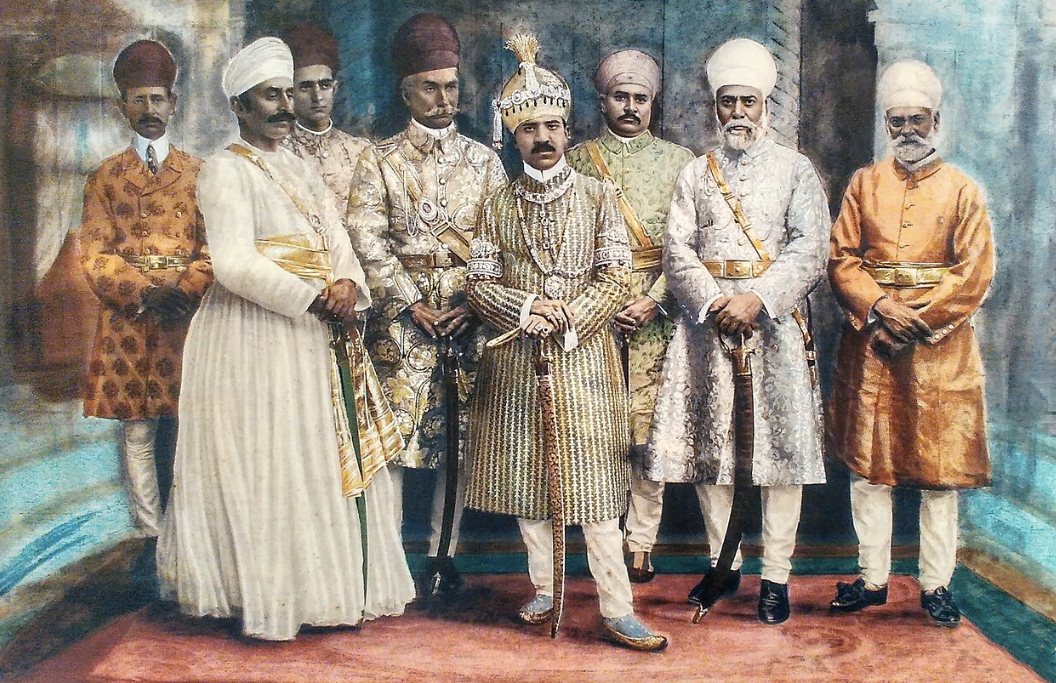
We know who the richest man in the word is today. A few years ago, before he gave away most of his money it was William Gates Jr. Back in the sixties it was Paul Getty. Today, it is Mr Elon Musk, But who was the richest man in the world back in 1947. Rockefeller, Howard Hughes ? They were extremely rich, but not as rich as the Nizam of Hyderabad, otherwise known as Mir Osman Ali Khan.
In 1947, just months before India gained its independence, the Nizam ( or ruler) of India’s largest state ( the size of England and Scotland combined and heir of the great Mogul empire which once bestrode India ), was, according to Kenneth Mills of Today ( Photo World), who obtained an audience with the great man , worth £500m. Today that would be worth around $210.8bn.Actually, at the time of this meeting, no-one was quite sure how wealthy the Nizam was. Let Mr Mills explain:
The value of his fortune increases from hour to hour, and investigators find caches of precious metals and jewels tucked away and forgotten, which upsets all calculations. Experts from Britain were once called in and after several months of counting they failed to agree. Finally, they settled on five hundred million pounds—with a hundred million either way as a safety margin.
The enormous Falakuma Palace, official residence of the Nizam, is a treasure house. British airmen recall the time when all the flat roofs of the royal compound shimmered with millions of pearls, when the Nizam thought they might lose their lustre and ordered an airing. The rooms of the Palace are choc-a bloc with gold plate and cases full of jewels. There is the solid gold plate service for 150 people. There is the Jacobs diamond, cut to the shape of a camel, one of the largest diamonds in the world, used as a paperweight by the Nizam; the egg-diamonds set egg-like, not only in shape but in size; the largest emerald collection known; and all along the walls gold is stacked, in bars, in coins, and large keg-shaped blocks. Once, when the Nizam had his servants take down some tapestries of which he had tired, scores of boxes filled with gold coins were found behind them.
But the ruler of Hyderabad no longer lives in his great palace…(but in) King Kothi, his private residence…King Kothi is a rambling collection of about a dozen ill-assorted buildings. A high wall surrounds the residence and there are guards from the Nizam’s own 100,000 strong army continuously on patrol. Inside is shabbiness cheek-by jowl with the inevitable fairy-story wealth. In one of the yards stands a gaudy Rolls-Royce, which some British statesman presented to the Nizam at his accession. It has been rusting for years. The royal elephants contentedly munch hay day after day, year after year. They are never used. For the Nizan drives in an ancient Ford tourer or uses an old Humber.
And he is a shy and extremely modest man. When you meet him, don’t look for a diamond-studded turban, a brocade gown or resplendent uniform. What you’ll find is a wizened little man—in dire need of a haircut, with an untrimmed moustache of amber hue, wearing an old Indian coat, very worn leather shoes and a turban, frayed and faded. He will talk to you in a rasping but not unpleasant voice, speaking excellent English, underlining his words with gestures of his thin, tobacco-stained, sensitive hands.
The Nizam outlined to me some of his plans for the future. On the occasion of his Golden Jubilee—he came to the throne as a boy—he intends to give his subjects some munificent presents. For the noblemen there will a book of his own poems in a jewelled cover and printed in gold lettering. For the people there will be the biggest irrigation scheme India has known, costing millions of pounds, supplying mains water to 209,000 villages and banishing famine through drought.
He is taking great interest in all affairs of the State and is really concerned with the welfare of his subjects. Up at the crack of dawn, he has a cup of coffee and begins his daily column for the Hyderabad newspaper.
By ten o’clock the audiences begin and the first visitors and petitioners appear. These audiences provided an important source of revenue. The civil list of the Nizam is paid for by the State and amounts to 5,000,000 rupees a year. His income from the Crown lands—not counting the private estates, which cover one tenth of Hyderabad state and are inhabited by 1,500,000 people—comes to 21,000,000 rupees. But in addition to all that there is the “ palace custom”. Every subject received in audience by the sovereign presents him with a gold ashrafi, equal to 100 rupees. The Nizam’s father used to touch these coins and return them to the petitioner. The present Nizam keeps them…On four annual gala occasions when he entertains thousands of guests, His Exalted Highness squarely faces the long queue, quickly jerking the coins out of each visitor’s hand and dropping them into two tall urns. Some of his nobles take pride in presenting him with as many as twenty or thirty ashrafis, and total returns from the four rituals may be estimated as 10,000,000 each year. Additional gifts from those eager to please the Nizam, or seeking special favours, bring in another million pounds a year .
The man with the highest income in the world boasts that he gets along quite nicely on a personal allowance of £5 a week. This is, of course, just pocket money, for running expenses are a State affair. His palaces, his staff, even his kitchen, are maintained out of public founds.
…the Nizam has done much for the advancement of his country. The industrial potential of Hyderabad is as great as any in India’s provinces. During the war he built a large Bren gun factory, one of the most modern armament works in the world, put a string of modern airfields at the disposal of the R.A.F., and with the advent of peace has invested enormous sums in his country’s industrial and agricultural development .
Alas, despite all these contributions to the welfare of his people, the Nizam was effectively dethroned in September 1948 following the inauguration of the independent state of India just a few months after this article appeared. He was exiled and died in 1967 aged 80.
FUN FACT
One amazing story about the Nizam concerns his visit to a Rolls Royce showroom in London in 1920. It would seem that he was dressed in simple garb when he asked to see some cars. The salesmen took him to be an impostor and treated him with disdain, whereupon the great man left disappointed. Later on, he returned dressed in royal attire. The staff immediately recognised him and felt nervous. He then ordered several Rolls Royces and reportedly paid for them in cash on the spot. However, when the cars arrived in Hyderabad, the Nizam attached brooms to their front bumpers and the vehicles were handed over to the municipal corporation for use as garbage collection vans. [Photo courtesy of Wikipedia, the Nizam wear a crown…]