
Part two
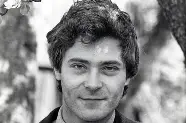
Geoffrey Elborn
This is based largely on personal memories of the biographer, who died in October 2022, aged 72.
I first met Geoffrey Elborn early in 1983, through the artist and writer John Piper, then General Editor of the Shell Guide series. My Shell Guide to Hertfordshire had appeared late in the previous year and Geoffrey, who also knew Piper, through their shared friendship with the Sitwell family, decided to publish a festschrift to mark the artist’s eightieth birthday in 1983. I was told, either by Piper himself, or by someone known to him, that my Guide was one of his favourites and so it happened that when Geoffrey asked him if there was a writer who might be persuaded to contribute to the festschrift , Piper suggested me.
I met Geoffrey to discuss the brief in his rather dowdy council flat in Clerkenwell. His biography of Edith Sitwell had just appeared and had been very well received. Unfortunately, the year before, another life, written by the better known Victoria Glendinning, came out, but most reviewers seem to have preferred Geoffrey’s as it reflected the author’s personal association with its subject and his youthful enthusiasm for her poetry. As the contract he has signed with the publisher stipulated that he also write a biography of Princess Alexandra, he was currently researching this as well as putting in the hours as a bookseller with Vermilion Books.
Back then, before I knew him well, I didn’t think to quiz him on his duties at Vermilion, but as I guessed that his main interests were music, twentieth century literature and modern firsts, these were the subject areas he presided over at the bookshop. I was later shocked to discover that when he had worked at Francis Edwards in Marylebone, he was head of the militaria department! I can hardly imagine that he had volunteered to take on such a post, so must conclude that there was a vacancy there and he took it.
Geoffrey had been a librarian in Scotland before travelling south to study Music and English at Leeds University as a mature student. Looking back, I now see that his attitude to books was closer to that of a librarian than a bibliomaniac.
By no means was he ever a book collector in the sense that he could not resist adding to his collection and paying over the top for a cherished item. And he took this custodial sense regarding books into his duties as a book dealer. It followed that in his chosen areas of expertise he knew what the rarities were, he did not covet these books, partly because he was aware that a shortage of shelf space in the tiny flats that he occupied made it almost impossible to assemble a specialist collection, had he wanted to do so.
He had an ‘ eye ‘, as they say, for bargains in unexpected places. Knowing that I was interested for a while in Wyndham Lewis, mainly because of his connection with Geoffrey Grigson, he somehow located a signed limited edition of Apes of God. He wouldn’t have paid much for this. On another occasion he presented me with a rare copy of The Tyro Two, complete with a cover drawing by Lewis, which he said he had bought for £5 in a ‘ junk shop ‘. I have no doubt that while a bookseller, like those ‘ runners’ who haunted the book barrows on the Farringdon Road, he was always on the lookout for items that would have been appreciated by the owners of the various bookshops he worked for. Oddly, however, over the ten years or more that I myself frequented Jeffery’s barrows, I never saw his face, although it does not follow that he never went there.
At our meetings in various London pubs, often in Soho, Geoffrey could be hilarious company as a literary raconteur. I’ve related his encounter with Daniel Farson, the thirsty biographer of Francis Bacon at the French House, at least twice in these columns, but there were so many others. Often these anecdotes came with expert mimicry. I particularly remember his retelling of a visit to the home of the anthropologist Geoffrey Gorer under some pretext or other. As with the encounter with Farson, where a less than sensitive remark from Geoffrey resulted in the former Panorama reporter going bright red and drunkenly expostulating, Gorer’s response to Geoffrey’s unwanted question was a loudly expressed ‘ Get out of my house’ or words to that effect, delivered by Geoffrey in the clipped accent of a minor aristocrat.
To someone overhearing our conversations at the next table Geoffrey could sound like an inveterate name dropper, but to me there was context to the anecdotes he told. He really did know, albeit slightly, the many celebrities he mentioned, from Laura Knight and Valerie Eliot in his youth and, of course, all the Sitwells, and later Beryl Bainbridge. As a schoolboy he had impressed his fellows by writing to Brigitte Bardot
for an autograph and getting in return a photograph with ;’ To Geoffrey, love from Brigitte ‘ scrawled across her breasts. I don’t know whether he knew Patricia Highsmith that well, but he was planning to write her biography and would have done so had not some problem arisen regarding the availability of her archives in Switzerland, where she lived. Looking back, it occurs to me that some of his encounters with celebrities may have originated in the bookshops where he worked.
And talking of bookshops, I must end with Geoffrey’s brush with notoriety in the shape of anonymous ‘leaks‘ to Private Eye magazine regarding the behaviour of a well known owner or manager of an antiquarian bookshop in Charing Cross Road, where he worked in the early nineties. I can’t exactly recall what Geoffrey accused this distinctly disagreeable man of doing, but it was something to do with workplace bullying or even financial malpractice. I do remember admiring him for his temerity at the time, but don’t recall whether Geoffrey was fingered as the whistleblower. Anyway, there was a stink and the man left, partly or wholly thanks to Geoffrey. I do miss him.
R. M. Healey
My obituary of Geoffrey appeared in The Scotsman late in 2022.