
Today, the non-fiction lists are dominated by the memoirs, cookbooks and travelogues produced by celebrities best know for appearing on TV. But is this a new phenomenon ? Not if the following piece by the novelist Elizabeth Berridge, which appeared in The Writer magazine in as long ago as February 1955, is anything to go by. She wonders if publishers are going to be daring for once and go all out for young authors instead of ‘reaching for a pen to sign up mountain climbers, trans-Siberian foot travellers, egregious peepers into royal nurseries, ex-valets of society people and, of course, television personalities ?’
‘All these aides to publishing constitutes a creeping and insidious risk to those who still like to read a book, not for ready escape or easy entertainment, but for that nourishment of that inner man who cannot be forever denied.
Undoubtedly television has halved the publishers’ headaches. “What, a gap in the spring list ? Ring up Lime Grove and put me in touch with Mr Blank, my wife’s crazy about him. Question is, who can we get to write his book ? “
The transaction is made. The Name and the writer get together, the latter very properly put in his place—for he is now the ghost of a celebrity. The hollow echo behind the pages of a best-seller. The ghostly legions are on the increase in proportion to the amount of attention given by the popular press to the Personality—or should it be the Flavour —of the Month. Just how simple the average TV gazer’s mind is, the following true story will show.
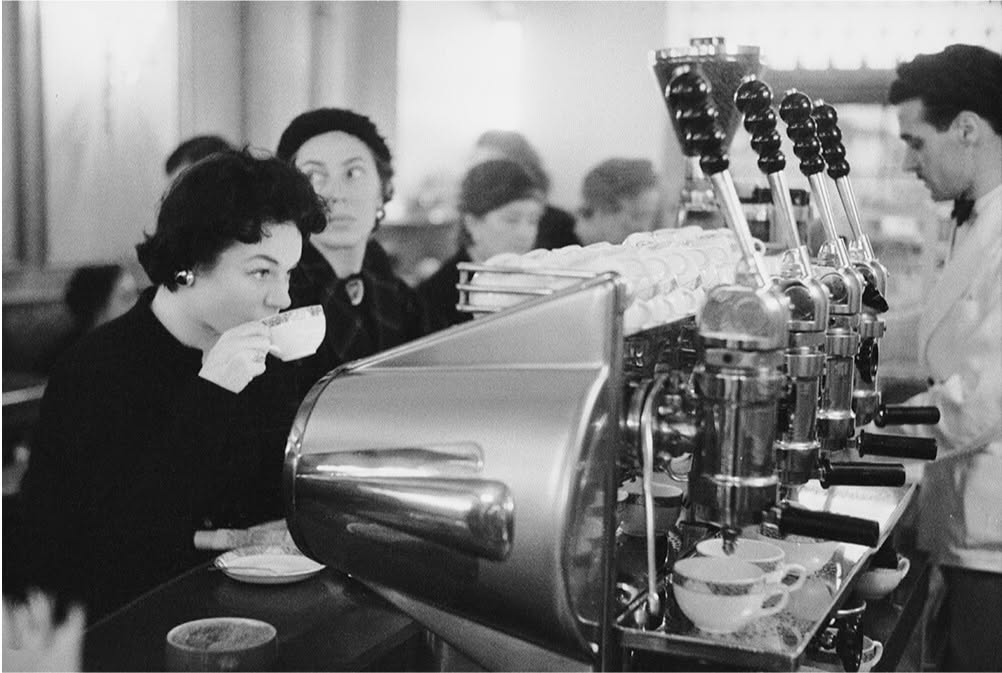
I was in a Coffee Lounge with a delightful woman who has made a great success on television. As we were talking a man came up and asked her if she was Miss So-and –So. My friend said she was. He then took a page from his diary and asked for her autograph, saying in a hushed voice, “There are three people I would like most to meet—I think there are the greatest people in the world today.”
“Oh yes,” she smiled. “Who are they? I am very flattered.”
“Well, his lined, tired face lit up. “ There’s you, and Armand Denis and Cousteau.”
We could not quite see the connection, then I asked, to break the silence: “ Cousteau. So you admire his book, The Silent World?”
He gazed at me blankly. “Book ? I don’t know about any book—I only saw him on the telly.”
Which brings us to the interesting fact that librarians report an increase in book-borrowing during the past year. Our friend in the Coffee Lounge has by now, I hope, dashed into his Public Library to borrow Cousteau’s fascinating book. His archaeological counterpart, too will now have the same sources at his disposal if he wishes to supplement Sir Mortimer Wheeler’s admirable forays into the past.
So here’s a revolutionary proposal, and one which I am assure the BBC would not dream of introducing. Why not help the viewer still further and supplement these talks on archaeology, zoology, cookery, sport, do-it-yourself and so on, with a short list of books in which the subject cam be explored further ? Some of the viewers might even buy one or two and give the book trade a fillip.
But what about the fiction writer? As usual, he can only sit down with a piece of clean paper, a typewriter, a copy of Roget’s Thesaurus, a pot of hot, strong coffee and a lot of hope. He can only hope himself. But if, his opus done, he is stuck for a publisher—let him use the modern gimmick which leads to fame and fortune, and Ask Wilf.
Berridge clearly differentiates between the novelist with his blank sheet and typewriter and the celebrity non-fiction writer, who may have a ghost writer to do the heavy lifting. For all we know, back in the fifties even some novelists may have had a ‘ghost’, though this is unlikely. Today, this is a more likely occurrence, although few celebrity novelists ( think ‘ cosy crime’ writers ) would admit to having had ‘ help’.
The main thrust of Berridge’s argument is that the viewers who worshipped TV explicators, who included not just Armand and Michaela Denis, Jacques Cousteau and Mortimer Wheeler, but also the unnamed Philip Harben (the first TV chef) and the unnamed TV experts on DIY who appeared in ‘About the Home’ ought to be helped by the BBC to seek out library books that explored the subjects further. She doesn’t say where these lists of books might appear. Today, of course, people who are inspired by David Attenborough, Michael Palin or the Time Team presenters don’t need to visit a library to search out stuff. A few clicks on their smartphones will reveal any number of sources of information on archaeology, zoology, cookery, sport, DIY etc etc. Moreover, the BBC itself has become a publisher, as can be seen by the many, many books that bear the BBC logo.
Answers to the last literary quiz.
Last lines.
1) Gone with the Wind by Margaret Mitchell
2) The Picture of Dorian Gray by Oscar Wilde
3) Vanity Fair by William M. Thackeray.
Shakespeare.
1) ‘The Tempest’
2) ‘As You Like It.’
3) ‘Twelfth Night’
4) ‘Richard II’
Artists in Literature.
1) Traddles in David Copperfield.
2) Charles Strickland in The Moon and Sixpence by W. Somerset Maugham
3) Emmeline Grangerford in Huckleberry Finn by Mark Twain
Alice in Wonderland.
1) The Dodo
2) The White Queen
3) The White Queen
4) Humpty Dumpty
Interrupted weddings.
1) Jane Eyre by Charlotte Bronte
2) Mrs Havisham in Great Expectations
3) Lorna Doone by Richard Blackmore.
Money.
1) Silas Marner by George Eliot
2) Mr White in The Monkey’s Paw by W. W. Jacobs
3) Montgomery Brewster in Brewster’s Millions by George Barr McCutcheon.
Second Lines.
1) ‘To a Skylark’ by Percy B. Shelley
2) ‘Break, break, break’ by Alfred Tennyson
3) ‘’Why so pale and wan?’ by J. Suckling
4) ‘The Eve of St Agnes’ by John Keats
R. M. Healey