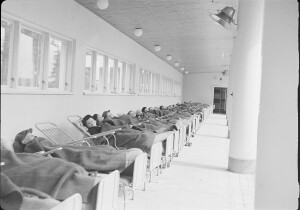
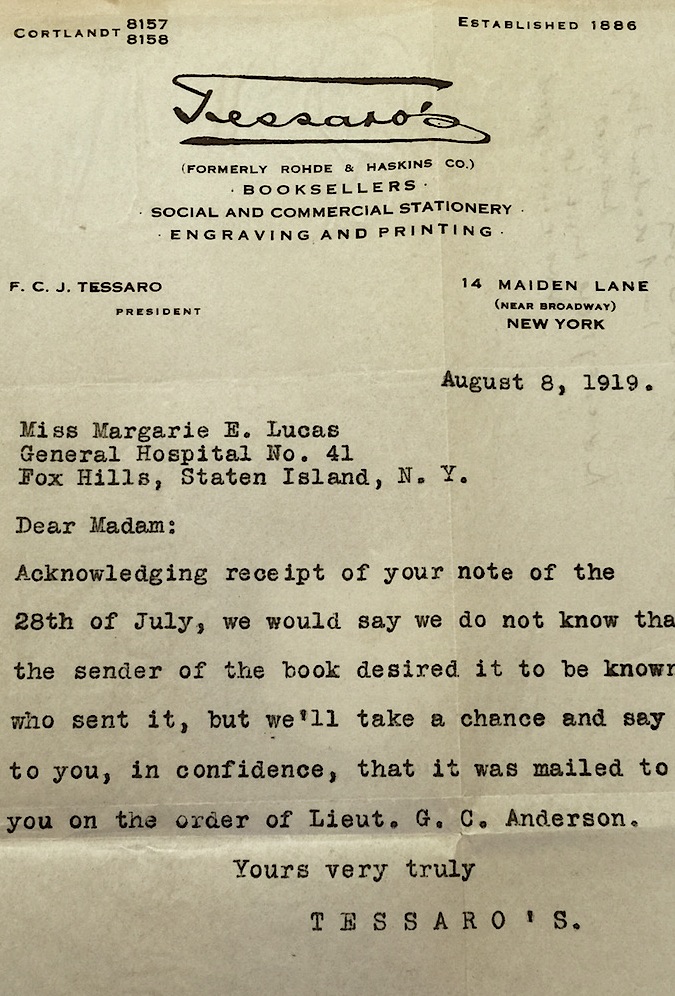
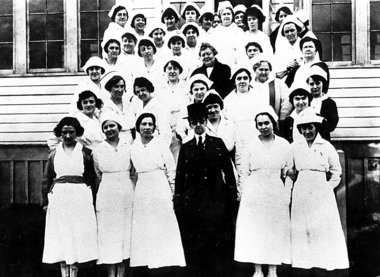
Nowadays we are used to hearing of a permanent crisis in the NHS. If it isn’t ambulance waiting times it’s bed blocking. If it isn’t bed blocking it’s junior hospital doctors’ pay or the near impossibility of accessing a GP. But the lack of nurses is not always an issue today. But go back to the early years of the NHS and the shortage of nurses was a real problem, according to a report in an undated issue of Picturing Today.
‘Britain’s hospitals are facing a crisis. Doctors have protested to Health Minister ANEURIN BEVAN that sick people are being turned away. In one London region, 20,000 patients are waiting for admission to 100 hospitals; and all over the country our hospitals, through no fault of their own are suffering in varying degree from the same paralysis. The diagnosis: acute shortage of nurses. The cure: another 40,000 nurses—and quickly.
Yet there are 40,000 more today than ten years ago. Have we then become a nation of weaklings? No—but we do have wider and much improved medical services. Where once a case was considered incurable, it is now admitted to hospital for lengthy treatment. Where once people never went near doctor or clinic, now they go at the first sign of illness. And more patients need more nurses. Why don’t they get them. Ask any nurse—and her answer will be: ‘Conditions in the profession are appalling.’
No one, not even the most inspired Sister or Matron, pretends that nursing is anything but a hard life…The testing time is the first year. A raw recruit, after going through a preliminary training course of twelve weeks, goes on to the ward as a very junior cog in the rigid machinery of hospital life. She is 18 or 19, in many cases fresh from school. She has to adjust herself to working among rows of beds with people in varying degrees of sickness and pain. She has got to work to time, and she is at the beck and call of a Sister and staff nurses who cannot permit mistakes. She has got to get used to emptying bed-pans, serving meals and doing a hundred and one chores that seem like sheer heartbreaking drudgery…
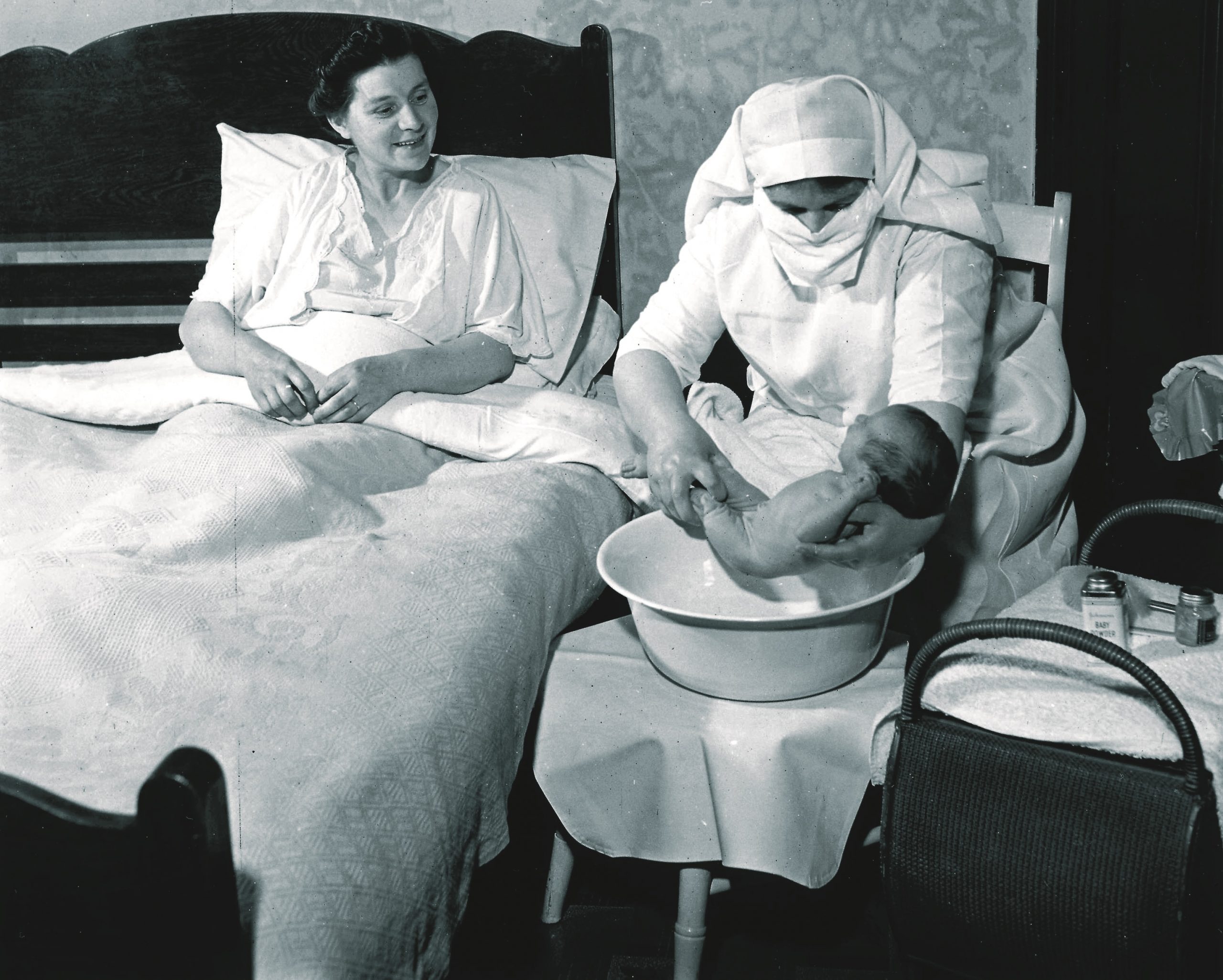
…Are the hours so terrible? Ideally, no—often in practice, yes. You can’t leave a desperately ill case just because your shift is up. Ideally nurses should work a 96 hour fortnight. In some hospitals this has been achieved by a shift system, the first shift from 7 a.m. to 3.30 p.m with an hour for meals, the second from 3.30 to 11.15 with
half an hour for meals. Shifts are worked three days a week, and staff nurses have one free week-end a month. Night duty is from 11 p.m. to 8.15 a.m. with one and a quarter hours for meals, and two nights off duty in 14. But the shift system is not always popular. Nurses prefer to work with regular off-duty periods so that they can plan ahead.
Pay ? This is one of the sorest and most debatable points. Under the Rushcliffe Committee of 1943, conditions and pay were improved. With the Whitley Council for Nurses and Midwives, set up to negotiate salaries and general conditions, even better have been achieved. The Council campaigned for nurses in training to be treated as students, and began by stepping up their salaries to £200, £210, and £225 for the first, second and third year of training, including £100 -£120 for emoluments for board, lodging and laundry. Now the Council is negotiating for better things for qualified nurses. At the moment, the bitter fact is that a qualified nurse gets very little more than a student—–£240, which again includes the £100—£100 – £120 for board.
To the old school, £140 and all found may seem pretty good. But a staff nurse has heavy responsibilities. Under a Sister, she may have charge of a complete ward. She is also young and a very human being with the normal urges to buy clothes and have as good holidays as she can. A Sister earns from £180 rising over a period of time to £260 maximum. A Sister Tutor can earn more, this post next to Assistant Matron, being one of the most lucrative. But none of these sums compares very brilliantly with , say, a women business executive whose work is less exacting, for whatever else she has to do she does not have from 20 – 30 lives on her hands.
Continue reading