The Revd. Sidney Swann – A Muscular Christian

An old edition of Who's Who reveals that The Revd. Sidney Swann, M.A., born in 1862, rowed in the Oxford and Cambridge boat race in 1883, 1884 and 1885, won the Cambridge sculls and pairs and the Grand Challenge in 1886 and 1887 and, in record time, the Steward's in 1885 and 1887. He also, in Japan, "won most things started for on land and sea; rowing, hurdling, cycling, running, pole-jumping, weight and hammer." We learn that he was the first to cycle round Syria, that he rode from Land's End to John O'Groats and from Carlisle to London in a day, that he rowed a home-made boat from Crosby Vicarage down the rapids of the Eden to the sea and that he cut the record from England to France in 1911 by rowing the Channel in 3 hours and 50 minutes "faster than anyone had ever gone between England and France by muscular power". He built several flying machines, and drove motor ambulances in Belgium winning three medals. In 1917, when 55 years old, he cycled, walked, ran, paddled, rode and swam six consecutive half-miles in 26 minutes 20 seconds in competition with a certain Lieutenant Muller of the Danish Army.

He eventually became very eccentric and was persuaded in 1937 to retire. Committed to a mental asylum he escaped, remarried after his first wife died, and finally died himself after falling off his bicycle (in 1942). John Julius Norwich has a lot more on the highly competitive Swann in his 1975 Christmas Cracker - in old age he appears to have become a slightly  daunting figure in Lindfield...
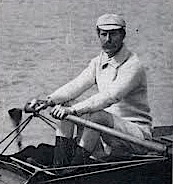
In 1911 the Revd. Swann crossed from Dover
to Cap Griz Nez in 3 hours and 50 minutes

How to become a spy (in 6 easy lessons)

Found in a 1963 Central Office of Information booklet Their Trade is Treachery. Of some rarity and value - a top online bookseller describes it thus:

In the wake of the Profumo Affair the COI "produced a lively booklet as part of their educational campaign to improve the awareness of middle and lower grade officials and members of the Armed Forces of their responsibilities in regard of security matters" (Gladden, Civil Services of the United Kingdom: 1885-1970, p.166). Includes accounts of notorious cases, tricks of the trade, and helpful advice, "Spies are with us all the time. They are interested in everything, defence secrets, scientific secrets, political decisions, economic facts, even people's characters in order to recruit more spies" (from the preface).

Towards the end of the book after a piece called 'How not to become a spy (in 6 not so easy lessons)' they offer this tongue in cheek advice:

How to become a spy (in 6 easy lessons)

1. Let it be known to your friends, casual acquaintances, and strangers that you have secret information, or are in a job where you may be able to obtain it one day. This should attract treasonable propositions or threats, which it may or may not be possible to resist.

2. Think you are cleverer than you are. Be conceited. Tell yourself that you are capable of handling any regular association with Iron Curtain officials without informing your superior officer or local Security officer. If the Iron Curtain man is a diplomat, convince yourself that it's only your fascinating personality, wit, and friendship that attracts him. If you can believe that, you can believe anything. You're on your way.

3.Develop a few vices, especially abroad, so that with luck you can be compromised and blackmailed.

4. If you cannot manage a vice or two, just be foolish. If you can't be foolish, be incautious.

5. Accept favours and hospitality from Iron Curtain officials… When in return they ask some harmless service in exchange for good money, accept at once. This encourages them, and, if you pursue  the matter to a logical conclusion,  you should land yourself safely in prison one day.

6. If you do not fancy prison especially in cold weather, persuade yourself that if you become a spy you will never get caught. You will, of course, but one must not start with a defeatist attitude.

A castrato sends in his bill…

Invoices from famous castrati are pretty rare, but there is no reason why there shouldn’t be more of them around. The reason is that some of the best castrati gave singing lessons, and thus presumably sent in bills for their services. One of the greatest singing masters of them all was the brilliant Domenico Mustafa, who was also a composer and was appointed perpetual director of the Sistine Chapel in 1878.

Born in 1829 in Perugia to a Turkish father, the young Domenico doubtless had a good voice (it was later described as ‘ sweet and pleasant as that of a woman’) and, as was the custom, was castrated before puberty as a way of generating an income for his impoverished parents . He later was quoted as saying that he’d risk being indicted for murder if he could discover the man who had castrated him’. He joined the Sistine Chapel as a chorister at the age of 19.

This invoice and letter date from 18 February 1870, when Mustafa was aged 41. He had already been director of the Sistine Chapel choir for ten years and as such must have been in great demand as a private singing tutor. For six lessons plus the sheet music he charged Signorina Holland ( perhaps an English lady ) a total of 67 francs and 50 centimes. Why the sum should be in francs, I don’t know.

Later on, in 1892, Mustafa gave lessons to the famous French soprano Emma Calve, teaching her to employ her celebrated ‘fourth voice‘, which was an unnaturally high falsetto. After hearing Mustafa himself performing this weird sound Calve described it as ‘ strange, sexless, superhuman, uncanny ‘.

Mustafa retired at the aged of 73 to his luxurious villa in Montefalco where he died in 1912. ‘ Villa Mustafa ‘became a hotel and is now a museum to his memory. [R]

The Politesse of Valdré

An interesting an uplifting anecdote of true impulsiveness found in John Julius Norwich's 1990 Christmas Cracker. Viscount Norwich was a jotter before jotting was invented - an Ur jotter. Respect. His Cracker booklets are sent to a few thousand of his closest friends and consist of information and wisdom culled from his library and also presumably sent to him by loyal correspondents.

Vincenzo Valdrati or Valdré (1742-1814) was an Italian painter-architect who came to England in the 1770s and designed, inter alia, several of the state rooms at Stowe before settling in Ireland where he became Architect to the Board of Works. From Howard Colvin's superb Biographical Dictionary of British Architects I learn that "while at Stowe he attended a wedding and when the bridegroom failed to appear, he was so moved at the bride’s distress that he chivalrously offered himself as a substitute – and was accepted."

I once had tea with ….Geoffrey Hill

Sent in by faithful jotter RMH. Fans of Nobel Prize winner Heaney might be peeved by his closing remarks but c'est la guerre...

I once had tea with ….Geoffrey Hill

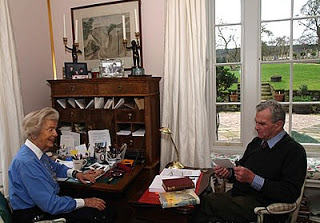
Our Greatest Living Poet is not known for his bonhomie, but on this particular occasion the man who while teaching at Cambridge was often seen moping around with an expression that made him look ( according to one colleague ) 'as if he had been raped by God', showed a more buoyant side to his personality. It was around 1993 and my dear friend, the late lamented Patricia Huskisson ( a descendant of  the unfortunate Tory minister who was run over by a locomotive in 1830), lived in the next village and had invited me to meet the famous poet. I had contemplated bringing along my copy of Mercian Hymns, arguably the best poetry collection to appear for the past 40 years, for him to sign. I can’t remember if I actually took the book along to the meeting, but when I arrived it was obvious that this was not the occasion for a demonstration of cheap fan worship.

Hill was already there and so was Patricia’s old friend Guy Lee, the Latinist and translator of Ovid. Tea, which featured the usual mountain of sandwiches and cakes, was brought and although I cannot recall any scholarly bon mots from the mouth of Hill, I seem to remember him laughing on at least two occasions, which from the author of Tenebrae, seemed to me unexpected .

More unexpected still was the appearance of Hill in front of Patricia’s square piano, where he and Guy proceeded to play a duet---a baroque piece, I seem to recall. The whole meeting lasted no more than an hour. Our Greatest Living Poet ( sorry, Seamus, but you’re not in the same league ) left before I could ask him any serious literary questions.[RMH]

The Crazy Quilt Murders (1938)

The Crazy Quilt Murders by H.W. Sandberg (Phoenix Press N.Y. 1938)

Rare book (no copies for sale anywhere online) from the Donald Rudd collection of detective fiction. The plot is summarised thus:

When Benjamin Markley willed his nephew Sam a crazy quilt, it seemed like merely one more of his eccentrics on a par with the proviso that Markley legatees spend three days together in Sam's country cabin.

But the Markleys stopped laughing when the three days were blighted by a series of murders more puzzling than any Sam, a mystery writer by profession, had ever imagined. And the colorful crazy quilt enabled Sam to stop the murders before he himself was added to the growing list of victims… 

Everything in life must perforce follow a pattern. Life, death, the very thoughts that idle in your brain at this moment, are guided by a logical, if sometimes confusing, pattern. Witness the crazy quilt; modest or gorgeous, seemingly possessing neither rhyme nor reason, yet behold, you find in it a beginning, a body, a conclusion, the very essence of a pattern.( Sam Markley)

Continue reading

I danced with Wittgenstein

Almost everybody has met someone with a good story about someone well known that they had met - the 'I danced with a man, who danced with a girl, who danced with the Prince of Wales' phenomenon. Here is one just received about Wittgenstein - probably the greatest philosopher of the modern age.

One of our neighbours is a doctor in his 90s who remembers Wittgenstein at Guy's Hospital in the 1940s. He told me he had been recently invited to the unveiling of a new commemorative plaque recording Wittgenstein's time there but though fit and in excellent humour did not want to go to London.

Wittgenstein was working at Guy's Hospital as a  porter and was pointed out to him pushing a trolley. He was known to be some kind of genius and was working as a volunteer even though he was in his 50s. Sadly the doctor remembers nothing else about him. Online other  doctors from Guy's remember his skill at mixing ointment and his intense charisma. He was still working on the manuscript of Mathematik und Logik while there and through Dr R.T. Grant also became involved in valuable work on wound shock therapy. He was really more of a laboratory assistant than a porter but also was tasked with taking drugs to patients. My doctor friend says that Guy's at the time was pretty much run by Ward Sisters, persons who inspired awe and fear and it would be interesting to know what Ludwig's Ward Sister thought of him. The King's College site has a good piece on his time at the hospital - Portering and Philosophy.[D.O.]

The Art of Dancing by Anna Pavlova

Found in the first issue of The Dancing Annual (1923) from the Mayfair Press in London. Anna Pavlova had been living in London for over 12 years and this appears finely written, possibly ghosted, with some vehemence towards a style  ('the lowest slang of dancing') that was prevalent in the early 1920s and has never strictly gone away...

The Art of Dancing by Anna Pavlova

To me, the fascination of dancing lies in this: you can express with it so many moods, and so many beautiful thoughts and poems.

People imagine that self-expression in dancing is only for those who, through many long years of training, have arrived  at the perfection of their art in its highest forms of drama, poesy, or tragedy.  But though this is true, so far as it goes, it does not mean that all those who are not expert ballet dancers are for that reason unable to enjoy some share of its pleasures.

Continue reading

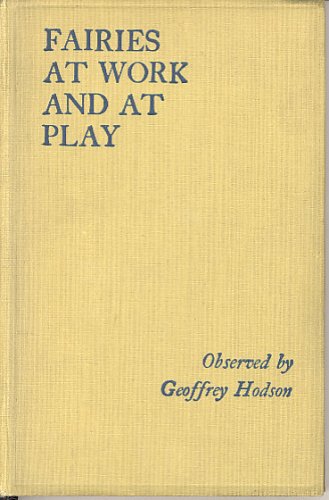
Fairies at Work and Play

From Fairies at Work and Play by Geoffrey Hodson. Published by the Theosophical Society in 1925 (and still in print) the book is a sort of Varieties of Religious Experience anthology of meetings with and sightings of fairies, elves,devas, sylphs, 'mannikins', gnomes and brownies. All the observations are by Geoffrey Hodson (1886-1983) who wrote many other religious and occult works in a long and productive life.

Dancing Fairies
Lancashire, 1921

We are surrounded by a dancing group of lovely female fairies. They are laughing and full of joy.

The leader in this case is a female figure, probably two feet high, surrounded by transparent flowing drapery. There is a star on her forehead, and she has large wings which glisten with pale, delicate shades from pink to lavender; in rapid movement, however, the effect of them is white.

Her hair is light golden brown, and unlike that of the lesser fairies, streams behind her and merges with the flowing forces of her aura. The form is perfectly modelled and rounded, like that of a young girl; the right hand holds a wand.

Although her expression is one of purity and ingenuousness, her face is at the same time stamped with a decided impression of power. This is especially noticeable in the clear blue eyes, which glow like flame, and have all the appearance of a living fire. Her brow is broad and noble, her features small and rounded, the tiny ears are a poem of physical perfection. There are no angles in this transcendently beautiful form. The bearing of head, neck and shoulders is queenly, and the whole pose is a model of grace and beauty.

Continue reading

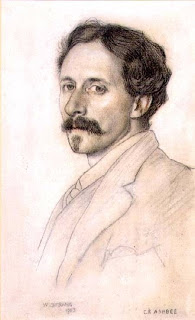
John Betjeman on C.R. Ashbee

A good John Betjeman letter found in a VHS cassette from the estate of Felicity Ashbee the daughter of the great Arts and Crafts figure C.R. Ashbee and granddaughter of the erotica collector Henry Ashbee. The video, not played, appears to be of a couple of talks on Ashbee in 1994 at the Fashion Institute of Technology. The letter has no address but interior evidence suggests Betjeman was dodging the bombs in London at the time...

June 2, 1942

Dear Mrs Ashbee,

I was most awfully sorry to read in The Times of Mr Ashbee's death. I had so look forward, the end of this war, which has separated us all from friends and interests, to seeing him again.

The personal loss to you and your family must be great indeed. I remember well that happy life at Godden Green at the time I came to stay with you and he and I walked over to see a *Comper church.

Continue reading

I once met…Sir John Mortimer

I had been invited to interview him on his book collection. Of course, I was aware of his reputation---as a champagne socialist and general bon viveur. The press photos  always showed him surrounded by adoring and attractive women. He lived in a house designed by his father and inherited from him, in one of the most beautiful parts of Buckinghamshire, among the beech woods of Turville Heath, not too far from Jeremy Paxman’s place and Fawley Bottom Farmhouse, the former home of John and Myfanwy Piper, whom I had known, and who were his close friends too. I was a little envious, I admit.

The taxi dropped me unceremoniously on the edge of woodland. The driver didn’t know where his house stood, and no did I, but I peered any all directions for any sign of a dazzling green pantiled roof, which Mortimer had told me to look out for. In less than five minutes I had found it, splendidly turquoise through the trees, looking as though it belonged to a thirties gem in Stanmore or Bushey than rural Bucks. I approached the front door and knocked. A women in her latish sixties clad completely in a white towel with a turban around her wet hair opened it. The first adoring female fan of the day, I thought. How many more would I meet before I left for home ?

None, as it turned out. The turbaned lady was his wife, who had just that moment stepped out of the bath. She showed me to his study and she did so warned me that her husband was ill. I must say, he didn’t look too chipper. He was wheezing and his face was flushed. He explained that as well as the house his father had bequeathed him two medical conditions—asthma and blindness. My envy dissipated forthwith. We talked about his childhood enthusiasms for the stage and for poetry and how he hated his time at Harrow. One remark surprised me and has remained in my memory ever since. On the subject of Law he remarked that he didn’t consider it a worthy academic discipline and wished that he had spent his time at Oxford reading a 'proper' academic subject, such as  history or English Literature instead.

Before I left he offered me a glass of (you’ve guessed it) champagne—the first and only time I’d been offered this after an interview. His wife joined us and afterwards drove me back to Henley station. [RH]

Too cool names

Found in a HarperCollins paperback Cool Names for Babies (2007 reprinted from Mother & Baby magazine) a list of names that are 'too cool' - in fact it's the last chapter. Have added a few..

What makes a name too cool? Trying so hard that coolness is its main, and maybe its only, merit. Being so aggressively hip that poor little Kool willl bend under the expectations of grooviness created by his name… the line of what constitutes too cool a name seems to get redrawn every day [but] these choices will probably be on the wrong side of it for a long time to come..

ARMANI
BABE
BRANDY
BREEZE
BUCK
CALIFORNIA
CHARDONNAY
CHEYENNE
Henri Cartier Bresson 1954
CONGO
CROCKETTB
DESIREE
DUKE
FREE
HARLEY
KEROUAC
KOOL
MAVERICK
MINGUS
PORSCHE
PRINCE
RAMBO
RIBENA
RIDER
SCORPIO
SINBAD
SUGAR
TALON
THOR
TIGER
VICE
VULCAN
WILD
YOGI
ZAPPA

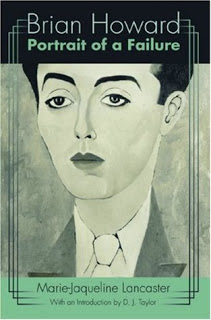
Brian Howard to the Duchess (on Rex Whistler)

Signed letter sold in 2010. Brian Howard poet, journalist, socialite, 'failure'. Found in a book from the Gilmour estate.

2pp. About 80 words to 'Dear Mollie' (ie  Mary ('Mollie') Montagu Douglas Scott, Duchess of Buccleuch) on her notepaper - Boughton House, Kettering dated May 1957. It is loosely inserted in a used copy of Laurence Whistler's book on his brother Rex Whistler (Art & Technics 1948) presented to her mother by her daughter Caroline (later Lady Caroline Gilmour.) The letter reads - 'Caroline might be faintly amused to know that when Laurence was compiling this book he wrote to me to for the complete text of my poem about Rex. In one's forgetful, selfish way, I didn't reply - so these weak little lines, this miserable quatrain is all that posterity will receive. The unhappy thing is that the complete (underlined) poem wasn't a bad literary portrait of Rex. Love, Brian.' BH has initialled the relevant 4 lines in the printed text.  LW does not name Howard in the text  but refers to him merely as 'a clever friend (who) drew his character in words...' The poem begins with the lines 'Laughter in the bedroom...' Letter sold with book which is sound but somewhat bumped. Brian Howard letters are seldom encountered.

When a copy of the Whistler book (not rare) shows up again we will post the missing lines.

21/7/13 Sure enough a copy has shown up and the lines read:

Laughter in the bedroom,
          in the bar-too,
          in the ballroom--
          But the laughter is an urn.

Not exactly The Waste Land but to his brother Laurence the lines catch Rex's character at about 21-- the way in which  he was 'subtly detached' from his 'great gaiety'. He writes 'Rex's smile was immensely amused, as only a thoughtful man's may be..'

Self portrait by Rex Whistler

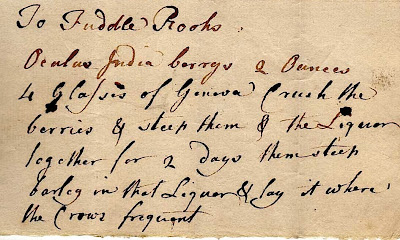
Rook fuddling made easy

To Fuddle Rooks
Cocculus Indica berrys 2 Ounces. 4 Glasses of Geneva. Crush the Berries & steep them & the Liquor together for 2 Days, then steep barley in that Liquor & lay it where the Crows frequent.

Evidently from the spelling and paper used (a scrap rescued from an autograph collection), this is an eighteenth century recipe. Because it mimics the effects of alcohol, unscrupulous brewers often used Cocculus Indica berries to adulterate beer. Unfortunately, the berries are rather poisonous. The scientist Frederick Accum exposed the scandalous practice in his groundbreaking work,Death in the Pot; a treatise on the adulteration of food (1820).

Consider your rooks (or indeed crows) well and truly fuddled !! Or dead.[RH]

Shackleton’s Phantom Guide

Came across this article in the Winter 1948 Occult Review by the intrepid cinematographer J.C. Bee-Mason, a war photographer in France, Belgium and Russia, and cinematographer to Ernest Shackleton on his last expedition south and other Arctic expeditions. He was obsessed with bee-keeping (hence the hyphenated “Bee” in his name) and filmed documentaries about bees.There is quite a bit about him on the web including his belief that if you ate a hundred pounds of good honey every year you would live to 100. Sadly JCB only made into his early 80s. Part of the interest in the piece is the acknowledged influence of Shackleton's experience on some lines in T.S. Eliot's The Waste Land:

Who is the third who walks always beside you?
When I count, there are only you and I together
But when I look ahead up the white road
There is always another one walking beside you
Gliding wrapt in a brown mantle, hooded
I do not know whether a man or a woman
- But who is that on the other side of you?

This phenomenon  has been called by the author John Geiger the 'third man factor' - the experience of people at the very edge of death who feel the presence of an incorporeal being who encourages them and guides them to safety. Geiger tells the stories of 9-11 survivors, mountaineers, astronauts, explorers and prisoners of war who have reported this feeling…

Continue reading

I once danced with Ringo

Almost everybody has met someone with a good story about someone well known that they had met - the 'I danced with a man, who danced with a girl, who danced with the Prince of Wales' phenomenon. Here is one just received about Beatle Ringo Starr.The mention of Barbara Bach dates it in the early 1980s.

I got a minicab from Hammersmith to Heathrow and was chatting with the driver about Robert Tressell's The Ragged Trousered Philanthropists which he had read several times (I think I had a copy with me that I was going to read on the flight). As with so many other readers the book had radicalised him. He told me that he never called passengers 'Sir'. On that subject he mentioned that he had once driven Ringo Starr who told him he was the only driver he had ever had who did not call him 'Sir.'

Intrigued, I inquired about the great (and irascible) Fab Four drummer*. He had driven Ringo and Barbara Bach from London to a studio in Manchester. Ringo spent most of the journey rolling and smoking joints. At the end of the journey he gave my minicab driver a £100 tip, which he said was still the best tip that he had ever received...and he never called him 'Sir'!

*Of whom John Lennon said  when asked if Ringo was the best drummer in the world --"He's not even the best drummer in the Beatles..."

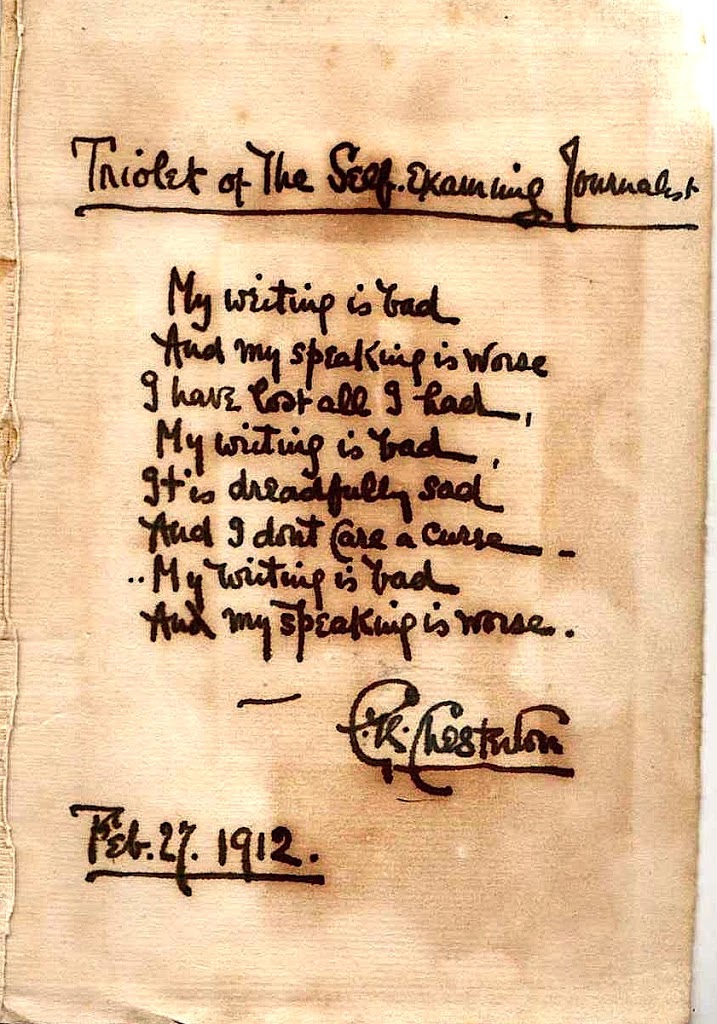
A problematical squib by Chesterton

Triolet of the Self-examining Journalist

My writing is bad
And my speaking is worse
I have lost all I had
My writing is bad,
It’s dreadfully sad
And I don’t care a curse
My writing is bad
And my speaking is worse.

G.K. Chesterton
Feb. 27.1912.

Here’s a literary puzzle to gnaw on. In his introduction to volume ten of G. K. Chesterton: the Collected Works, Denis J Conlon maintains that addressing a meeting of the Distributist League at Gatti’s Restaurant in London on January 11, 1934, Chesterton summed up what he called his moral, mental and spiritual condition in an ‘ impromptu triolet ‘. Conlon prints this squib, which in every respect but one, is identical to the one printed above. In the later version the third line has become ‘They were all that I had ‘.

Continue reading

I once met Snoop Dogg

Winter, London,1997. It was at the Elbow Room in Notting Hill Gate, a bar and snooker hall. The occasion was  the Low, Howard, Spink advertising agencies  creative departments afternoon out and 'jolly.' Snoop Dogg was recording an interview with MTV - in the days when MTV was still cool. We noticed the rapper Snoop and his crew at the bar. His crowd  included his father who joined us admen in a game of pool. Being gentlemen and somewhat affeared of his entourage (blokes with big coats) we thought it best to let him win. He was in fact a good player and a very nice man known affectionately to all as 'Pops.' I also shook hands with Snoop Dogg (a soft, loose grip) and my boss insisted on having a picture of his dog ('Mr. Patch')  taken with the great man.  As I recall he was slightly mystified by this request but went along with it in good cheer.

Photo above is of Snoop with the late show-biz dog 'Lucky' not 'Mr. Patch.' Sent in by Damian - a longterm jotwatcher.

Lovat Fraser on Sty Head Pass

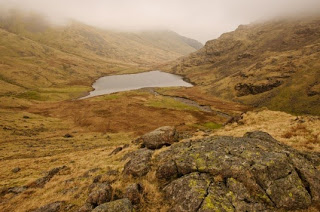
A news clipping from 1919 found pasted to the endpapers of Hall Caine's The Story of a Crime. It is by the artist Lovat Fraser  - obviously a lover of the area, but keen on sharing it with others to the extent of wanting a road to it. He seems to be talking about a sort of Edwardian nimby but as far as I know the road was never built, although the campaign had been going on for about 15 years. Fraser writes well, some of the descriptions of scenery are reminiscent of John Buchan..

Sty Head Pass

The fate of the proposed road over Sty Head Pass, in the Lake District, may be decided today at Carlisle. I have read dozens of protests against the scheme, not one word in its favour. With some trepidation, I wish to take the lists against the crag  climbers on the fell wanderers and to back Mr. Musgrave of Wastdale and his road.

Here is my own experience. Late last October I went through lovely Borrowdale to Seathwaite and walked over the Sty Head Pass down towards Wastdale, and back. Everybody who visits Lakeland has heard about Seathwaite which has the reputation of being the wettest place in England, and has earned it.

Continue reading

Dummy Books for Duchesses

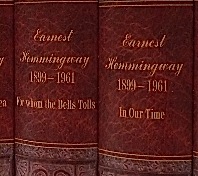
In the library of Chatsworth, the seat of the Dukes of Devonshire, are two doors disguised as shelves of books. The second one was created in the 1960s during renovations, and 28 book-backs were made by binders Sangorski & Sutcliffe, for titles like Reduced to the Ranks by D. Motion, Second Helpings by O. Twist, Dipsomania by Mustafa Swig, and The Battle of the Bulge by Lord Slim. The last volume was Book Titles by Patrick Leigh Fermor, in honour of the inventor of the titles. They were suggested to the Duchess in a letter from Fermor from Euboea dated February 1964. This was published in 2008 ( In Tearing Haste) by John Murray. Among  PLF's other candidates were:

          Knicknacks by  Paddy Whack
          Nancy Mitford & her Circle by Juno french
          Minor Rodents by Aygood-Mausser
          A Tommy in the Harem by Private Parts
          First Steps in Rubber by Wellington
          Flags of the Nations by Bunting
          Will Yam Make Peace? by Thackeray
          Consenting Adults by Abel N Willing
          Where the Hormones...by Christine Keeler  
          Venus Observed by I. Sawyer
          Intuition by Ivor Hunch
          Alien Corn by Dr. Scholl
          March Days by A. Hare
          Creme de la Creme by Devonshire
          K-K-Katie by Kay Stammers
          On the Spot by Leo Pard
          Humble Pie by J.Horner
          The Shaking Hand by Master Bates 
          Ruined Honeymoon by Mary Fitzgerald and Gerald 
          Fitzgeorge              
          The Day After Gomorrah by Bishop of Sodor and Man
          Call me X by Anon
          Pardon Me by Belcher
          Weather in the Streets by Omega Losches
          Haute Cuisine by the Aga Khan 
          The Babies Revenge by Norah Titsoff
          The Cat's Revenge by Claude Balls

Patrick Leigh Fermor confesses he has a soft spot for the rude ones 'though they're not your style.' Might follow up with more garnered from books, recommendations and the web. The most famous is, of course, Rusty Bedsprings by I.P Knightly. There are manufacturers of dummy bookshelves, mostly providing classic titles like the two vols below by one Ernest Hemmingway...