Found in The Album for August 19th, 1895, are these encouraging words for aspiring fiction writers:-
‘Let no boy or girl, ambitious of literary fame, fear nowadays that they will be denied a hearing. The one thing necessary is merit—something to say and the power to say it. Granted so much, and industry, success is certain.
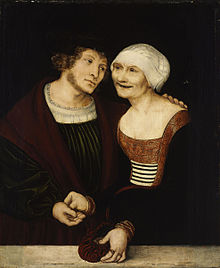
Take the case of two young men who have fought their way into success, and with whose careers I happen to be familiar. They are Mr W Pett Ridge (above) and Mr H. G. Wells. Neither had any influence; neither, when they began to write, had friends in the literary world; neither had the advantage of a ‘Varsity education; and yet these two young men have six books between them on the eve of publication. Moreover, the stories and articles and dialogue that make up these books having already appeared in serial form, these authors have already made incomes out of them which barristers or bank-clerks of the same age would consider exceedingly handsome.
How was it done? Just by choosing fresh subjects, by looking at those subjects with fresh eyes, and by having the gumption to know what journals those subjects would suit. Mr Pett Ridge is a London born and bred, and a Londoner who was blessed by nature with a most observant eye, great patience, and quite an abnormal sense of humour…Hardly a day passes but the writes a short story or a dialogue and hardly a night passes but his shrewd brown eyes peer into some corner of the London he knows as well as Mr Gladstone knows Downing Street…
Continue reading


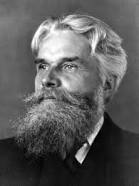 Found in a album of cuttings from various East Anglian newspapers in the early twentieth century is a review that appeared in The Leader, December 24th, 1906 of A Study of British Genius by the pioneer sexologist Havelock Ellis. The reviewer gleefully notes that East Anglia seems to have produced a high proportion of geniuses. To make his point he lists in order of greatness those English counties that have contributed most to the making of English men of genius. These were:


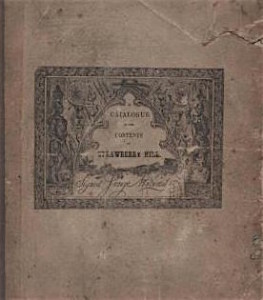 Found in a copy of John O’London’s Weekly for 18th April 1952 is a review of Collector’s Progress by Wilmarth Lewis ( 1895 – 1979) in which the author reveals that the combination of wealth and a collector’s obsession brought about the greatest collection of manuscripts relating to Horace Walpole in the world.


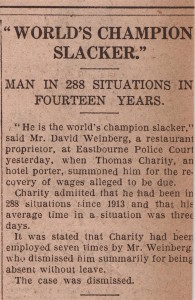 A clipping taken from the August 16th issue of the Daily Express for 1927, reported that David Weinberg, a restaurant owner, had been summoned to Eastbourne Police Court for the recovery of wages allegedly due to Thomas Charity, a hotel porter. Weinberg stated that he had employed Charity seven times before dismissing him summarily for being absent without leave. Weinberg called him ‘the world’s champion slacker’. When asked for his employment record Charity admitted that he had been in ‘288 situations since 1913 and that his average time in a situation was three days ‘. The case was dismissed.
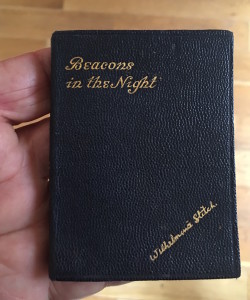 Found a fine copy of Beacons in the Night (Methuen, 1934) by Wilhelmina Stitch. A small book of simple, unsophisticated poetry. Wilhelmina Stitch achieved some popularity and sales in the first half of the 20th century. As a sentimental poet she was very much the Donovan to Patience Strong’s Dylan. She has no Wikipedia page unlike Ms Strong who has a lengthy and well tended entry. Some facts of her life are known and she turns up on a site