
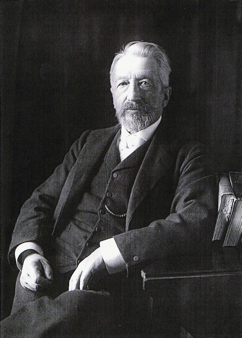
 On June 12th 1913, sixty years before the UK joined the EEC, and 103 years before it voted to leave it, The New Age, a well-known Socialist weekly, published a prescient article by one of its frequent contributors, Joseph Finn (1865 – 1945), a former tailor who, according to one source, became ‘one of the first Jewish labour leaders in Britain.’ In it Finn put forward a radical economic alternative to the political vision of a ‘United States of Europe’ that Sir Max Waechter had outlined in a recent issue of The Fortnightly Review.
On the eve of a possible war between Britain and Germany Waechter had argued that there were no political, racial or dynastic reasons why the two nations should not join as the prime movers of a larger European Union. Finn, however suggested that the basis for any such federation should not be political, but economic. Germany and Britain were in direct economic competition with one another and therefore were unlikely to cooperate within a proposed political union, but might even go to war in furtherance of their own economic ambitions. Finn continued:
‘If nations were not afraid of competition they would not surround themselves with tariff walls. England is no exception, though she is a Free Trade country. English free trade originated in a period when England was the workshop of the world. On the one hand, she had no rivals; on the other hand, she stood in need of cheap food for her factory hands. Such economic conditions were the natural mother of the political institution of Free Trade. Now, having lost her monopoly in manufacture, and she being compelled to face formidable rivals, we see growing up a political tendency towards Protection. Thus we see clearly the truth of the sociological law, that the political structure of society is the outcome of the economic structure.’ Continue reading
 this amusing game that can be played using an iPhone or laptop. One player picks 3 people of seemingly equal fame and then all the players have to say (in order) who has the highest google rating i.e. number of hits. It is best when searching to put the full name in inverted commas – e.g. “Kevin Bacon.” Players score 1 point for naming the person with the most hits and an extra 2 points for naming all 3 in correct order. First to ten , at that point you can play again but one session is usually enough. Try Marcel Proust, Jorge Luis Borges and Vladimir Nabokov. The leader is Borges at 7.88 million, Proust at 4.68 and Nabokov at 3.3 million.
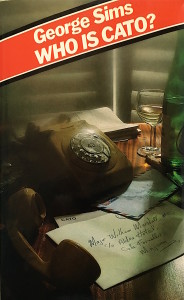 Found in a thriller by
  Found – Society Racket: A Critical Survey of Modern Social Life (Long, London 1933) by Patrick Balfour (Baron Kinross) – a journalist. At the time of this book he was ‘Mr Gossip’ at the Daily Express and the character Adam in Waugh’s Vile Bodies was probably partly based on him (Adam becomes ‘Mr Chatterbox’ at the ‘Daily Excess’.)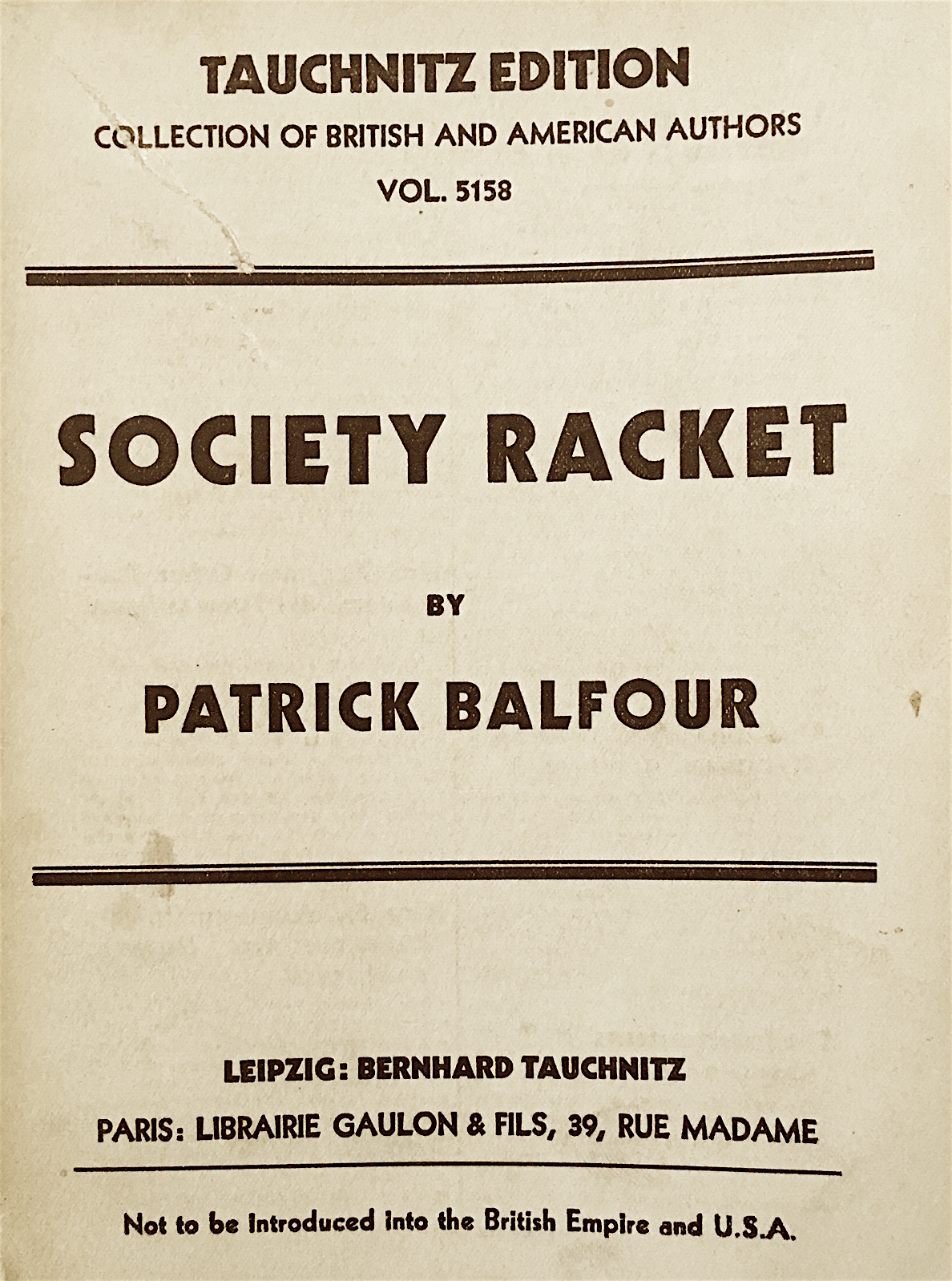


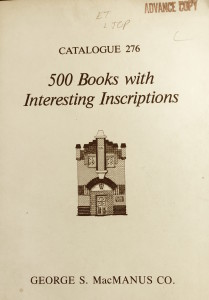 Found – a 1982 book collector’s catalogue from George S Macmanus of Philadelphia 500 Books with Interesting Inscriptions. Mostly modern American and British literature, it has many direct signed presentation from the authors and many

 Found, part of a menu for the Chelsea Arts Club Ball, which was held at the Albert Hall, March 4th 1914:
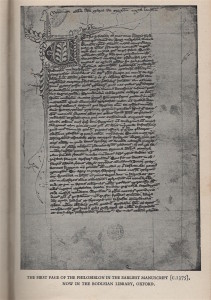 Bishop Bury of Durham spent so much money on books that he lived in dire poverty and debt and when he died all that could be found to cover his corpse was some underwear belonging to his servant.



 The removal of the British Library from Bloomsbury to St Pancras seems to have ushered in a new, more relaxed, attitude towards the rules governing who can acquire a reader’s card, according to a Guardian article of 2005. In it the Reading Room is described as being crowded with undergraduates, anxious, no doubt, to obtain an advantage over their peers. Under the rules prevailing in 1938, and which are contained in a Guide to the Use of the Reading Room, a copy of which we found recently in a box of ephemera, restrictions which perhaps Karl Marx might have recognised, were doubtless drawn up to limit the number of readers using the famous Rotunda. There is a distinctly schoolmasterly tone to the following advice: