A Guide to Zeta Energy

img_2531Found – A Plain Man’s Guide to Zeta by John Maddox (Manchester Guardian, 1958). It was in a collection of pamphlets from the library of the late political cartoonist David Low which surfaced in Cambridge. The cover and a few illustrations in its 14 pages are by him. Zeta was a British thermo-nuclear machine, proclaimed here as a ‘sun on earth.’  It was a project from Metropolitan Vickers at the Harwell Atomic Energy Research Establishment that ultimately failed because they could not achieve fusion. There is much on it at Wikipedia, ZETA stood for ‘Zero Energy Thermo-Nuclear Assembly.’ Deuterium from the ocean was a key element according to the pamphlet:

The oceans contain some 330 million cubic miles of water. If we were to extract all the deuterium from this mass of water, and then to burn it as a thermo-nuclear fuel, the energy we should win would be equivalent to 500000000000000000000000 tons of coal. This would last the wold, at its present rate of consumption of all fuels, for about a hundred million million years. This interval of time, it will be noticed, is about thirty thousand times as great as the estimated age of the solar system. Clearly, there is no conceivable way in which we could use up deuterium in a thermo-nuclear furnace in such a way that we could make a perceptible difference to the world’s stock of it.

These facts point to the main significance of deuterium as a fuel. It is so abundant that we cannot conceivably have to worry about supplies of it. 

A.M.Low: the professor who wasn’t a professor

a-m-lowDiscovered in a July 1930 issue of Armchair Science, an article by the magazine’s ‘technical advisor’ A. M. Low entitled ‘Little Things and Big Minds’. In it Professor Low argues that we shouldn’t be impressed by large things—whether they are exaggerated claims for some patent medicine, or some mechanical apparatus, such as a typewriter. Machines are made from small parts, just as matter is composed of atoms and molecules; and big phenomena, such as broadcasting is powered by electricity, which is a flow of electrons. Small is beautiful, in other words.

This homily is a preface to the contents of the rest of the magazine, which is mainly devoted to broadcasting, the electron and diatoms. In addition, however, there are fascinating features on the newly invented saccharine, the proto-helicopter known as the autogyro, and tinned food. There is also a double-page spread entitled ‘On My Travels’ by Low, who looks about thirty (he was 42). Continue reading →

Rubaiyat of a Rhode Island Red

rhodeislandred-web-2Found — a  handwritten poem in a reprint of Omar Khayyam’s Rubaiyat, a parody on the theme of chickens. It probably dates from the 1920s. There are  1000s of such tribute/ parodies, many published. This appears completely unknown …

Rubaiyat of a Rhode Island Red

Awake, for morning through the roosting shed

Has stained the dusty windows gold and red;

The weary toiler of a thousand fields

Will soon be climbing from his downy bed!

Awake! The silver buckets of the day

Are clanking and the corn is on the way – 

The early worm creeps but a laggard inch,

And lo! The bird espies her prey.

‘Neath that inverted box they call a coop 

There sits the broody with her little troop:

For them what fortune calls – the plucking shed,

The Palace – or the haying test – or Roup?

(The Palace = a famous poultry show – Roup = a disease) Continue reading →

A note on Brunsdon Yapp

img_2508Found in The Biology of Space Travel (London, 1961)— a typed note on the biologist Brunsdon Yapp. It was dated 2005 and initially refers to Yapp’s bookplate. There is a short entry for him at Wikipedia but this fills out the existing info on this excellent human being.

Brunsdon Yapp’s father came from Hereford to Bristol for the sake of his family’s education, and his two daughters went to Bristol University. William Brunsdon Yapp went to Bristol Grammar School before going to Downing. Christened William and known at home as Billy, he preferred as an undergraduate to be called Brunsdon, inviting friends to call him Brunny. Brunsdon was his mother’s maiden name, but I think his choice was dictated more by a desire to be different than by any desire to give particular credit to his mother. He read Natural Sciences, taking biological options. He went on to teach at Haileybury and Manchester Grammar before being appointed secretary to Oxford Local Examination Boards. Then he became a lecturer, subsequently a senior lecturer at Birmingham University. Service on the National Parks Commission won him the OBE. He was a member of both the Athenaeum and the RAC, the London club that is, not just the roadside motoring organisation.

‘An Introduction of Animal Physiology’ was, I fancy, the book that won him his appointment at Birmingham, and he prepared a series of revisions of Borradaile’s Manual of Elementary Zoology, a more advanced work than its title suggests. Published after his retirement, his ‘Birds in Mediaeval Manuscripts’ was a significant contribution to antiquarian studies. In 1962 Yapp’s ‘Birds and Woodlands’ was published by Oxford University Press. He regarded it his most important scientific work. The frontispiece is C. E. Tunnicliffe’s picture of ‘Cock Pied Flycatchers in Sessile Oak’, which I understand was specially commissioned. It was also used, on a green background, on the dust jacket, and Yapp later adopted it as his bookplate. I have not seen it in publications about Tunnicliffe, though I have not looked very hard. Continue reading →

From the classified ads in T.P.’s Weekly, July 11th 1914

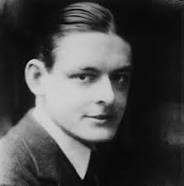
t-s-eliotBachelor, in digs.,wishers to meet gentlemanly fellow of refined tastes, bank clerk for instance, who wants chum. Walks, cycle rides, physical exercises, theatres etc. Friendship desired. Confidences exchanged. (X2, 372)
Although T.S. Eliot was studying philosophy at Oxford in July 1914, he was probably lonely in his ‘digs ‘ and may have met a bank clerk who persuaded him that such fellows were sensitive and highly cultured. This could explain why, in 1917, he himself decided to join Lloyds Bank in London. However, it’s hard to visualize Prufrock taking up cycling and other physical exercise.

The Summer School of Patriotism—–An endeavour to organise the forces working for the renascence of patriotism in England, Scotland, Ireland and Wales, to be held at Bexhill-on-Sea, August 1st to September 12th. Stamp for full particulars, Organising Secretary, 6, Melbourne Road, Merton Park, London, S.W. (X2, 315).

A bit worrying, this. A call for patriotism in mid July 1914! Two weeks later Britain was at war with Germany. What were these armchair warriors planning to do in sunny Bexhill for six weeks? And why did the Secretary not volunteer his or her name? Still, never mind, the event was probably cancelled due to you know what. Continue reading →

The madness of collecting–Major Pat A’ Beckett

jesus-christ-matchbox-label-001Found in a copy of the October 1936 issue of The Collector’s
Miscellany
is this account of fanatical collector Major A Beckett, who many times risked his life for a matchbox label:

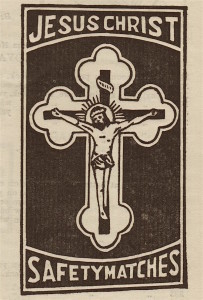
‘ He states that as a boy of 8 whilst riding in a tramcar he dropped his ticket. Bending down to search for it he found an unusual match-box. This interested him, and there and then he commenced to collect match-box labels, having now accumulated a collection of over 25,000 different varieties. He remarked that on several occasions he has been nearly run over whilst picking them up in the gutter. During the War, whilst in the Piccadilly Tube, he saw a matchbox label lying on the line. He jumped down to secure it but a policeman came and arrested him on a charge of attempted suicide. Whilst at the Police Station he was examined by a Doctor, and it was only when they rang up his Army Headquarters that he was able to establish his identity. Part of his collection was presented him by the late King of Siam, who more than once was run over while searching for labels. The Major recently made the acquaintance of Mr Burnell, the proprietor of a Weymouth hotel, who owns a collection of 27,000 different labels. Mr Burnell offers any figure for the rare Indian label of the Crucifixion. Only a few copies of this label, which we illustrate on this page, were ever printed, as the design was almost immediately suppressed’. ( p 66). Continue reading →

The neglect of prose

Found, in the issue of Today for March 1919, is this well argued plea by the acclaimed journalist Bernard Lintot for a greater appreciation of prose:

today-title-page-1919-001‘One of the most persistent of literary illusions is that the writing of prose is easier than the writing of verse. The contrary is the truth in both instances. Most of those who try can write passably good verse, and most of those who try fail to write passably good prose. Further there are far more triers at verse than at prose. Why? In the first place those who think they can write prose rarely pause to consider whether they are writing prose, because prose is popularly assumed to be all that writing which is not verse. In the second place verse writing is the more primitive, and therefore the most instinctive, and therefore, again, the easier form of literary expression. This, you may say, is mere theory. So it is. But, as theories go, it is none the worse for that, and as for facts, it is only necessary to point to the epidemic of verse-writing in full flux at this very moment. Never were there so many volumes of verse; never so many verse-writers, and those who succeed in bringing their composition to printing-point are in the minority of those who use or abuse metre and rhyme for the purpose of expression or amusement or vanity. The remarkable output of verse and poetry at the present moment is perhaps a little abnormal, but it certainly indicates a hitherto unsatisfied taste for this form of literary composition.

                                                         *     *     * 

The volumes are read, it is true, very largely by those who have written, are writing, or would like to write, verse, and the fact that many more of them (volumes, not readers ) are issued than volumes of prose, say genuine prose essays, novels or plays, proves that verse is more popular than prose. But, you object—and there is as much meaning in your ‘but’ as there was virtue in Touchstone’s ‘if’—what about the newspapers: are not they very prose of very prose, and popular? What, again about Sir Hall Caine and Mr Charles Garvice and Miss Ethel Dell and other novelists with high velocity circulations; do not these walk in the garden of prose? They do not, nor are newspapers found there. Those about to become popular abstain from prose as they would the plague. They angle with clichés and dazzle with jargon. They grow rich and famous, but they do not write prose, because, desiring success, and being good business folk, they know that the lovers of prose are so few as to be beneath commercial notice. Some of them couldn’t write prose if they tried, others resist a temptation that does not pay. Continue reading →

In Honour of Mr. John Betjeman – Patrick Leigh Fermor

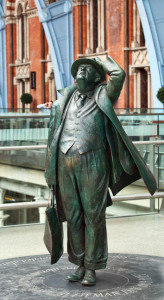
john-betjeman-statueFound- in a copy of Nip in the Air (John Murray 1974)  a book of poems by John Betjeman this affectionate parody by the esteemed travel writer Patrick (‘Paddy’) Leigh Fermor. It is probably from a magazine (pp 379-380), possibly The London Magazine but is not archived anywhere online. It is probably from the 1970s. It deserves a place in a completist Betjeman collection and in any future collection of Fermor’s complete oeuvre.

In Honour of Mr. John Betjeman – Patrick Leigh Fermor

Eagle-borne spread of the Authorised Version,

Beadles and bell ropes, pulpits and pews,

Sandwiches spread for a new excursion

And patum peperium under the yews!


Erastian peal of Established Church-bells!

(Cuckoo-chimes in Cistercian towers)

Bugloss and briny border our search. Bells

Toll the quarters and toll the hours.


Unscrew the thermos. Some village Hampden

Swells the sward. Fill the plastic cup

For toast to Brandon, to Scott and to Camden,

To dripstone and dogtooth, with bottoms up! Continue reading →

Oscar Wilde—a case of ‘human wreckage’

oscar_wilde_portraitFound in the issue of T.P.’s Weekly for July 11th 1914 is this distressing description of Oscar Wilde a year and a few months before his death. It was sent in by an American reader who noticed it in an article by the war correspondent George W Smalley (1833 – 1916) for The New York Tribune:

‘Oscar Wilde died in 1900, a bankrupt in respect of property and reputation alike. With regard to our personal relations I will quote Wilde’s own testimony:

     “ I dislike all journalists, and Smalley most of all “

I was staying with Sir Sydney and Lady Waterlow at their villa in Cannes during the winter of 1898 –’99. Every Sunday morning I used to drive with Sir Sydney to the further end of the Esterel promontory, the most picturesque portion of that picturesque Mediterranean shore, to the east and south-east of the town. As the horses walked up the long hill, I saw at some distance a figure of a man coming slowly down. He was tall, heavily built, ill-dressed, almost ragged. You could hardly say he walked. He shambled and slouched and stumbled along. As he came near, his face was bloated, the flesh hung below the jaw in dewlaps, the eyes were bleared; there was hardly a look of conscious humanity left in them; his whole attitude was one of illness and extreme misery and despair. ( It was Oscar Wilde.)

     He passed rather close to the victoria, and the spectacle of so much human wreckage was appalling’. [RR]


Press release for an early Coco Chanel Exhibition

coco-chanel-picFound in a box of ephemera — this press release from the Paris HQ of legendary fashion designer Coco Chanel announcing a forthcoming exhibition on a May 5th (possibly 1933) of over a hundred dresses made entirely from British materials.

The aim of this non-selling exhibition, which was to be held at 39, Grosvenor Square and would last a fortnight, was to promote co-operation between textile manufacturers and exclusive model houses in Britain and designers in Paris. The show was the result of a previous visit to London when Mlle Chanel had met with forty textile manufacturers. From the samples they had brought with them she had produced a collection that aimed to prove that’ it is possible to be appropriately dressed in British materials for a cloudburst at Ascot or a hurricane at Lords, as for a dead calm at Cowes, or a tropical spell on the Scotch moors.’

‘These dresses and their many accessories ’, the press release continues, ‘will be displayed by English girls, (including Mrs Ronald Balfour and Lady Pamela Smith), and as each dress appears, a card will be shown stating the name of the manufacturer of the materials employed. Continue reading →

The Mystery Man of Cowes

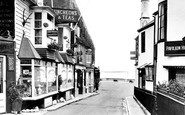
cowes-old-houses-1927_Found in that repository of odd facts, The Collector’s Miscellany, is the following short piece by reporter H. A. Owen in the issue for May 1935.
THE MYSTERY MAN OF COWES

In a certain narrow street of Cowes, Isle of Wight, lives Mr W. Cole, locally known as the Mystery Man on account of the many strange things he has in his house. He is a chemist and has been collecting all sorts of curios for over sixty years. The small room behind the shop contains hundreds of valuable curios and the other rooms are also crammed full with them. All the windows are closely shuttered and fastened and the atmosphere is stuffy, as they have not been opened for years. As a schoolboy he started collecting stamps, butterflies and birds’ eggs and now he has a valuable collection of stamps, hundreds of books and the largest collection of fossils in the Isle of Wight.

     One room upstairs contains a collection of Skeletons, including one of the Bronze Age. Among his stuffed monstrosities he has a two-headed calf, a calf with six legs, a one-eyed puppy and a three-eyed kitten! There is also a double-headed pig and a four-legged robin. The latter he found himself at Calbourn many years ago. He also has many valuable pictures and prints and a complete record of the island since 1290. Continue reading →

The Motor Car ( J.H.Goring)

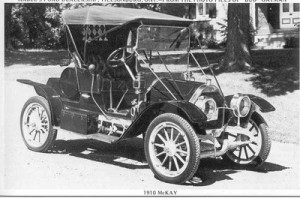
motor-car-1910I see him at night with his head low down

And his terrible eyes ablaze,

He takes at astride the long street of the town,

Like a dragon of older days


The throb, throb, throb of his heart I hear,

And the throb of my own replies

As he booms and bounds from the darkness near,

And into the darkness flies.


And I long to leap out on his back and away,

Away, in the night, alone,

Any where out of myself and to-day,

To drown in the deep Unknown.

This little poem by J.H.Goring—a minor versifier of the early twentieth century—was discovered in The Odd Volume (1910). It is not the best or earliest car poem,but it is powerful enough and perhaps deserves a place in an anthology of motoring literature for its evocation of the romantic allure of early motor vehicles.

The opening stanza also recalls that famous engraving of 1845 by George Cruikshank entitled ‘The Railway Dragon’ which shows a locomotive as a fire breathing dragon consuming everything in its path. The difference, of course, is that in 1845 passenger locomotives had only been around for about 15 years and were genuinely feared by many of the older generation, especially farmers, who were terrified that their crops would be destroyed by sparks from a locomotive’s chimney. However, in 1910 motor vehicles were more commonplace. In fact, the first had taken to the road around 1885, and by 1910 around 100,000 were in existence in the UK. That is not to say that in south Essex, where Goring lived, the sight of a motor car did not have to power to thrill and excite the imagination. [R.M.Healey]

Twelve Miles from a Lemon

img_1366-624x380Found in a bound volume of The Idler Magazine (Chatto & Windus, 1892. Volume 1, February to July. pp 231 – 232) this piece by regular contributor Robert Barr. The Idler was edited by Barr with  Jerome K Jerome. It ran from 1892-1911. This piece was found in the always interesting section ‘The Idler’s Club’, fairly heavy on the whimsy but never unamusing– see an earlier jot  where, among other things, Barry Pain proposed that ‘..amateur dramatics would be much improved if performed in total darkness and thus they would also be able to avoid paying a licence fee…’ This piece by Robert Barr has a curiously modern feel about it (if you substitute the internet for the telegram) and the idea of being 12 miles from a lemon echoes the current city dweller’s fear of being more than ‘four miles from a latte..’

Some years ago, somebody* wrote a book entitled ‘Twelve Miles from a Lemon’. I never read the the volume, and so do not know whether the writer had to tramp  twelve miles to get the seductive lemon toddy, which cheers and afterwards inebriates, or the harmless lemon squash, which neither cheers nor inebriates. I think there are times when most people would like to get twelve miles away from everything – including themselves. I tried to put a number of miles between me and a telegraph instrument, and flattered myself for a time that I had succeeded. I dived into the depths of the New Forest. The New Forest is popular in summer, deserted in winter, and beautiful at any season. I found a secluded spot in the woods, and thought I was out of reach of a telegram. I wish now I had not got so far away from the instrument. The boy came on horseback with the message. It was brief, coming well within the sixpenny range, and it stated tersely that the printer was waiting for these paragraphs. The boy said calmly that there would be fifteen shillings and sixpence to pay for the delivery of that yellow slip of paper. Continue reading →

Barry Ono—collector extraordinaire

barry-ono-pic-001Barry Ono (1876 – 1941 ) was both a comic ( in the Music Halls) and a collector of comics. This photo from the Collector’s Miscellany of August 1936 shows him lecturing at the ‘Barry Ono Penny Dreadful Exhibit ‘at Selfridge’s Hobbies Exhibition.

In a short article for the same magazine a trawl by Ono through the ‘ For Sale ‘ and ‘Exchange’ adverts in the Boy’s Standard of the 1880s recalls his own early triumphs as an avid collector of Penny Dreadfuls.

“There was a little shop in the Waterloo Road, London, that had stacks and stacks of the Chas. Fox publications when that firm passed out, 6d a vol. mint in wraps. “Spring Heeled Jack”, “Sweeny Todd” , “Turnpike Dick” and all the lot, plus quarterly divisions in wrappers of the Boy’s Standard, Boy’s Leisure, and Boy’s Champion at 3d each. At another second hand shop, also in the Waterloo Road, a shilling used to be my limit for such items as “The Boy Detective, or The Crimes of London”, “Gentleman Clifford”, etc, etc. Seems incredible now, and all a fantastic dream. Yes, my £20 would have gone quite a long way then, wouldn’t it? And many now completely unknown and unheard of rarities would have been saved. Well, since I acquired belated wisdom, many a tattered only derelict have I rescued from that oblivion it was hastening to, midst unfeeling and heedless vandals, carefully have I doctored it, gorgeous has been the half-calf overcoat in which I have had it arrayed, and now a more careful posterity I am thinking will least honour it on my demise as ‘Curiosa’. I am thinking I have been the ‘Scarlet Pimpernel’ of the ‘bloods’, rescuing not from the guillotine, but from the flames and the dust bin. Continue reading →

An early poem on the thrill of flying

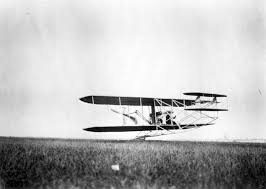
airplane-wright-brothersRescued from a copy of The Odd Volume, a one-off literary miscellany published in 1910 to raise money for the National Book Trade Provident Society, is the following poem by Norman Davey entitled “Aerial Survey (no 3498 K).”

Back from Sahara’s sun-scorched sand,

With its dome of shimmering blue:

Back from beyond Van Dieman’s Land

Where the pack-ice breaks the view :

Back from the glow of the sun-kissed snow

On Fuji Yama’s crest;

We have fled from the grey of the dawning day

—Fleeter than falcon for its prey—

Home to the winsome West,

       My Boys!

Back to the winsome West! Continue reading →

Shipboard Games

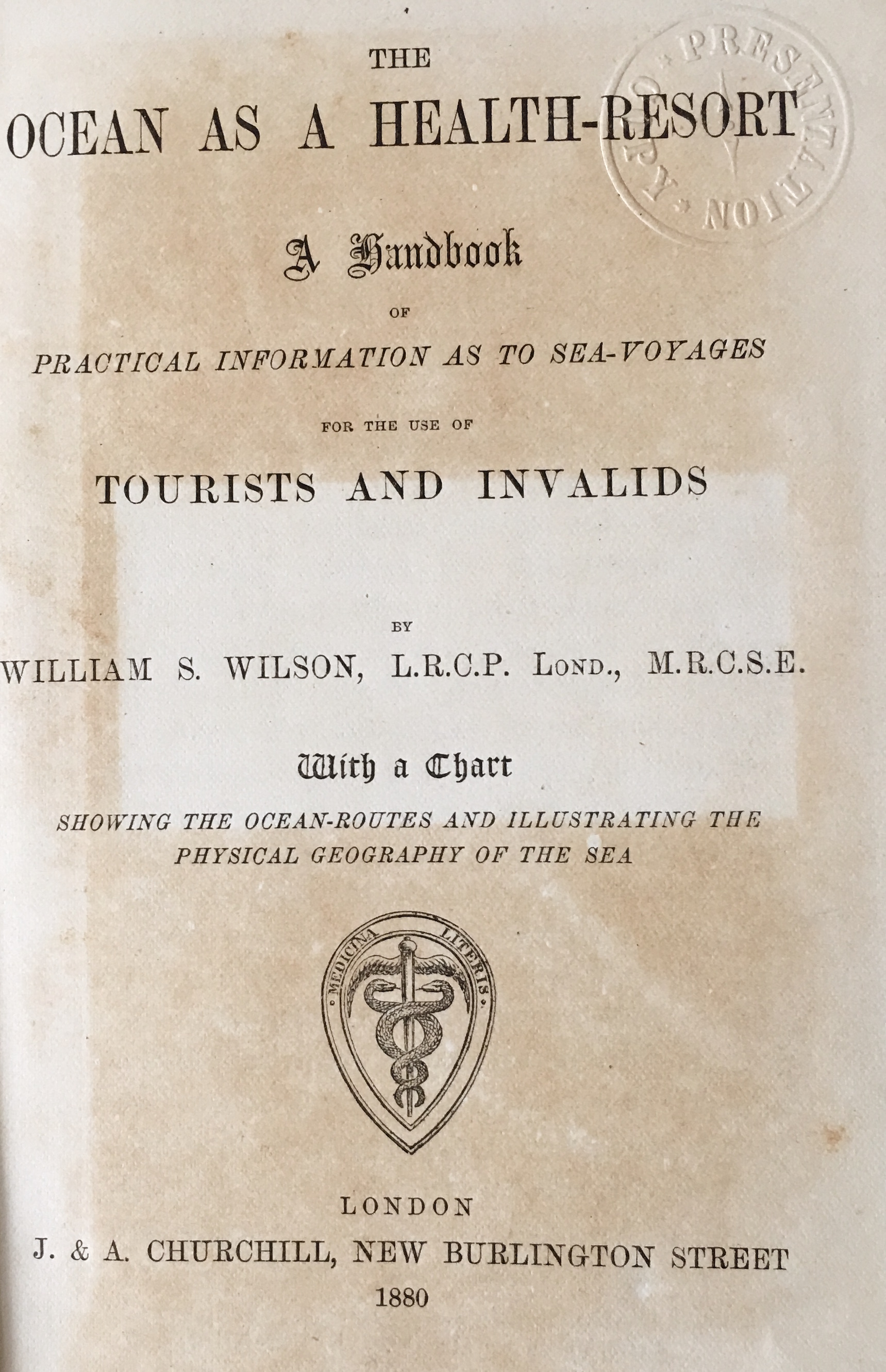
img_2161Found in The Ocean as a Health-Resort (A Handbook for Tourist and Invalids) by William S Wilson (London 1880) this guide to shipboard games. The author start by saying that study on board a ship is nigh impossible and recommends light reading. Is Cricket still played on cruise liners? Certainly there will no longer be shooting or climbing the rigging…

Those who expect to be able to study in the sense of reading hard will almost always be disappointed. There is something in a sea life that seems to be antagonistic to work of this kind, and it is generally seen that those who started with high resolves in this respect very soon subside into light literature or idleness. There are of course exceptions, but they are rare. The prevailing inability to study is, however, scarcely to be regretted in the case of invalids, who cannot do better than provide themselves with a supply of light literature, and direct all their energies towards deriving the greatest possible benefit from their voyage.

 
There are several open-air games which can be played on board ship, and which furnish a capital means of obtaining that exercise, the want of which is one of the drawbacks of being shut up within such narrow limits. Continue reading →

Gramophone inventor Emile Berliner on ‘Immortality’

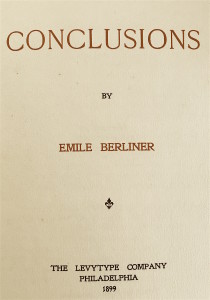
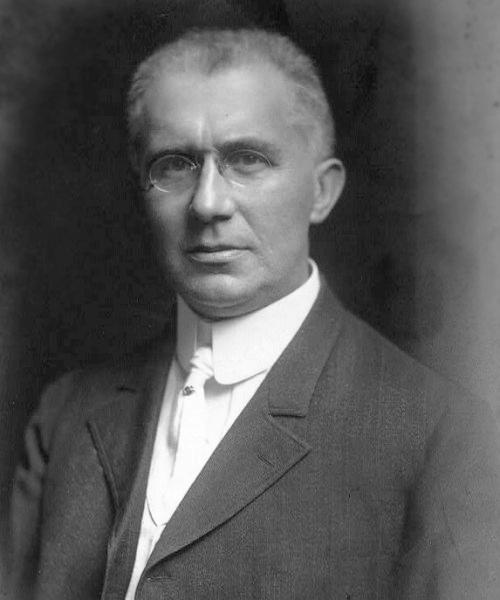
Found- a copy of Conclusions by Emile Berliner published in Philadelphia, img_2160by the Levytype Co., in 1899. Berliner was the inventor of the gramophone and the gramophone record and exceedingly wealthy. This book presents his philosophy and may have been a vanity project, this copy is marked complimentary and limited to 500. He appears to have been something of an agnostic and his views, especially his faith in science,
are somewhat ahead of his time:

On the Doctrine of Immortality

The confident belief of mankind in a personal immortality is a positive drawback to human progress.

The possibilities of earthly happiness are so vast, the dread of early death so natural and pronounced, that if mankind would but rationally divorce itself from its over-confidence in a life hereafter, it would work out its earthly Salvation in a very short time.

The time will undoubtedly come when most people will live to a hale old age, when they will be free from the hypocrisy, the intolerance, and the morbidness of our so-called civilisation, when food will be pure, when sound sanitary science by universally recognised, when life will be simple and free from sham, when love, in all its phases, will be less restrained, and when all parents will know that their children are and will be the incarnation of their combined thoughts and impressions.

Then, having tasted life from an overflowing cup, and having drunk the last drop at a ripe old age, man will gradually have become wearied and tired, and will be glad to lie down, expecting nothing, and leaving the future in serene resignation to take care of itself.

Prayer

The futility of prayer was never better emphasised than at the time of Garfield’s sickness and death, when some hundred millions of people earnestly and sincerely prayed for his recovery. What an absence of mercy!

But had Garfield been shot twenty years later Science would probably have saved him, prayers or no prayers.emile_berliner

King Kong – a poetic film

kingkong33newposterFound– a one page ‘flyer’ put out by a surrealist group in Leeds for a season of ‘Surrealists go to the Cinema’ held at Bradford cinemas in November 1994. It reprints a 1934 review of the 1933 King Kong directed by Merian C. Cooper and Ernest B. Schoedsack. The review was by Jean Ferry a French writer and later ‘pataphysician’ who saw it as a poetic film ‘heavy with oneiric power’ but, curiously, he does not attribute this to the makers of the film… It reads:

I had so definitely given up the idea of seeing a poetic film that, beside any attempt at criticism. I cannot help reporting the appearance of that rare phenomenon, greeted as you would expect by howls of derision and contempt. I hasten to add that what gives this film value in my eyes is not at all the work of the producers and directors (they aimed only at a grandiose fairground attraction), but flows naturally from the involuntary liberation of elements in themselves heavy with oneiric power, with strangeness and with the horrible. … It appears, finally, that the tallest King Kong, for there were many of them, as you may have guessed, was but a metre high. But you see we knew it already. And this is why I think the inept laughter of the public is only a defence mechanism to force itself to think that this is only a mechanical toy and, having succeeded in this, to escape the feeling if unheimlich, of disquieting strangeness, that we cherish and cultivate, for our part, so carefully, and which nothing brings to life as readily, and rightly so, as being in the company of automata. I think that the film would be no less moving, no less frightening, if it was not about a supposedly living beast but an automaton of the same height making the same movements. In any case, whether the monster is real or false, the terror he provokes takes on no less of a frenzied and convulsive character through its very impossibility. Continue reading →

How to Speak American

Found in the 1919 volume of the British literary miscellany Today is a beetle3bfascinating disquisition on the American use of English by the journalist J.M.C. Hampson, himself an American Anglophile. He begins his piece with a fragment of American dialogue followed by its translation:

“ Well, Dana, how do you stack- up this morning? “

“ Oh, sickabed.”

“Is that so? What’s on your system?”

“Oh, had a row with the Vrow; and look at that.” He pointed to the calendar on the wall in front of him, on which appeared in bold figures “Friday, 23.”

“Good Lord! 23—-skiddoo! Ugh! No wonder. Well, so long, I must be on my way. See you later.”

This being translated into English means that I called in at the office of my friend Dana Howard, said “Good morning “ , asked him how he felt, was informed that everything was all wrong, and that the proper place for him was in bed, that he had started the morning by an argument with his wife, and that he had just realised that it was Friday the 23rd. Be it understood that to an American 23 is the zero mark, and when it crops up all one can say is “skidoo”, meaning “get out of here”, or “away with it “; and if Friday falls on the 23rd it is even worse than Friday the 13th.All good Americans of the cities, at any rate, walk very warily before the Lord that day and pray that nothing untoward will happen . “So long “ as a substitute for au revoir is, of course, frequently used in England. Continue reading →

An apology for the large breweries

allsopp-beer-picHere’s another extract from T.Earle Welby’s The Dinner Knell of 1932. This time the epicure voices an opinion which in the seventies era of the Almighty Keg would not have been accurate but which, thanks to the influence of CAMRA and other campaigning groups, may possibly ring true today.

‘Beer abides and the best of it now is as good as English beer ever was. This is not a fashionable thing to say. For years the air has been full of the moanings of those who imagine a golden age for beer, and suppose it to have been destroyed by the wickedness of the great breweries. The truth of the matter is that, until the nineteenth century was pretty well advanced, most small brewers and vendors, secure in local monopoly, adopted the most vicious methods with beer.

As late as 1824, the author of The Private Brewery wrote: ‘It has seldom been my fortune in a great number of years to taste unadulterated purchased ale, whether brewed in the metropolis or in the brewing districts of the country’. For years before that date and for some years later an extremely harmful and highly intoxicating drug, the Indian berry ( coccollus Indicus) was freely used in beer ; and willow bark, walnut leaf, quassia, gentian, aloes, entered into the production of what was sold in hundreds of establishments and more particularly in the abominable beer-houses produced by the Duke of Wellington’s Act. Continue reading →