Author Archives: Jot 101

The Cinema Serial —-early twentieth century verse in praise of a silent film


Jot cinema very early scottish cinemaFound interleaved in an exercise book inscribed ‘ Recitations ‘, which contains a variety of both original material and copies in different hands of extracts from published recitations that were the staple of Music Hall acts from the late Victorian period to around the time of the First World War, is this piece of doggerel entitled ‘The Cinema Serial’.

The piece, which is probably original, describes the experience of viewing the ninety–third episode of an imaginary  thriller entitled ‘ Philip’s Phantom Quest’ in a ‘large suburban’ picture palace, probably in Scotland. The whole item is of interest to historians of the Cinema, not only because the film’s subject matter  reflects the contemporary panic surrounding the ‘ Yellow Peril ‘, but also because the preamble to the filmic action tells us something about the experience of visiting a cinema in the  early twentieth century:

‘ In a large suburban palace with the

Latest films portrayed,

Where in darkness hands are clasped

And cupid’s hits are often made

Fair maids their heads on manly shoulders

Ceased awhile to lean

For the title of the next film

Has appeared upon the screen

There’s a buzz of approbation

From the young folks one & all

In excitement one wee laddie

Swallows half a butter ball.

Love’s whisperings subside

As folks prepare to gaze with zest

For ‘tis Episode the ninety-third

Of Philip’s Phantom Quest…’

The verse continues with an account of Philip’s enemy, a Chinaman humorously named Ah Choo, whose ‘average of weekly murders stands at four point three’. This villain is evidently modelled on the protagonist of Sax Rohmer’s famous novel The Mystery of Fu Manchu, which had been published in 1913. Continue reading

Thorpe’s Water Frolic of 1824

Thorpe_Water_Frolic,_Afternoon‘Water Frolic’ is a new term for us at Jot HQ. But according to the art historian Trevor Fawcett, who was perhaps a Norfolk man ( he attended the University of East Anglia), these events were common festive occasions on the Norfolk rivers and broads, at least in the early years of the nineteenth century.

In his short article published in Norfolk Archaeology ( XXXVI, Part IV, 1977), a reprint from which we found in a pile of ephemera at Jot HQ, Fawcett writes about the Thorpe Water Frolic of 1824, which was captured in a superb oil painting by the provincial artist Joseph Stannard, himself a keen oarsman and the owner of a skiff—the Cytherea — the following year.

Thorpe is today a riverside place on the Yare immediately adjoining Norwich, whose station is named after it. In 1824, however, it was a picturesque hamlet ( dubbed the ‘Richmond of Norfolk’) on an important trading route to foreign markets; and on this particular occasion all the various commercial vessels on the Yare would have been immobilised to enable the ‘ frolic’ to take place.

Although annual frolics had been common events in Norfolk over the years, the Thorpe frolic had only been established in 1821 by local cloth-merchant and manufacturer John Harvey, who had bought and developed the Thorpe Lodge estate. Originally, it was attended only by the wealthy and influential in Norwich and its vicinity. In 1822 nine cutters had raced for a silver cup and five rowing boats for another trophy. But in 1823 Harvey decided to open the event to everyone—from the humblest loom-worker, farm labourer and shop assistant, to the wealthiest businessmen and landowners. Continue reading

The Whitest Man I Know

Jot 101 whitest man larkin 001Larkin’s ‘Sympathy in White Major ‘ ( High Windows 1974) is one of his best known poems. It begins with a lip-smacking description of a gin and tonic being poured and ends with the poet drinking the health of ‘Here’s to the whitest man I know, though white is not my favourite colour.’

The poem is essentially about the doubtful virtues of unselfishness. Larkin lists all the virtues of his ‘white ‘altruistic protagonist: he ‘devoted his life to others ‘, ‘and was ‘a real good sort ‘, implying that these are qualities that are generally admired. However, as Larkin suggests in another poem, ‘Self’s the man ‘, someone who marries and has children is making a selfish choice rather devoting ‘himself to others’. Larkin looks at his own life as a non-white bachelor who has rejected this ‘ family man ‘ lifestyle, and contends that by being a poet and a novelist he has contributed more to society in general than has the ‘ white ‘ family man with responsibilities to others.

But placing its possible interpretation aside, where did Larkin get the phrase ‘the whitest man I knew‘? We know that he was an enthusiast for ‘ trad’ jazz. He owned a large collection of mainly traditional jazz records and some of his writings on jazz were collected in All What Jazz. But was he also knowledgeable in the field of Music Hall recitations and the music that often accompanied them? Was he familiar with the poem ‘The Whitest Man I Know’, which was written in 1913 in the era of Dixieland by the English actor and poet  J.Milton Hayes, who also performed it to the music of R. Fenton Gower.  Continue reading

Marie Corelli in 1909


Jot 101 Bookman Corelli 001Winston Churchill, Queen Victoria, Tennyson and William Gladstone admired her; Mark Twain and most of the Press did not. She is said to have outsold Dickens. Some of her novels went into twenty-five or more editions. In an era when writers like H. G. Wells were promoting the  New Woman, she reviled this modern phenomenon, and yet some of her heroines could be said to have embodied the virtues—a sense of adventure, a resoluteness and a curiosity– of this type . She promoted Christianity and yet wrote about occultism and transcendence. In her private life she dressed as a rather twee lady, but was a hard-nosed businesswoman in her dealings with publishers and the Press. She had a reputation for ostentation. Owning the grandest house in Stratford-on-Avon ( now an outpost of the University of Birmingham’s Shakespeare Institute ), she had  acres of trim garden, a tower for writing and a gondola on the river. Her readers adored her, so why, nearly a hundred years after her death is Marie Corelli, arguably the best-selling female author of all time, now almost totally forgotten ? If you wish to buy a first of her many novels today, you need not part with more than a tenner—often much less. From being a former Queen of the subscription libraries Corelli has become a literary curiosity, fit only for examination in academic studies on the cult of celebrity and the role of the popular novel in society.

Corelli sold millions of books, but was she ever any good ? The Bookman, a serious middlebrow literary journal, certainly saw her  as a significant writer. In May 1909, at the height of her fame, a whole issue was devoted to an appreciation of her life and work by A.St John Adcock, the magazine’s editor, who called on various admirers to support his view of her greatness. Firstly, Adcock takes aim at those ‘cocksure’ critics who set themselves up as the final arbiters of good writing: ‘ There are a thousand times as many critics who have never written a line of criticism, but are not therefore the less cultured, impartial, competent.’ Adcock then turns to the ‘ superior ‘ critics of Marie Corelli:

No living author has been more persistently maligned and sneered at and scouted by certain members of the Press—by the presumptuous and struttingly academic section of it particularly—than has Miss Marie Corelli; and none has won ( by sheer force of her own merits, for the press has never helped her) a wider, more persistently increasing fame and affection among all classes of that intelligent public which reads and judges books, but does not write about them… Continue reading

Edward Baker, the Demon Bookfinder General of Birmingham

Edward Baker Poe coverIn some of our past bulletins recording the nefarious dealings of Edward Baker, who called himself the ‘ most expert bookfinder extant ‘, but who we prefer to dub ‘The Demon Bookfinder General of John Bright Street’, we credited him with what today might be regarded as generosity. He had the habit of selling quality deleted books, including works by Oscar Wilde and Dowson,  at knock down prices that in today’s market might sell for decent profits. After all, because a book is deleted it doesn’t follow that it loses its value. Thomas Hardy was deleted, as were many other celebrated novelists. On the debit side, however, as a buyer Baker was niggardly to the point of criminality.


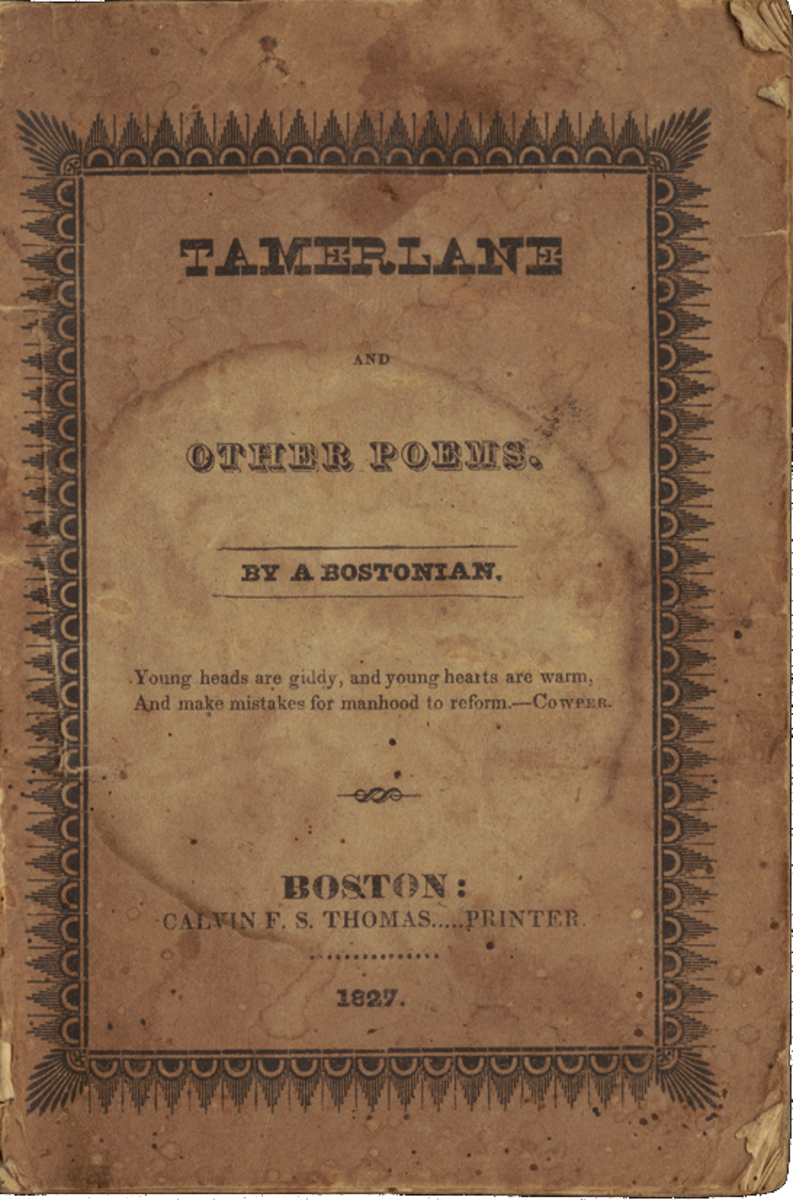
Let’s start with what he was prepared to offer for one of the rarest titles in American literature. Edgar Allan Poe is now regarded as a key writer in the American Romantic idiom. ‘The Raven ‘ is a staple of most Americans’ childhood education, and his creepy tales were pioneer works . He is even credited with inventing the detective story. Poe’s debut, Tamerlane and otherPoems ( Boston, 1827) was privately published when Poe was just 18. The edition was around fifty, which made it so rare that today perhaps only twelve copies have survived. In 2009 one of these fetched $662,500, a record for a work of American literature. In 1907, when he offered just £2 for a copy, Edward Baker, who knew the book was a great rarity , would not have expected to buy a copy in Birmingham, but being a shark, he offered a ludicrous price anyway. If he had been a better businessman, an offer of £20, might have interested someone in Europe. To compound his criminal offence Baker offered a measly 25/- for The Raven and other Poemsand the same price for Poe’s Tales of the Grotesque and Arabesque. We at Jot HQ would love to know if Mr Baker ever managed to acquire any of these incredibly rare Poe firsts.


It gets worse. Today, Poems by Currer, Ellis and Acton Bell isa rarity that most  Bronte fans would love to acquire. It is nothing like as scarce as Tamerlane,but today you’d need to shell out at least £2,000 for a decent copy. .In 1909 Ed Baker would give you 25/-.There are more horror stories. Baker seemed to have a penchant for Shelley, or at least one of his well-heeled clients did. Perhaps one of them was A.M.D. Hughes , author of The Nascent Mind of Shelley, who later became a professor of English Literature at Birmingham University, just down the road from Baker’s shop. There are twelve very rare  Shelley  titles in Baker’s  ‘wanted ‘ list, but only two of these ( the Adonais, which was printed in Pisa following Keats’ death, and Queen Mab(1813), would he give more than £3 for. Today, many Shelley firsts will fetch up to £2,000, some much more.. Continue reading

George Hutchinson—Mass Observer

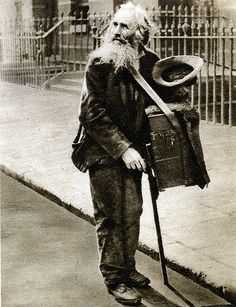
Barrel organ and grinder London 1920sRescued from the archive of his son are some typed copies of short articles and reports by George Hutchinson ( 1921 – 1980), one time active member of that valuable organisation Mass Observation. Founded in 1937 by poet Charles Madge, journalist Tom Harrisson and film-maker Humphrey Jennings, Mass Observation was set up to record the opinions and observations of ordinary people on national as well as day-to-day events through the UK. It continued throughout the Second World War and folded in the fifties, though it was revived in the eighties.


A journalist by training, Hutchinson ( as a previous Jot noted ) began as a volunteer observer and later became a ‘ whole-time investigator’ while conscripted into the Navy during 1941. The Mass Observation Archive at the University of Sussex contains some of his wartime interviews and reports as well as evidence of his long association with Tom Harrisson. His time in the Navy gave him an opportunity to collect examples of naval language which he put to good use in two of the articles we found at Jot HQ—‘The Andrew’s the Navy’, which he submitted to Lilliputmagazine, and ‘Naval Language’, which he wrote in Bradford and which may have been submitted to The Yorkshire Post. Another piece, entitled ‘The Barrel Organ: will it survive a growing indifference ?’ was also written in Bradford and may also have been meant for the same newspaper. It has been said that Hutchinson worked for The Yorkshire Post,but his article entitled ‘ Stevenage: a new design for living’, which must date from c1946, is inscribed ‘ originally written for John Bull: not used ‘, which suggests that he wasn’t a staff member of the Postat this time.


The two articles on Naval Language will be considered in a later Jot. This particular Jot will look at his piece on the Barrel Organ. In it he attributes the decline in popularity of that distinctly old-fashioned street instrument partly to the ‘ increasingly popularity ‘of the radio, but mostly to the depredations of the Aliens Act of 1912, which discouraged mainly Italian immigrants from setting up as organ grinders in the UK. Interestingly, Hutchinson observes that the Act ‘accounts for a recent estimate that, of all the hundred barrel-organs remaining in London, all are pre-war models.’ Continue reading

The Lost Art of Advertising fliers

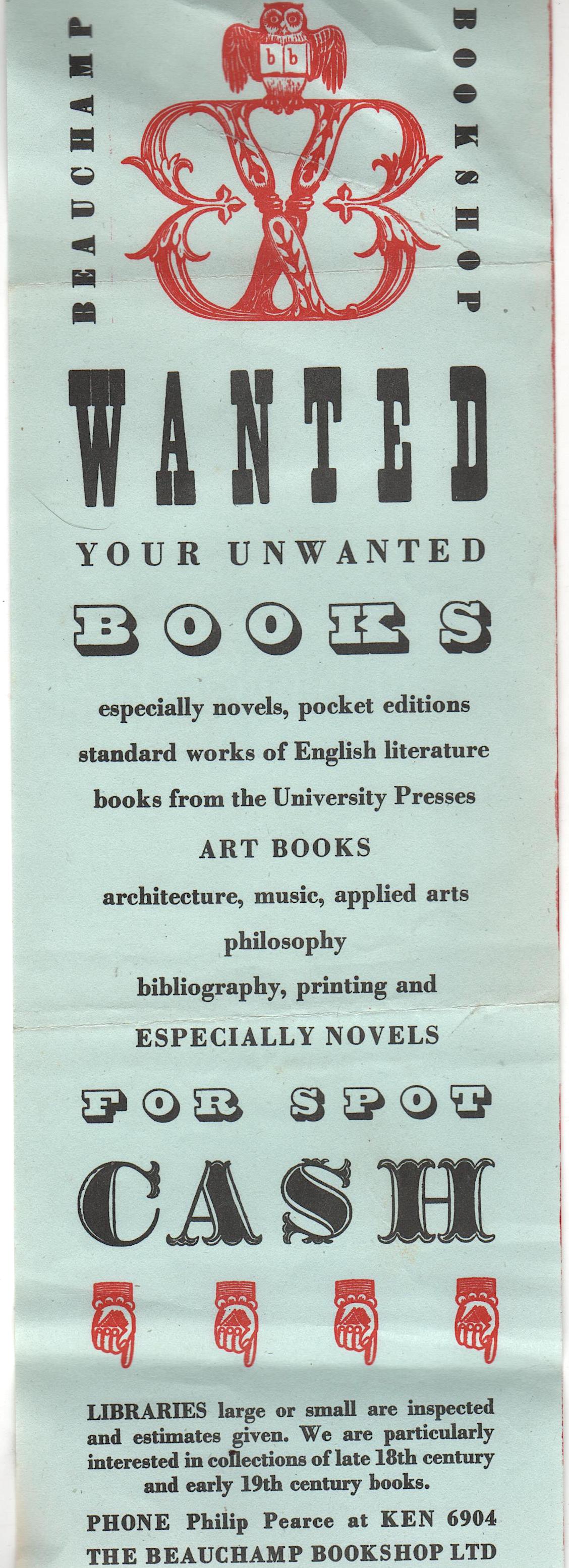
Found, among some papers at Jot HQ is this very long and thin flier for The Bookseller advertising pic 001Beauchamp Bookshop of 15a Harrington Road, which was once located by South Kensington station in SW London. Its most striking quality is the boldness of the two colours ( red and black) used for the various period typefaces on display. To someone who grew up in the Swinging Sixties, when designers took inspiration from Victorian (and even older) typefaces and decorative flourishes, it could date from that time. However, the telephone number featured (KEN 6904) might quite equally suggest a slightly earlier date, though the fact that the all-number system began in London in 1966 doesn’t help us much. Some specialist magazines devoted to design, such as Signatureand the Penrose Magazine, were experimenting with typefaces in the forties and fifties. Indeed, the fact that the Beauchamp Bookshop wished to buy books on  bibliography and printing suggests that the owner, Mr Philip Pearce, had an active interest in book design. It is telling too that his special need to acquire ‘ late 18thand early 19thcentury books ‘ betrayed a fondness for well printed and well designed books from this pioneering era of fine printing.
 

As to the bookshop owner, we at Jot 101 must confess an ignorance of Mr Philip Pearce and his shop. South Kensington has always been a haven for book collectors of large and small purses, but the Beauchamp Bookshop has long gone. Nor does the Net record anything about it or its owner, who seems not to have made a mark on the world outside of selling books. We at Jot HQ have asked a leading rare bookseller in the district, but he cannot remember  Mr Pearce. Perhaps some collectors in the Jottosphere might recall bookshop and/or owner. If they do, we’d like to hear from them.   [RR]

One Hundred Years Ago

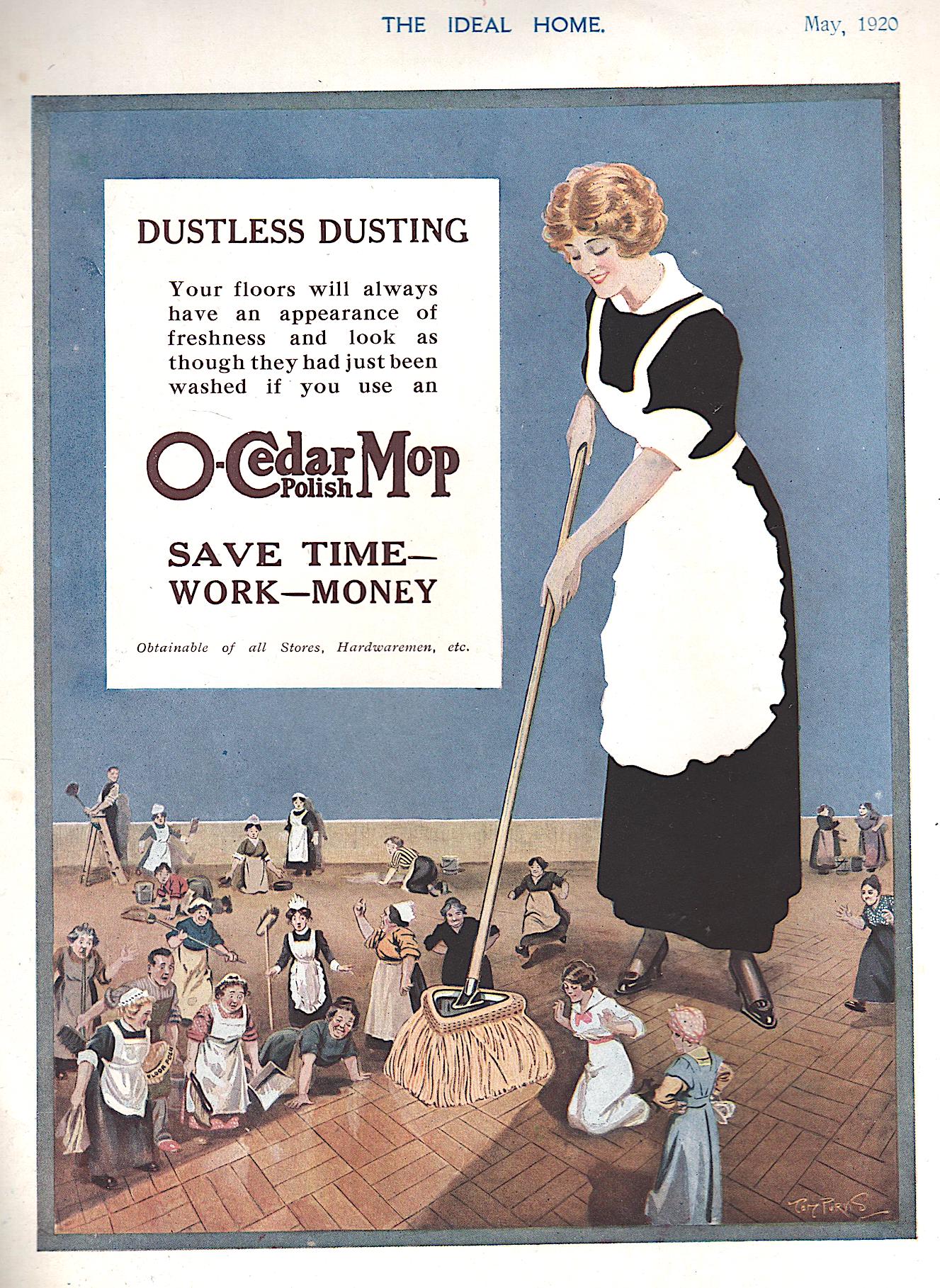
Jot 101 Ideal home mop 001In the current issue of the TLS Nicholson Baker reviews what was being published a hundred years ago. In this Jot we look at what was happening in the world of home appliances and gracious living, according to the May 1920 issue of The Ideal Home.


As always, it’s the adverts that entertain the most. The first that greets the reader is a full page colour ad for the O-Cedar Polish Mop which shows twenty or more tiny maidservants admiring the wonderful effects produced by a giant charlady manoeuvring this mop around a giant room. It makes one wonder how many middle-class supporters of the Women’s Suffrage movement employed female cleaners in their large, comfortable  houses. Quite a few, one would have thought.


In contrast, on the following page we have an advert meant, we presume, for male readers, who are urged to save  on average £30 by buying a machine designed to make concrete roofing tiles ‘ on the site’.


Mains electricity for lighting and power was patchy in this immediate post-war  period and relied on local council-run generating stations.  An Act of 1919 gave the go-ahead for a more nationwide supply system, but this wasn’t established until the National Grid came into being in 1935( remember that poem ‘ Pylons’ by Spender ?). For those who afford it in 1920, a petrol driven domestic generator was one source of electricity. Home owners would hide away their generator, in this case a ‘ Delco-Light ‘ available from F. S. Bennett of Oxford Street, in a shed or outhouse to minimize the noise and fumes produced by it. Continue reading

The fatal effects of reading Dutch


Dutch poem typescript 001Found in a copy of Montague Summers’ Restoration Theatre is this typed copy of a poem entitled ‘The Dutch Mail or The Tragic Fate of Examiner 3X22.’ It is dated February 27th 1918 and signed E. de K, which suggests that it is an original composition. The corrections in black ink bear this out. It is most likely to have been sent to a magazine editor.


It tells the story of a polyglot censor named Examiner 3X22 whose job it was to censor outgoing mail during the First World War. Though happy to be dealing with mail written in many languages, he is forced to admit one day that he couldn’t read Dutch. He quickly remedies this defect until he becomes so fluent in the language that he is mistaken for a native. Unfortunately, his mastery means that he is now forced to censor ‘stacks’ of letters from the Dutch East Indies. The cumulative effect on the censor of dealing with these ‘verbose effusions vapid’ results in a rapid decline. One day he faints from the effort, falls from his chair onto the floor where he rapidly expires.


This is obviously a squib, possibly ridiculing both the Dutch language and in particular employees of the Dutch East Indies Company whose language it was . On the surface Examiner 3X22 seems to be working for the Netherlands government, but this cannot be so if he is unable to read Dutch. On the other hand, if he is working in Britain, how is it that so much mail from the Dutch East Indies is being censored in Britain? A possible alternative to either of these scenarios is that the censor is working in South Africa, which during the First World War was a self-governing dominion of the British Empire and as such contributed troops to the war effort in Europe and suffered many losses. The writer’s surname de Koch/ Koch/Klerk was a common enough one in South Africa, which had been colonised by the Dutch as well as the British. In addition, an online postal history site records a letter sent to Batavia, the capital of the Dutch East Indies (now known as Indonesia), being censored in 1915.


The squib may have political undertones. After all, the Boer War was a recent memory for both the defeated Boers and those of British heritage, though the exact nature of the tensions in South Africa that prompted the satire remain to be discovered. We welcome comments from the Jottosphere on this issue. [R.M.Healey]


Fay Inchfawn

Inchfawn cover pic 2 001Discovered at Jot HQ is this first edition of one of the ‘Homely Woman’ pocket volumes by the prolific female writer Fay Inchfawn ( aka Elizabeth Rebecca Ward, 1880 – 1978), whose work is forgotten now, but whose books, which included popular verse, religious works and children’s literature, were once, to quote the blurb from her publisher Ward, Lock & Co in 1947,  ‘to be found in countless homes, for more than half a million have been sold’.

To further quote from her publicity department:

 ‘everyone of Fay Inchfawn’s delightful little books rings with a true sincerity from cover to cover. She can extract joy from the scullery, yes, even from the wash tub…If Fay Inchfawn cannot bring some compensation to you in your humdrum daily toil—well, nobody can ! She has certainly done so for countless wives and mothers, and if you do not happen to be one of those so fortunate, it is up to you to see what she can do for you. Surely she cannot fail ! ‘


Inchfawn, who lived in Freshford, near Bath, for most of her life, also contributed to women’s magazines, and if she didn’t write for my grandmother’s favourite magazine, The People’s Friend, she should have done. The Day’s Journey, which is one of her ‘ religious works, seems perfumed with peppermint creams and Werner’s Originals.


A Day’s Journeyis a homily which takes its inspiration from The Pilgrim’s Progress. Its homely message seems to be that like Bunyan’s pilgrim, the wanderer through life will overcome all the difficulties that confront him by applying the self-reliance and common wisdom that God has conferred on him and by ignoring all the vices and distractions placed in his way by the ‘Prince of Evil’. Continue reading

Autograph Collecting hints

Unknown [Found at Bookride 2010 -our first site, this wise piece about autographs.] Try to avoid forgeries! To my mind the ‘blink’ test is a good start in testing for authenticity. If on very first seeing it the autograph doesn’t feel right don’t touch it. As Malcolm Gladwell details in over 300 pages of his book Blink. The Power of Thinking Without Thinking the unconscious mind often delivers a better answer than more deliberate and protracted ways of thinking. If the seller doesn’t pass the blink test either, drop it like a hot brick. Kenneth Rendell, purveyor of manuscripts to the great and the good, advises avoiding the kind of dealer who brushes you off when probed, he adds: “The real expert will bore you with answers.” I also like what he says about how forgers often fail to get the feel of a signature right -the “flying starts and endings of the pen”.

Avoid signatures that look more like a drawing than writing and ones that seem to have stops and starts. Also signatures in cheap editions of books can be suspect, most forgers will not risk screwing up a signature in a four figure book. Forgers often stick to a plain signature so a date or sentiment is useful (belying the tiresome ‘flat signed’ schtick.) Also beware the desirable signature that is seriously underpriced, you may be lucky but it is often a sign of a grifter at work. If it is very cheap, of course, it may be real but unrated or unrecognised. Age is no guarantee of authenticity, forgers have been around since Heraclitus stood in the river. Ebay is a minefield. Bad Salinger forgeries appeared there after the writer’s death and usually made a few hundred dollars. Like the curate’s egg they were ‘good in parts’ but if it is wrong it’s worthless, if it’s right it’s a few thousand. In one of the online signatures Salinger appeared to have misspelled his own name…a bad start. Continue reading

Who are you aiming at?

Someone emailed asking ‘for whom is this site intended?’ Not entirely sure -we are still finding our way. One of our jots gets 200 visitors every day An A-Z of Science Fiction words and contributions have come in- e.g.  Barry Cox (all glories to his name) and others, sure  but sporadic. Not a problem as we have unlimited reserves…this is a scintilla of HG Wells’ World Brain, a drop in the vast ocean of knowledge… Short answer – we are aiming at:

Enthusiasts, scholars, readers & re-readers, polymaths, historians, beatniks, robots, bibliomaniacs, collectors, academics, curators, archivists, scientists, botanists, gourmets, goths, gurus, gossips, geeks, pataphysicians, hipsters, bores, geniuses, diarists, pedants, intellectuals, flaneurs, ramblers, boulevardiers, bluestockings, hoarders, quizmasters, know-alls, art dealers, theorists, philosophers, jesters, occultists, walking encyclopaedias, antiquarians, millennials, autodidacts, autobiographers, nuns, monks, eggheads, child prodigies, analysts, data miners, savants, renaissance men and women, revolutionaries, obsessives, omnivores, the sincere, the pretentious and the intuitive, disrupters, contrarians, entrepreneurs, engineers, sophisticates, somnambulists, arguers, inventors, lexicographers, burners of the midnight oil, keepers of the flame, seekers of the Grail, Utopians, topographers, voyagers, travellers, explorers, perpetual students, poets, princesses, pundits, punks and pamphleteers…

books_1357046c-1

… World Brain of H.G. Wells, an olla podrida, a rag bag of information, trivia and factoids. The conception of a sublime, leisured future. A hotch potch, a mélange, a farrago, a salmagundi.. Knowledge is power. Truth is beauty. Need to know this (and much more) on earth. A coming world of creation and idleness where time is spent in pursuit of knowledge and robots empty the waste paper basket. A dream of no work, all play and jack not a dull boy any more.

The oddest collection, passing strange, a saga, a fantasy, a dream…enter Captain Cuttle and the pedant Casaubon (a maligned man, Madam George). Keeping some sort of record with factoids, footnotes, ephemera, factbooks and essential trivia preserved. An information bank, an interest bearing investment. An index of all knowledge, no less, laid out in the lost monograph – A proposal for an information sharing galaxy.

An amazing expanding archive, beyond the algorithmic dream, post Mass Observation, many beautiful things no longer lost, bringing forth the mind of God, the all seeing eye – the library of Babel, Alexandria, far Antioch and the lost library of Zembla, the loot of cities. Universal access to all knowledge [A2K]. A vanished world recaptured. Notes and Queries honoured: New Encyclopaedists [Encyc2]. Nothing lost or forgotten. Time spent in research, curiosity and scholarship (the daring to be dull) the Renaissance ideal, the Victorian vicarage – just  4 hours a week of money yielding work. By Timothy! The answer is written on the wind, on the wall of the world. So much to know. Sums are not set as a test on Erasmus, all glories to Aaron Swartz, Brewster Kahle – respect… “He had a tale to tell.” Madam, I’m Adam. Exit, pursued by a bear.

Snobs in the Arts

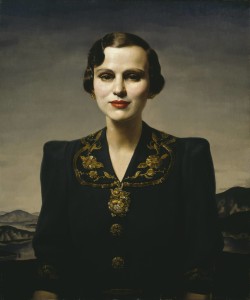
Portrait of Margaret, Duchess of Argyll circa 1931 Gerald Leslie Brockhurst 1890-1978 Presented by Tate Patrons 2009 http://www.tate.org.uk/art/work/T12796

Portrait of Margaret, Duchess of Argyll circa 1931 Gerald Leslie Brockhurst 1890-1978 (Tate Patrons 2009)

Here are some more selections from Jeremy Beadle’s own copy of The Book of Total Snobbery (1989) by Lynne and Graham Jones. The quotes bearing asterisks were marked in ink by Beadle.

Actor Michael Hordern on Glyndebourne
*There’s not the quality of audience today. The stalls should be in dinner jackets or tails, and they’re in singlets and bomber jackets. Quite awful! They come from places like Milton Keynes…
Sir Michael Hordern, Sunday Express Magazine.

Socialite Margaret, Duchess of Argyle. on opera singer Luciano Pavarotti
*Would you ever invite to your party people who weren’t “society”, but stars from another world—Luciano Pavarotti, say?
‘—Oh you wouldn’t ask a dancer. I mean, he can contribute nothing. All he can do is dance…’
Margaret, Duchess of Argyle, Sunday Express Magazine.

And on novelist Graham Greene.
‘Graham Greene? But he’s just a writer, isn’t he?’
Margaret, Duchess of Argyll.

Howard Jacobson on himself.
‘I’m not talking about Tom Sharpe or David Lodge. I’m talking about Shakespeare. That’s the kind of writer I should be compared with.’
Novelist Howard Jacobson, interviewed by Cherwell.

*Actor Robert Morley on Bertolt Brecht.
‘Brecht has not only never had an original thought, he takes twice as long as the average playgoer to have any thought at all.’

* Gore Vidal on Truman Capote.
‘A republican housewife from Kansas with all the prejudices’.

*Thomas Carlyle on John Keats.
‘His poetry is the fricassee of a dead dog. ‘

*Oscar Wilde on George Meredith.
‘As a writer he has mastered everything except language; as a novelist, he can do everything except tell a story; as an artist, he is everything except articulate.’

*George Orwell on Jean Paul Sartre
‘A bag of wind.’

T.S.Eliot on Arnold Bennett
When Bennett joined Eliot’s circle at a Bloomsbury party he left for another part of the room, bristling at the novelist’s “ lower middle-class accent “.

Janet Street-Porter on her TV image.
‘I hate being this “Cheery Janet” character on the Six O’Clock News. It wasn’t me at all. I don’t shop down the street market and I’m not riveted by the price of bloody fish. I go to the opera. My friends are artists. I live in a big house.
Janet Street-Porter, Q Magazine

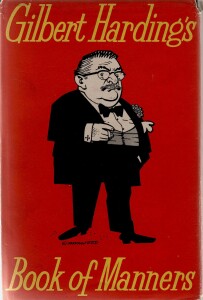
Radio personality Gilbert Harding at an engagement in Hounslow in 1953.
‘I have been dragged along to this third- rate place for a third- rate dinner for third-rate people’.

[R.M.Healey]

Hackneyed clichés of the 1940s

Kaleiposcope cover 001

Like any decent journalist Harold Murray tried to avoid using clichés and well worn catch phrases in his work. It’s a pity that more radio journalists today ( particularly on Radio Five Live) aren’t as scrupulous. In his very entertaining Kaleidoscope (1946) Murray expresses his irritation at some of the worst examples of hackneyed speech in common use back then.

I remember the editor of the Nottingham Journal talking about misused words and hackneyed clichés which “makes us feel murderous when we hear them “. A. P. Herbert has devoted much thought to the subject. We are all more or less guilty. Why do we say, “I’ve got to catch a train, “ I’ve got to go.”? Why that superfluous “got”?  Why at the end of a letter do we have to put “yours sincerely “, or, for that matter, “ yours “ anything? If ever I see girls talking now they seem to be crying ,” Ectually!”, Honestly!,” “ Definitely!”. There has been much talk about basic English. There is more silly slang from America, particularly from Hollywood, than ever before. I wonder how many popular catch phrases you can recall ( I mean before the radio) . The first I remember were, “Get your hair cut, “ Ask a policeman,” “ Now we shan’t be long,” “ Fancy meeting you, “ What ho! She bumps, “Make room for your uncle,” “Does your mother know you’re out,” “ Bob’s your uncle. “ Pop goes the weasel,“ liked nearly all catch phrases from a song was before my time, and you will know the weasel was a flat iron, pawned weekly. In these days catch phrases come mostly from “Itma” and the like.

We at Jot HQ would like to know whatever happened to “What ho! She bumps and “ Make room for your uncle “. Are there any in the Jottosphere who might have heard them being used ? We’d like to know. As for Honestly, Definitely and Ectually, we have our own Absolutely today. And we also have the recently introduced So that prefaces almost every explanation given by apparently intelligent spokesmen in radio interviews. The redundant’ Like’, liberally sprinkled in sentences delivered in estuarial accents by adolescents of all classes has been around for many decades and doesn’t look as if it will ever become unfashionable, unlike, ‘ grotty ‘ ‘way out ‘ and ‘psychedelic’.

I wonder what A. P. Herbert and Murray would have made of the frequent misuse by radio journalists with degrees in English of ‘ reticence’ for reluctance and ‘ enormity ‘ for a memorable event.

R.M.Healey

The Prices of Books

Book prices title 001H.B.Wheatley’s Prices of Books (1898) is a real eye opener, not just for the prices realised by truly great and important books,  but also for those works which today would not fetch ( in real terms) anything like the sums that our Victorian forebears might have paid.


In view of the stunning Tate Gallery exhibition of works by Blaket hat closed recently, it’s a good time to look at some of his most significant books.


Songs of Innocence and Experience(1789). At the sale of Sir William Tite’s Library in 1874 a copy rebound in green morocco fetched £61. In 1882 a copy from the Library of William Beckford sold for £146.


Today a copy, even in poor condition, would attract a huge amount of attention. In 2001 Christies sold a copy for $941,000 in New York.


At the same Beckford sale a copy of Milton: a Poem fetched £230. Today, there doesn’t seem to have been a copy on the market for many years.


It has already been remarked in a recent post that the grasping Birmingham bookseller Edward Baker was only prepared to pay 25/- for Blake’s debut poem Poetical Sketches,which was not illustrated, but is possibly rarer than most of his subsequent illustrated works.


Robert Browning

Of Browning’s first publication, Pauline: A Fragment of a Confession (1833) only eight copies were thought to exist at the close of the nineteenth century. One with an inscription by the author made £145 in 1896. Though Browning is deeply unfashionable today, the emergence for sale of one of those eight copies would attract attention, though it’s anyone’s guess how much it would make. Continue reading

Some anecdotes from Harold Murray’s Kaleidoscope

Oscar_Browning_(crop)Joe and Arthur Rank


“The richest man I ever knew was Joseph Rank, the flour miller whose quiet son, Arthur Rank, the film magnate, is so much in the news today. There were only three lines about ‘Joe Rank’ in Who’s Who. He was said at one time to be worth twenty millions. No one knows how many millions he gave away. Again and again I heard him say he stayed in business as an octogenarian in order to make money to give away. He refused titles and honours except the freedom if the city of Hull…This remarkable man had his little eccentricities, as millionaires generally do have. He told me he couldn’t stand journalists; they were always telling lies about him…In the ’14-18 war he handed over, it was said, a few million pounds to a Board of Trustees for the extension of Methodism. One of the last occasions on which I met Mr Arthur Rank was at the opening of a Methodist milk bar in Battersea, when he, with his wife, served behind the counter. His interest in films began when he warmly supported a campaign for religious films …”


Oscar Browning


“One of the most interesting men I then met at Bexhill was Oscar Browning (above right)  the famous “ O.B.” of Cambridge, a plump, bald-headed, Pickwickian little man, who, when over eighty years of age, would go down to the sea very early in the morning and bathe, whatever the weather. Continue reading

Fluxus Manifestos of 1966


Manifestos Paik Laser TV 001Found— a copy of Manifestos, the eighth Great Bear Pamphlet published by The Something Else Press of New York in 1966.

The Something Else Press was an avant gardeAmerican publisher of writers associated with Fluxus, an international, interdisciplinary community of artists, designers, composers and poets inspired by the composer John Cage. Many, including Yoko Ono, whose Grapefruit ( see Bookride blog )   had appeared in 1964, were dedicated to Performance Art and ‘Happenings’. The double pamphlet Manifesto, described as a ‘call to arms ‘, was edited by Dick Higgins (1938 – 98), a leading figure in the movement. It contained material by many of the authors of the nine other pamphlets in the Great Bear list—including Alison Knowles ( Higgins’ wife),  Al Hansen, Jerome Rothenberg, Allan Kaprow and Wolf Vostell.

All those who wrote for Manifestoswere significant in their own way, but a few were more pioneering than others. Nam June Paik was one. Born in Korea Paik was a Buddhist whose Zen-like vision permeated much of his work, which included  pioneering experiments in video art. He was also interested in the possibilities of cybernetics. By 1966 he could declare in Manifestosthat ‘As the Happening is the fusion of various arts, so cybernetics is the exploitation of boundary regions and across various existing sciences’. He went on to declare that he is ‘video-taping the following TV programmes to be telecast March 1, 1996 A.D.’ The speculative programmes on this ‘ Utopian Laser TV Station ‘ feature many of his fellow Manifestos contributors, but also such influential figures as John Cage and  Dadaist Marcel Duchamp. Most of the programmes described by Paik recall real Performance Art (‘Confessions of a topless cellist by Charlotte Moorman’; others may be satirical (‘ Baby care by Diter Rot’). One programme for 11a.m., ‘ Jackson Mac Low’s 1961 film in which a standing camera focuses on a tree for many hours, looks forward to Warhol’s  five hour long Sleep. Paik went on to explore variations on video art, most notably with ‘TV Buddha’, a video installation depicting a Buddha statue viewing its own live image on a closed TV circuit. Continue reading

J.R. Ogden of Harrogate—-the antiquarian who worked on Tutankhamen’s  treasures

Ogden by Murray 001Found in Kaleidoscope (1947), that miscellany of anecdotes and opinions by veteran journalist Harold Murray from which one Jot has already been created, is a pen portrait of J. R. Ogden, the keen amateur archaeologist and collector.


James Roberts Ogden owned a high class jewellery shop in Harrogate , which he had founded in 1893 . According to his friend Murray, Ogden had a passion for collecting ‘ anything that would tend to prove the authenticity of Bible stories’, though Murray doesn’t elaborate on that. Murray, himself an evangelist and bible scholar, would have taken to this industrious human jackdaw, and as a journalist he would have been  impressed by Ogden’s voluminous archive of press cuttings.


‘I don’t think he wrote a line for the Press himself. For years he took in scores of newspapers and magazines. At breakfast he would quickly scan them, marking with a blue pencil whatever interested him. One of his servants received a fee for cutting out the items; sometimes unemployed men were called in to place them neatly onto sheets which were transferred to neatly bound little files, of which Ogden must have bought many hundreds. Ask him for any information about explorations at Ur, about Roman customs, ancient burials, mummies, all the familiar Bible characters—it would be supplied in an instant. Ask for such detailed records of film stars, sportsmen and the like—nothing doing…’  Continue reading

An Onitsha Market pamphlet

IMG_1074

Onitsha Market pamphlets appear to be a niche collecting area.There are some amusing examples in semi pidgin English about how to court and pick up girls, also  well written political and economic booklets. They are also referred to as African Market literature… There are quite a few at abebooks including a collection  of 30 at $2000 with Harper’s in the Hampton’s NY (‘…most of it characterized by sensational, and even slightly prurient, content, rustic production values, and a disarmingly naive, to an American reader’s eyes at least, approach to its subject matter.’) Brittanica defines them thus: ‘ A 20th-century genre of sentimental, moralistic novellas and pamphlets produced by a semiliterate school of writers (students, fledgling journalists, and taxi drivers) and sold at the bustling Onitsha market in eastern Nigeria.’
There is a good book on the subject An African Popular Literature: A Study of Onitsha Market Pamphlets by Emmanuel N. Obiechina. Here is our catalogue description of one just found–

The Complete Story And Trial Of Adolf Hitler by J C Andrue.

8vo. pp 36. Marked up throughout in red pen, probably by the author. Appears to be for a future edition, almost all the notes are to do with typography and appearance (indents, italics, bold, type sizes etc.,)  

Continue reading

 Cotswold lawyer and poet revisited

W.H.Davies

W. H. Davies

A few weeks ago we were puzzling over a fragment discovered in the archive of Jot HQ. This was a draft in pencil of one page of a letter written in reply to literary journalist Ivor Brown around 1943. The hand was very hard to read at times, but persistence paid off and eventually I produced a decent stab at the letter. From its contents I deduced that the writer was probably an elderly lawyer from the Cotswold region of the UK who had been friendly with tramp poet W. H. Davies, enjoyed the poems of John Betjeman, Clare and Blunden and had published a slim volume of verse himself, as had his son, a former army officer.

Further research revealed that this apparently obscure amateur poet was the rather famous ‘ friend to  the poets ‘ John Wilton Haines, from Hucclecote, near Gloucester, who over nearly five decades befriended , not only Davies, but a number of  twentieth century literary figures, including Edmund Blunden, John Masefield, W. H. Hudson, J. C. Squire, Seigfried Sassoon,  Eleanor Farjeon, J. Gould Fletcher, Sir Edward Marsh, Walter de la Mare, C. Day Lewis, Lascelles Ambercrombie, Gordon Bottomley, Ivor Gurney, Robert Frost, Wilfred Gibson, James Elroy Flecker and Edward Thomas. He also communicated with some eminent musicians and composers, notably Ralph Vaughan Williams, Gerald Finzi and Herbert Howells.

Born in 1875 to a lady from India and a Gloucester solicitor whose family had practised law for generations, Haines trained as a solicitor after leaving school and then joined the family firm. Always passionate about classical and modern literature, and a dedicated book collector, Haines made it his business to seek out local authors and  poets, notably those ‘ Georgian ‘ poets who had settled in and around Dymock, on the edge of the Forest of Dean. He made friends with them and offered them financial help and legal advice. In return many sent him their latest work for his opinion. In 1921 Haines himself had a collection of his own poetry privately printed. On his death in 1960, Haines’ son Robin ( b 1913), whose own slim volume, Somewhere, Somehowhad come out in 1942, inherited his father’s literary archive, which eventually passed to his widow. It was she who donated the papers to the Gloucestershire Archives, where they can be examined today.  [RMH]