 Stella Gibbons, author of Cold Comfort Farm (1932), the cult satire on the doomy English novels of, amongst others, Mary Webb and Sheila Kaye-Smith, seems to have been a very generous and good natured woman, according to her nephew and biographer Reggie Oliver (b1952), who was also a playwright and the author of horror stories. In three pages of a typescript found at Jot HQ, which he sent to the bookseller Joan Stevens (and which may subsequently have been incorporated into his biography, Out of the Woodshed), Gibbons met some colourful characters at the mid- seventies parties she held at her home in Oakshott Avenue, Highgate, which incidentally was a two minute walk from my late uncle, Denis Healey.
One was the then fashionable (now almost totally forgotten) novelist John Braine, the former librarian who found fame and fortune with such blockbusters as Room at the Top and The Vodi. Here is Reggie’s description of the man:
‘ He was large, shaggy, genial and physically repulsive. A distinctive presence, enhanced by an unusually loud voice, allowed him to dominate the conversation. I got the impression he was one of those writers—by no means uncommon—whose interest in literature was confined to that produced by themselves. Certainly, I never heard him discuss any books but his own, and even those rarely. But he had pronounced views on almost everything else; and I can remember one enjoyable afternoon when he laid down strict guidelines for us all on the correct method of making bread. Continue reading

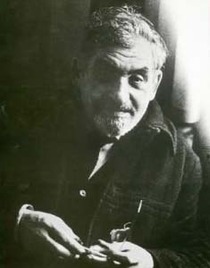 Found among some papers at Jot HQ, three photocopied pages of a panegyric by poet William Oxley to his better known poet and friend Hugo Manning (1913 – 77). Entitled ‘ The Scapegoat and the Muse ‘ it lavishes praise on a man who appears to have been a larger than life character in the mould perhaps of his friend Dylan Thomas, who was his junior by a few months and from whose work he drew inspiration. But Manning, in Oxley’s eyes, seems to have been an amalgam of so many attributes: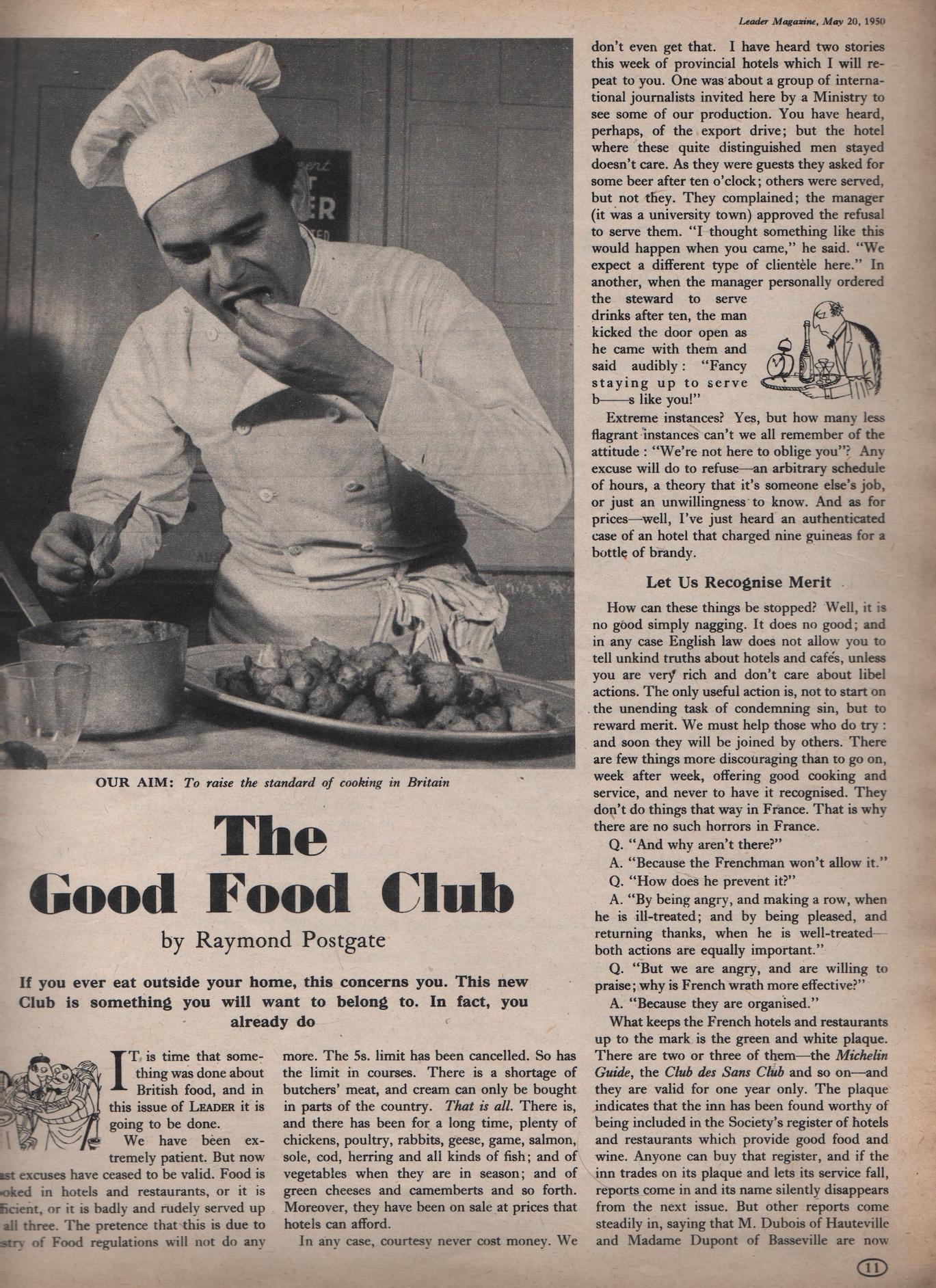
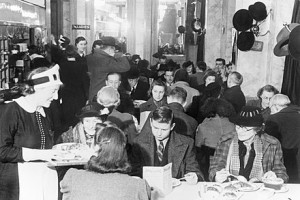 Leonard P Thompson, is a complaint about the ‘catchpenny ‘afternoon teas served up by typical road houses and other mediocre eating places.
 La Guerre du Feu, an early fantasy novel, probably written by Joseph Henri Honore Boex (1856 – 1940), one of two Belgian brothers who often wrote fiction together under the pseudonym J.H Rosny-Aine. was published in 1911 by the Bibliotheque-Charpentier in Paris. It is said to have been first translated into English by Harold Talbott in 1967. If this is true, it is odd that the acclaimed journalist and translator Eric Mosbacher in his note of 8.5.1979 ( shown) stated that this ‘ remarkably uninspired story’ was ‘ totally undeserving of translation ‘ and that the Souvenir Press should decline it. It is possible, of course, that a translation into a language other than English was proposed. Mosbacher translated from French, Italian and German.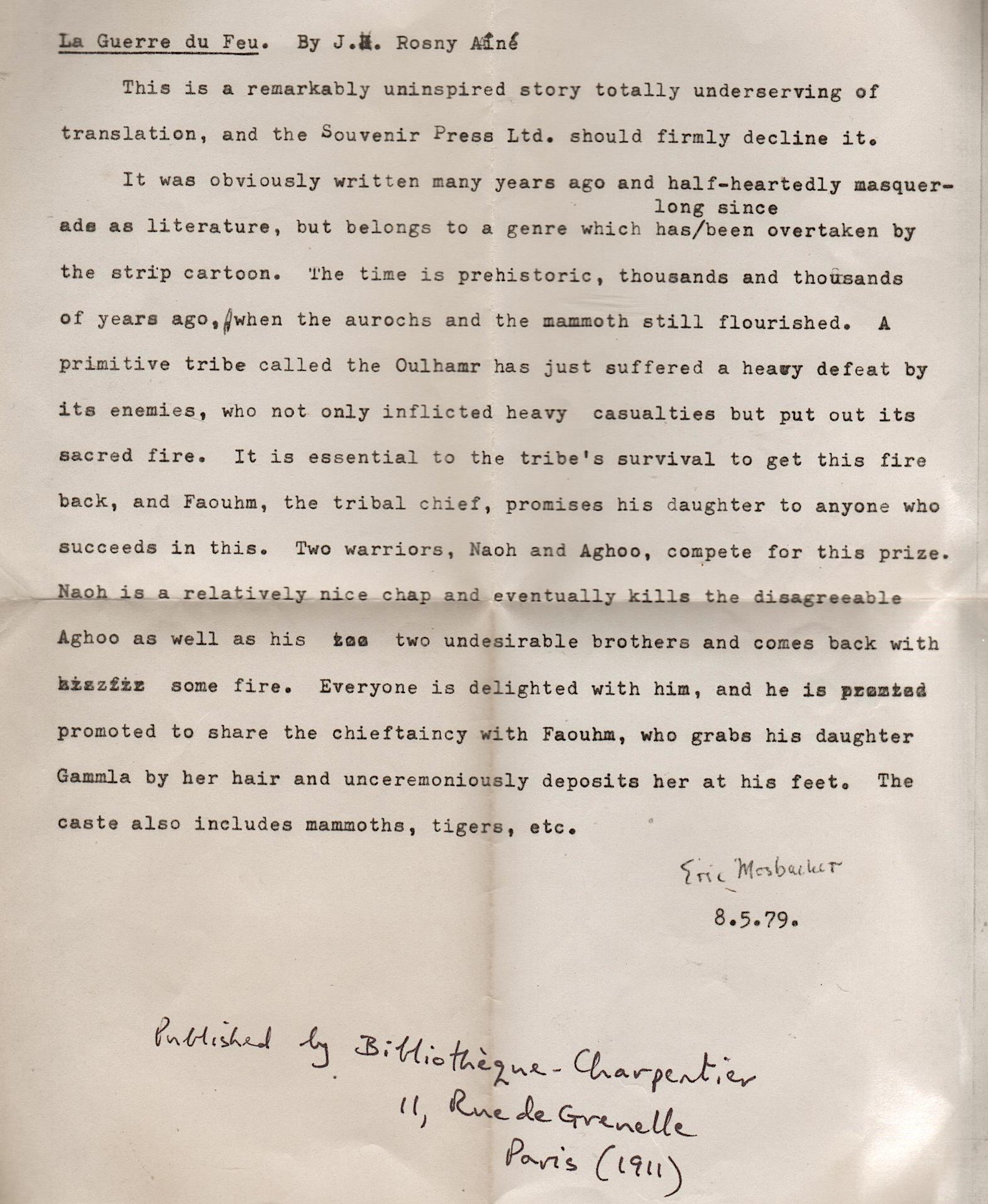
 Banned books: No 12: Lummox by Fannie Hurst