Author Archives: Jot 101

More schoolboy howlers

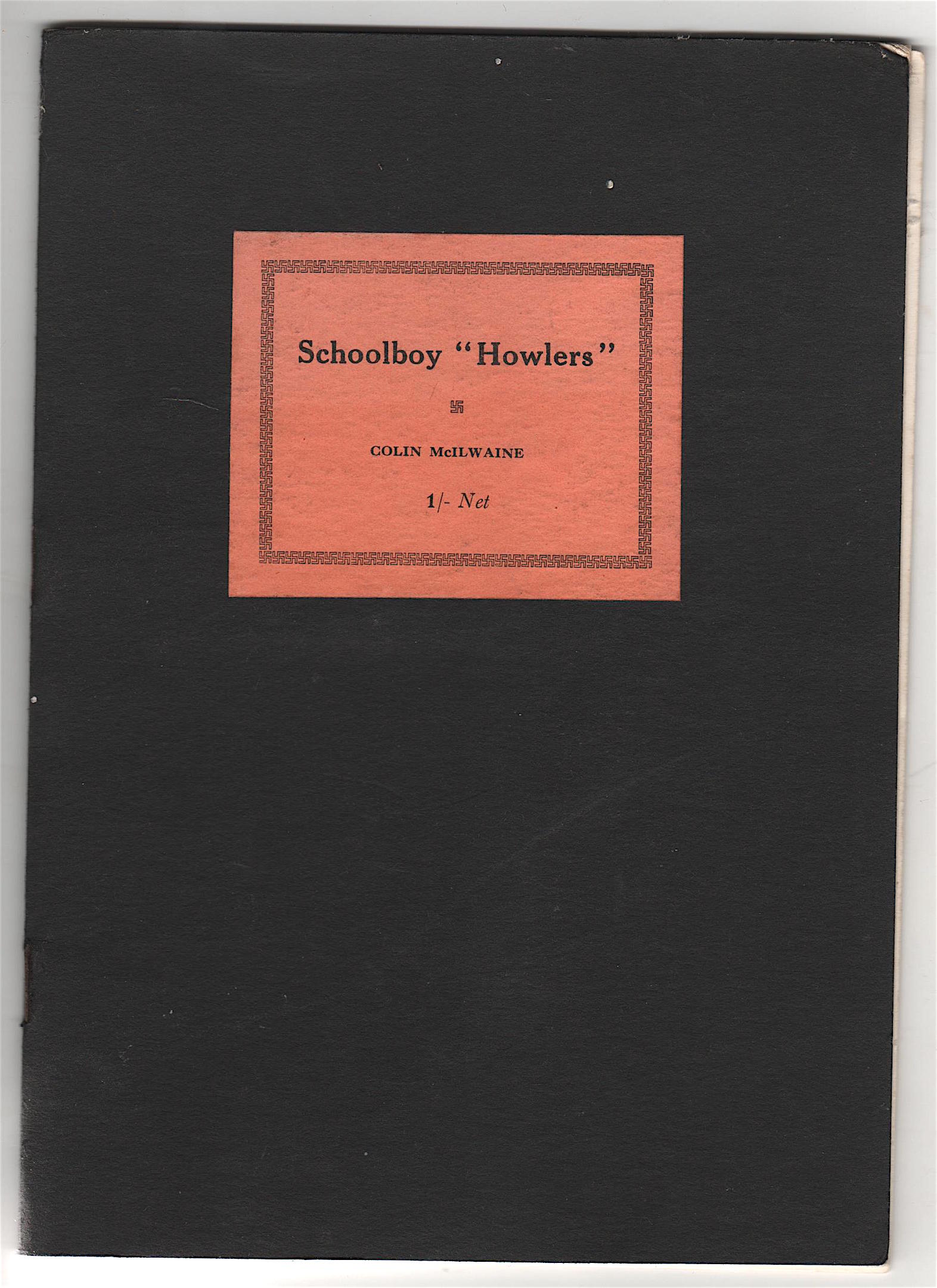
Schoolboy howlers cover 001Colin McIlwaine seems to have made a nice little earner out of collecting schoolboy howlers. His Selection of Schoolboy Howlers, first published in 1928, had gone into a fifth edition by 1930, while two further anthologies, More Schoolboy Howlers and Smith Minor Again followed. An obvious thought occurs with such collections. It must have been tempting to bulk out genuine howlers with made up ones, but since McIlwaine gives no sources for his examples, it is almost impossible to differentiate between the real and the suspicious. A date attached to each howler would also be useful from a social historical point of view. It would be interesting, for instance, to chart the rise of the specifically ‘ schoolboy’ howler as opposed to the malapropism beloved of eighteenth century compilers of joke books, such as Joe Miller’s Jest Book. My own tentative research has brought to light a chapter devoted to them in a book dating from the 1880s, but it doesn’t follow that the author of this book was supplied with howlers by schoolmasters of his acquaintance. It could be that certain howlers had become part of common currency by this period.

Some howlers collected by McIlwaine can be dated quite accurately.

‘ Joan of Arc was canonised by Bernard Shaw ‘

Mussolini is an ugly man. He wears the shirt of the Madonna, and when he smiles he makes people weep. He has been killed four times…He can do everything and knows everything and loves playing the saxaphone with his family. Galileo was charged with High Treason because he said that Mussolini moved round the sun, and not the sun round Mussolini.’ Continue reading
Maundy Gregory – a St John’s Wood Gatsby

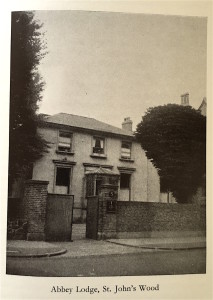
IMG_1829Found in a 1955 Punch – a review by the novelist Anthony Powell of Honours for Sale. The Strange Story of Maundy Gregory. (Gerald Macmillan, London: Richards Press 1954). Maundy Gregory had in the 1920s what amounted to a licence to print money. He sold honours, a profession that made a comeback in the Blair years. For £10,000 (about $1 million now) he could get you an earldom; knighthoods were a bit cheaper. You could, in fact, sign a cheque to him in your expected new name–only cashable when you assumed the title. He liked rare books, especially the works of the fantastical Frederick Rolfe (Baron Corvo.) In some cases (according to AJA Symons in Quest for Corvo) he would pay his agents to track down supposedly unfindable books, money no object. He had a mansion in St John’s Wood which later became the world famous Beatle’s recording studio.

Powell calls him an ‘honours tout’, a ‘real life Gatsby’ and ‘a mad aspect of the 1920s incarnate’. He suggests that anyone  ‘who enjoys a good laugh’ should read the list of  guests at his Derby Eve Dinner at his own club ‘The Ambassador’s.’ Something of a ‘sausage fest’ (i.e. no women) but, as Powell says, Gregory certainly knew how to ‘bring them in.’  The author of the book, Gerald Macmillan, may  be exaggerating when he says it was the most distinguished gathering ever held…

List of guests at Ambassador Derby Eve Dinner, held on June 2, 1931.

Major-General J. E. B. Seely (in the Chair), Sir Austen Chamberlain, Mr. Winston Churchill, the Duke of Marlborough, Mr. J. H. Thomas, the Duke of Sutherland, Viscount Craigavon, the Marquess of Reading, Major-General the Earl of Scarborough, Sir John Simon, Lord Southborough, Viscount Elibank, Mr. J. Maundy Gregory, Lord Jessel, Mr. Ralph E. Harwood, Earl Winterton, Lord Queenborough, Lord Bayford, Mr. W. Dudley Ward, Lord Plender, Marquis del Moral, Lieutenant-Commander Sir Warden Chilcott. Continue reading

The Greatest Invention since the Alphabet

Word and Idea Chart 001In an advert which caught my eye in the January 19th 1951 issue of John O’London’s Weekly is a description of ‘The Greatest Invention since the Alphabet ‘, the ‘Idea and Word Chart’ which ‘ gives the right word at a glance ‘. It bears the recommendation of no less an authority that ‘famous author‘ Gilbert Frankau, who declared it ‘ the best adjunct that I have so far discovered –it is not going to leave my desk.’

Unfortunately, like so many ‘adjuncts‘ this piece of kit wasn’t available to examine in shops. So aspiring authors had to send away for a ‘ free specimen… embodied in a descriptive brochure ‘.

In what way ‘ The Idea and Word Chart ‘ differed in its function from the excellent and best-selling Thesaurus of Dr Roget we are not told. We are offered a rather feint and distinctly unhelpful image of an octagon- shaped piece of card in which a pensive-looking man—possibly Mr Frankau—is depicted at the vortex of a whorl of words and concepts that includes the unfortunate juxtaposition of ‘ passageways ‘ and ‘desires’. Continue reading

Thomas Bewick tracks a package…

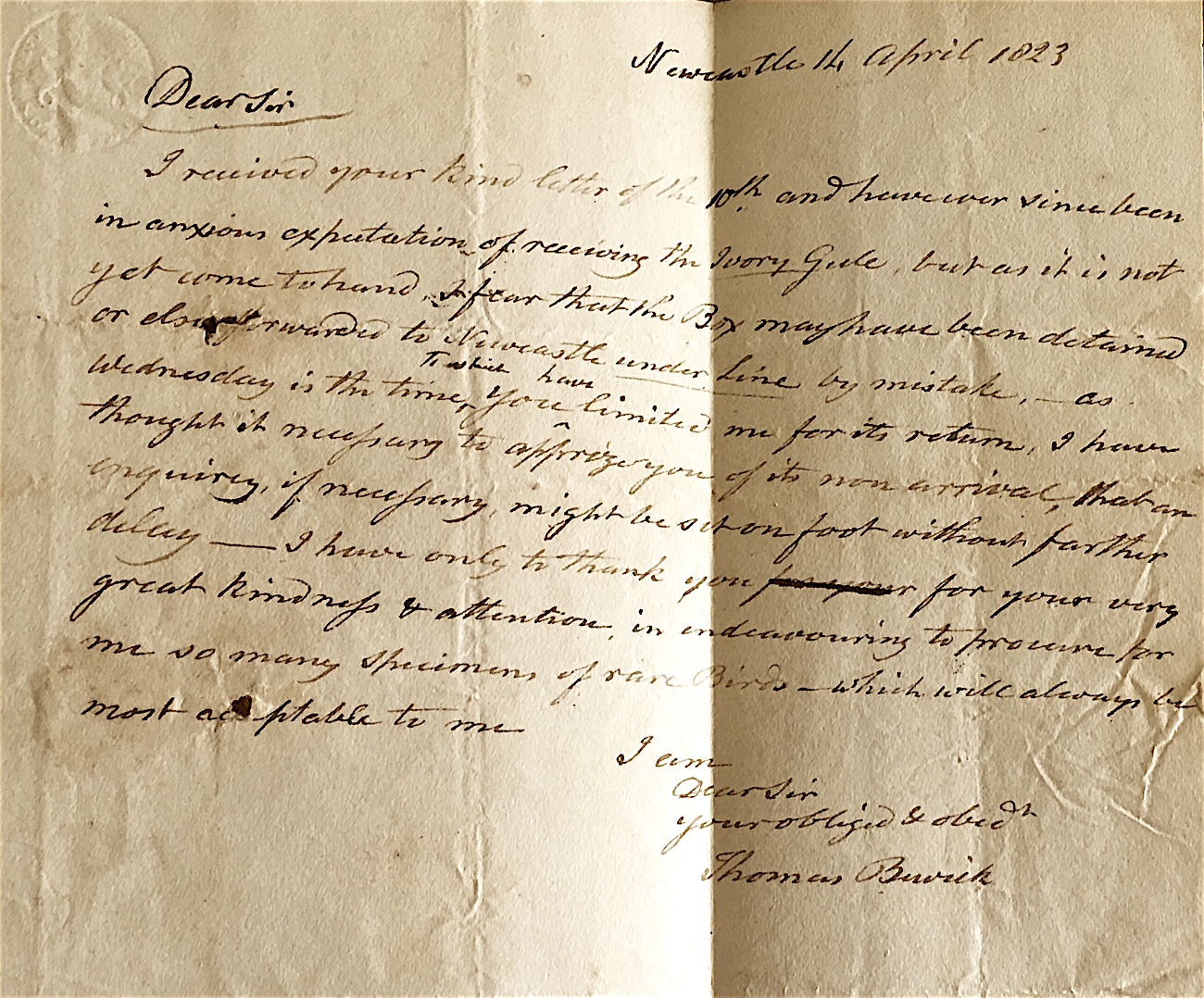
bew2Found -in a reprint copy of Bewick’s A History of British Birds (Newcastle, 1809) a  handwritten note pasted at the front endpapers from George Gulliver (anatomist 1804- 1882) stating that the book contains ‘.. 9 proofs of wood cuts of birds, an illustrated receipt, and an autograph letter of Thomas Bewick, dated April 14, 1823 (Newcastle) to Mr L .Edmonston: all inserted at the end of this volume.’ He continues- ‘They were given to me by Mrs Edmonston. Her husband, Dr Laurence Edmondston, has now (1862) been a medical practitioner upwards of 40 years at Bolton Sound, Shetland, which place he is a native. He knew and corresponded with Bewick about birds and the cuts were sent at different times by Bewick to Dr Evanston with the writing on them. George Gulliver. Bewick’s letter is present and reads:

‘Newcastle 14 April 1823.  Dear Sir, I received your kind letter of the 10th and have ever since been in anxious expectation of receiving the Ivory Gull, as it’s not yet come to hand. I fear the box may have been detained or else forwarded to Newcastle under Line by mistake as Wednesday is the date which you have limited me for its return. I thought it necessary to apprize you of its non arrival, that an enquiry if necessary might be set on foot without further delay– I have only to thank you for your very great kindness and attention endeavouring to procure from me so many specimens of rare birds which will always be most acceptable to me.I am dear sir your obliged and obedient Thomas Bewick.’  Continue reading

The St Petrox lectern mystery

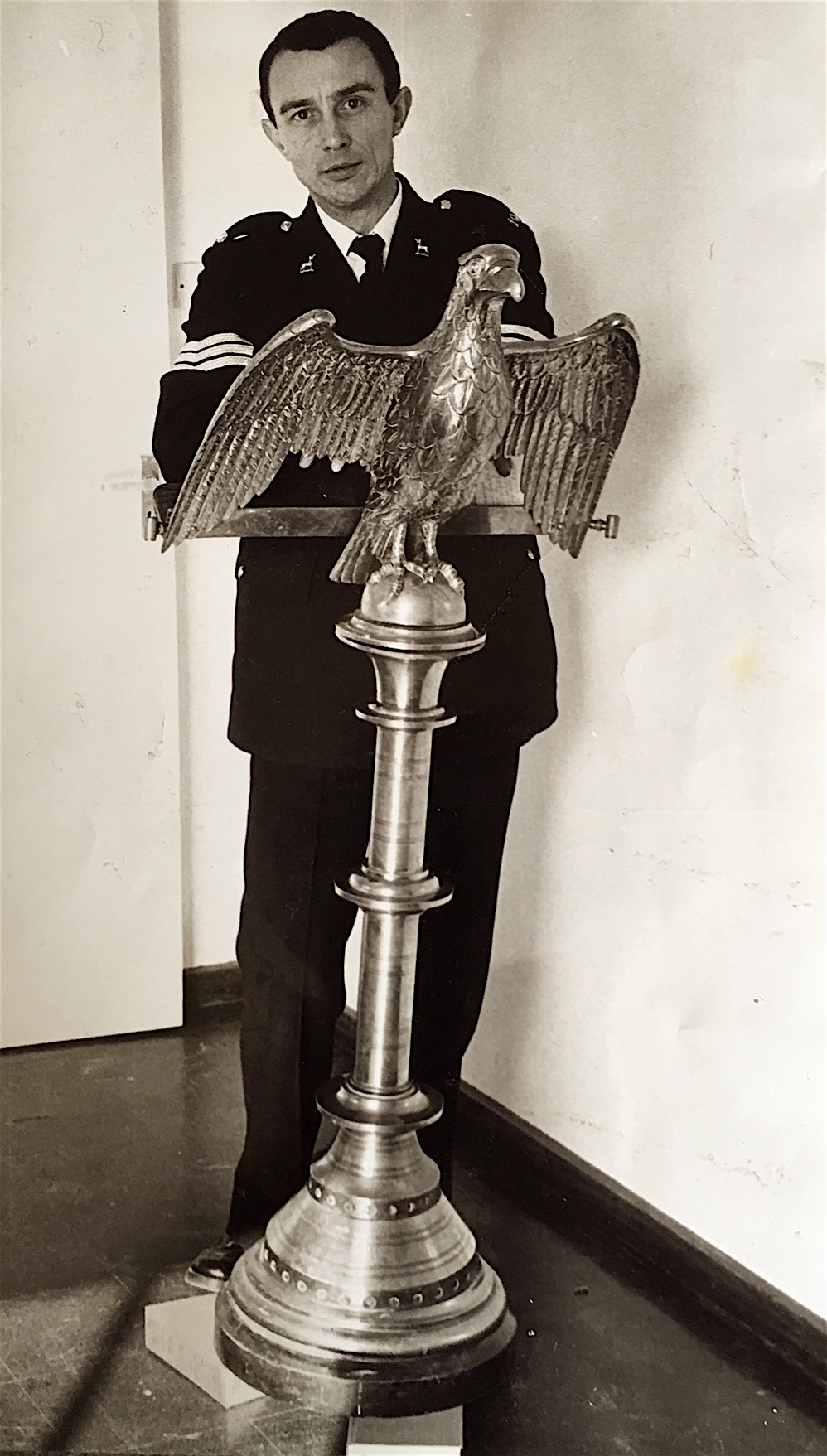
IMG_1760Found in  our boundless archive – this crime photo with a typed note pasted to the back: –

Police Sergeant Barrie Warner with the ornate brass lecturn (sic) which was found dumped in a quiet lane. London Colney* police are anxious to trace the owners of the object which has the inscription ‘presented to the Parish of St. Petrox by William Smith’ – Churchwarden 1884- around the base.” Echo and Post Ltd, Hemel Hempstead.

No date but most of the crime photos in our archive come from the 1970s. Possibly someone of an ecclesiastical bent was able to identify where the item came from. 40  years later using the net one can be pretty certain this is St. Petrox Dartmouth and William Smith was a local solicitor whose family were associated with the church. There is another St. Petrox in Pembrokeshire but Dartmouth is far more likely. How the lectern came to be abandoned in Colney is a mystery, possible the item was regarded as too recognisable or unsaleable in the criminal underworld…

*London Colney is a village near St Albans.  It is by junction 22 of the M25 but probably at the time it had not been completed in this area.

A modern painting in every student’s common room

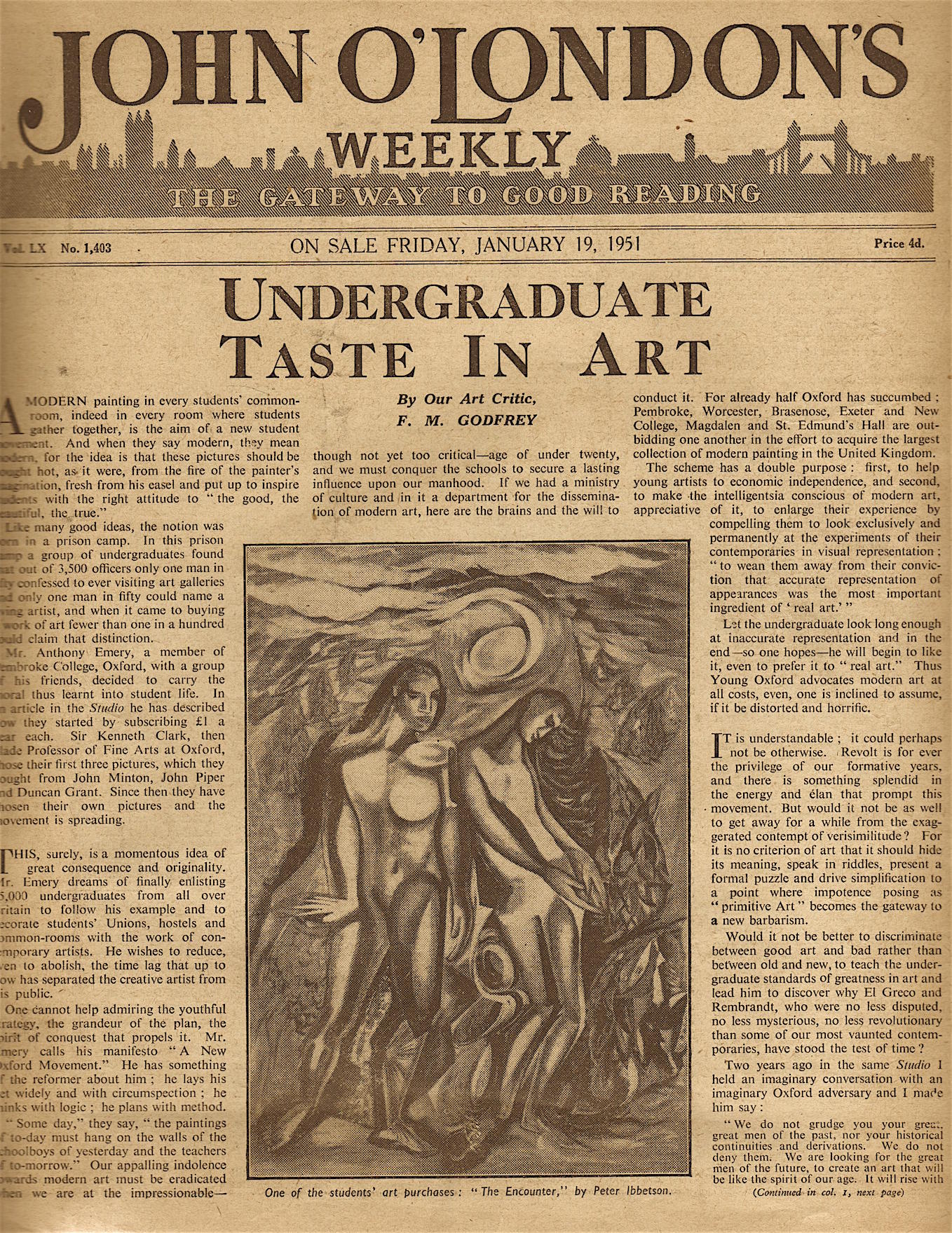
Undergraduate taste in art mag cover 001Thus begins the front page article published in the January 19th 1951 issue of John O’London’s Weekly. In it the art critic F.M.Godfrey recounts the campaign of Anthony Emery, a mature undergraduate at Pembroke College, Oxford, to supply examples of modern art for the Common rooms, hostels and Unions used by every undergraduate in Britain.

The crusade to inspire students with the right attitude to ‘ the good, the beautiful and true’ had begun just after the war at Emery’s own college, where, shocked by the ignorance of modern art shown by serving officers, he ( a wartime officer ) and some like-minded friends had pledge to subscribe a £1 each to established a small collection for their common room. Inspired by the guidance of Sir Kenneth Clark, who had chosen for them a painting each by John Minton, John Piper and Duncan Grant, they had gone on to choose their own pictures.

As Godfrey remarks, Emery’s manifesto, which he called ‘A New Oxford Movement’ had the spirit of the reformer about it. And Godfrey himself echoed his sentiments.

‘Our appalling ignorance towards modern art must be eradicated when we are at the impressionable …age of under twenty, and we must conquer the schools to secure a lasting influence upon our manhood. If we had a ministry of culture and in it a department for the dissemination of modern art, here are the brains and the will to conduct it. For already half of Oxford has succumbed: Pembroke, Worcester, Brasenose, Exeter and New College, Magdalen and St Edmund’s Hall are outbidding one another in the effort to acquire the largest collection of modern painting in the United Kingdom ‘. Continue reading

Clifford Bax on Edward Thomas

Edward in 1913 by Clifford BakFound among the papers of Joan Stevens (1933-2015) the feminist bookseller and expert on the Powys Brothers and Edward Thomas this piece, apparently unpublished, by  Clifford Bax on the poet Edward Thomas.
Clifford Bax (1886 –1962) was an English writer, known particularly as a playwright, a journalist, critic and editor, and a poet, lyricist and hymn writer. He also was a translator (for example, of Goldoni). The composer Arnold Bax was his brother, and set some of his words to music. Between 1922 and 1924 with the mystic painter Austin Osman Spare he edited The Golden Hind, an important and collectable periodical. The photo of Edward Thomas was taken by Clifford Bax in 1913 (many thanks to the Edward Thomas Fellowship.) Bax’s piece was probably written in the 1930s when Edward Thomas’s reputation was much less than it is now – the reference to him not having the status of Patmore could not be made now and for the last 60 years… Only 2 typed pages were present but Bax seemed to be near the end at the point it is cut off..

At intervals during the three years that I lived there (Wiltshire), Edward Thomas, breaking the long journeys on foot of which he wrote so well, stayed with me for a month or more. I had become acquainted with him in the previous winter and as I learned to know him better I realised how raw was my literary sense by comparison with his. The swiftest and happiest way of putting a keener edge upon our perceptions is to associate with a friend of maturer taste. Imperceptibly because we do not understand them. In the end we are astonished that we could ever have made such crude mistakes. Continue reading

Sabrina—Britain’s answer to Marilyn Monroe

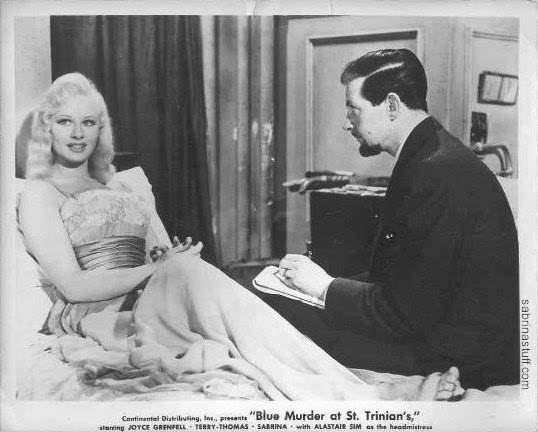
sabrina-bluemurder-publicity

Sabrina on the set of ‘Blue Murder at St Trinians’ being sketched by Ronald Searle

Found in the Peter Haining Archive a small file on the now forgotten fifties British glamour model Sabrina, who in 1936 was born in Stockport as Norma Sykes. The nature of some of the contents of the file, which includes three large glossy prints of the scantily clad model in various provocative poses, suggests that Haining was one of the thousands of young ( and not so young) men who had fantasised about the bosomy blonde in her heyday, when she was compared to Marilyn Monroe and Jayne Mansfield. His curiosity may have prompted either by research for a possible book on Arthur Askey, in whose TV shows she had appeared, or by another clipping in the Archive—-a double-page spread in The Mail on Sunday for September 1st 2002.

In this article Sabrina, who following her unsuccessful bid for Hollywood stardom had settled for a life of leisure as the wife of a wealthy LA gynaecologist, only to lose most of it following her divorce, was tracked down by reporters to a seedy corner of Beverley Hills :  Continue reading

The Book Bang of 1971

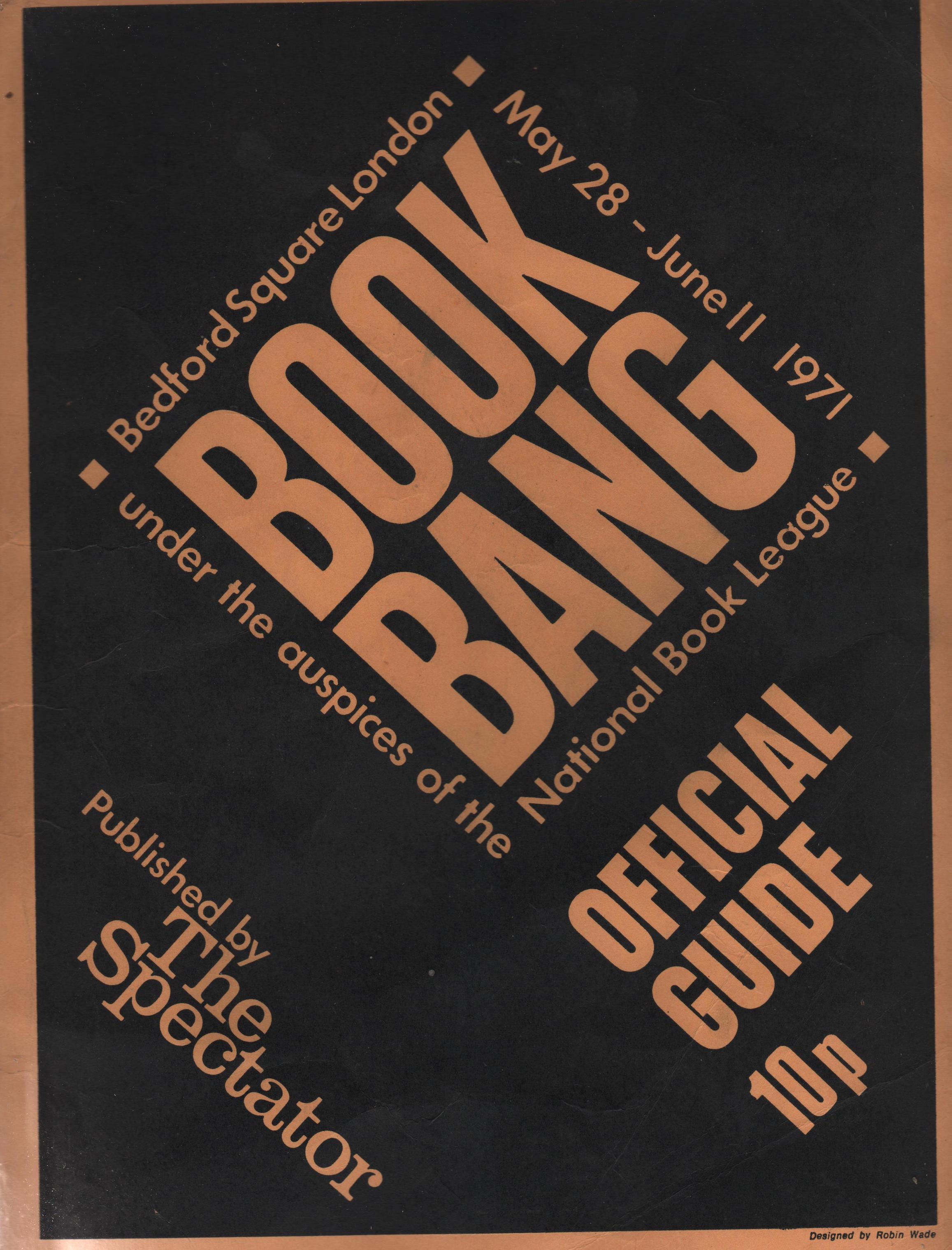
Book Bang 001Rescued from a pile of magazines is this programme of events for The Book Bang, which has been called ‘the first literary festival ‘. I doubt whether it was, but it was certainly a memorable event in 1971, and I seem to recall it being advertised widely in London. Held in, appropriately, the middle of Bedford Square, in the heart of Bloomsbury, between May 28 and June 11, it was organised by the National Book League under the direction of its Chairman, the former bookshop owner Martyn Goff.

The seed for this event had been planted in the mind of Goff in 1965, when he read a letter in an issue of The Bookseller from Desmond Briggs, of the publishers Anthony Blond, hoping that in the future a book fair might become a sort of circus and be held in candy-striped tents. When he was appointed Chairman of the NBL Goff knew that such an idea was feasible and he promptly went about preparing the ground by consulting experts and sponsors.

In his introduction Goff shows prescience in warning about the threat that ‘new media ‘posed to books:

‘Expansion of the number of hours and channels of television broadcasting: the arrival of video cassettes: microfilms and microfiches, to name but some of the competitors, will blot up hours and money that might otherwise have gone to books…’ Continue reading

Literary Masterpieces

james-joyceLiterary Masterpieces

In the miscellany Medley from October 1936 appears this intriguing pronouncement:

‘ It has been found that literary masterpieces of the first rank have been produced most frequently by authors who were from the ages of 40 to 44 inclusive’

Dr Harvey Lehman

We thought we’d test out the good doctor’s theory using, among other sources, the excellent Annals of Literature (1961), which finishes at 1950.

We started with Charles Dickens (1812 – 70). In this five year period he published three memorable novels: Bleak House, Hard Times, and Little Dorrit. However, most critics regard Great Expectations (1860) as his ‘literary masterpiece. ‘

We then turned to George Eliot (1819 – 80). She was 40 when Adam Bede was published, 41 when The Mill on the Floss appeared, 42 when Silas Marner came out, and 43 when Romola hit the shelves. All wonderful novels, but most critics would class Middlemarch( 1871-72) as her ‘ masterpiece of the first rank’.

Next we looked at James Joyce( 1882 – 1941). Here we hit the mark. His Ulysses, undoubtably a ‘ masterpiece of the first rank ‘, appeared in 1922 ( though it was years in the making ). Joyce was 40 at the time. Continue reading

Odd photos bought online 2

anne1Bought at eBay for the price of a latte (and muffin) -these 3 photos purporting to be of a British royal – Anne, Princess Royal. The left and right photos are indubitably her, the middle photo (printed on Fujifilm Crystal
Archive paper -as is the other colour shot) may not be. It shows a well dressed and striking young woman emerging from a Ford Thunderbird sometime in the (late?) 1960s in what looks like a field or orchard with other mostly pretty fancy American cars parked there. It has the feel of a Cindy Sherman performance  art photograph and if authentic must have been taken on a tour of America by Anne or while she was on holiday there.


The mouth (and nose) and assured demeanour certainly look like Anne. The provenance is good but such web purchases always have an element of doubt- certainly if it is Anne she is looking uncharacteristically  ‘cool’ and it is one of the ‘groovier’ moments of her young life. An online search revealed nothing conclusive especially when coupled with the words ‘Thunderbird.’
ann2

Odd photos bought online 1

Bought for the price of a cup of tea at eBay – the infinite online flea market, a photo of a jumble sale*, in England and likely to date from the earlier part of the 1960s. It is stamped on the back Salisbury Journal with a phone number ‘Salisbury 6933.’ The women are mostly wearing rain bonnets probably  because it was raining outside and possibly because it might rain (a fairly good bet most of the year in England, especially Wiltshire) or it may have been a fashion. The younger woman to the left with a transparentjumble plastic bonnet would indicate recent rain and also dates the photo in the 1960s, the rest of the women could come from the 1950s if not earlier. The goods displayed on the table are fairly meagre– some very basic bookends, a thermos flask without its cup, a lamp without a shade, a glass fruit juicer, some glass and tin jelly moulds, a cut-glass vase and one slim book. Some sort of raffle or tombola was also being offered (‘every card wins a bottle’.) The woman in the middle is obviously a keen and seasoned jumble sale shopper- she has three objects she may be buying from a box (a ruler, a chopping board and a wool hat or tea-cosy) and three bags ready for stuffing with bargains. Possibly she is holding these objects in order to be able to see or deal with things further down in the box. The lady to her left is either a friend or someone waiting to dive in…The woman behind in hornrim specs anxiously waits her turn – it is probably the very beginning of the sale, the first rush. Jumble sales still go on with bargain hunters, also online traders sourcing their wares , and people trying to help out the charity that has organised the event.

  • A sale of a mixed collection of things that people no longer want, especially in order to make money for an organisation, usually a charity. UK and Australian usage. In USA and Canada they are known as rummage sales.

Bookish mnemonics – the 5 D’s and the 4 R’s

bookridepile-1Someone once categorised the 5 reasons for selling books thus – Death, Divorce, Debt, Disinterest and Displacement (the “5 D’s”). The last refers to people moving houses, a very common reason. One could add ‘Disease’- we were once called to a house in Battersea where a man was selling every single book he possessed because he had become allergic to the paper in them. Dotage could also be added but this is usually covered by displacement…Duplication is another reason— for example, marriage can occasion the turfing out of a lot of duplicated books, especially when two great collections are amalgamated. We were privileged to be called to the Notting Hill mansion of Margaret Drabble and Michael Holroyd soon after their marriage. Divorce can be problematic in the division of books and occasionally lawyers become involved. In the days of CDs this was seldom a problem except one of clashes of taste.

In deciding which books to sell or get rid of the “4 R’s” mnemonic acronym can be of use.  Read, Revere, Reference, Riches. It is slightly  more contrived than the 5 D’s but is a very good test to use when slimming down a book collection. All bases are covered. Of each book ask the question:

Are you  going to Read or re-read it?

Do you love or Revere the book?

Could the book be of use (Reference)?

Is the book going to increase in value and eventually yield Riches?

If yes to any of the above -keep the book, if no to all -toss it.

A War Cookery Book

Found – a publisher’s advertisement (T. Werner Laurie) for a book of cookery recipes for war zones. It was in D’Auvergne’s ABC Guide to the Great War (1914). The book itself is rare but a copy can be found at the invaluable archive.org. Its full title is: A War Cookery Book IMG_0007 for the Sick and Wounded : compiled from the cookery books by Mrs. Edwards, Miss May Little, etc., etc. (by Jessie M. Laurie.) It was aimed at ‘every nurse, whether Volunteer or Professional’ and has easy to prepare dishes for ‘Invalid and Convalescent Patients.’ Here is a selection of  egg dishes. Obviously alcohol was considered useful and it is assumed that herbs can be fairly easily procured (parsley and thyme).

BREAD AND MILK.-Take a thick slice of fairly
stale bread. Cut it into tiny squares, and after having
cut away the crusts put it into an enamel saucepan
with about 1 pint of milk; boil up very slowly. Sugar
or salt to taste.

EGGS BAKED IN TOMATOES.-Choose rather large
tomatoes of equal size, cut a piece off the top of the
tomatoes, scoop out the pulp carefully, sprinkle on a
little salt and pepper, break an egg into a cup and pour
it into the hollow of the tomato, place on a greased
baking tin and cook slowly until the egg is set, basting
with a little butter. Continue reading

A bookseller meets T.E. Lawrence

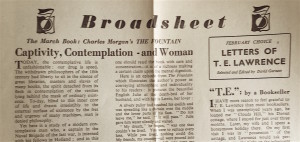
IMG_0006Found among  the books in the working library of the actor Peter O’Toole (1932 – 2013)  his copy of Letters of T.E. Lawrence (Readers Union, 1941.) O’Toole had surprisingly few books on or by Lawrence considering that this  was probably his greatest role and the film that made him an international star. In the Reader’s Union edition was loosely inserted  a one page wartime broadsheet keeping members of the book club informed about new publications. It was from an address at Wray Common, Reigate. This broadsheet / flier was dated February 1941and  has a good piece (“T.E.”) on Lawrence by his friend and bookseller  K.W. Marshall.
I have more reason to feel grateful to T.E. Lawrence than most booksellers. When I was unemployed years ago, he loaned me Clouds Hill his Dorset cottage, where I stayed for just over three months. Later, my wife and I spent a honeymoon holiday there. On my first  visit I was in “possession” of the cottage, and Lawrence would ask permission to stay the night on the infrequent occasions that he managed to pay a visit. He was very proud of the cottage and spent some considerable effort and time in gradually planning a comfortable retreat for his retirement. Unfortunately, when he died he had not enjoyed Clouds Hill for as long a period as I had; and during his short term of possession he was harassed by news reporters. Continue reading

Iona – a minor poet sings

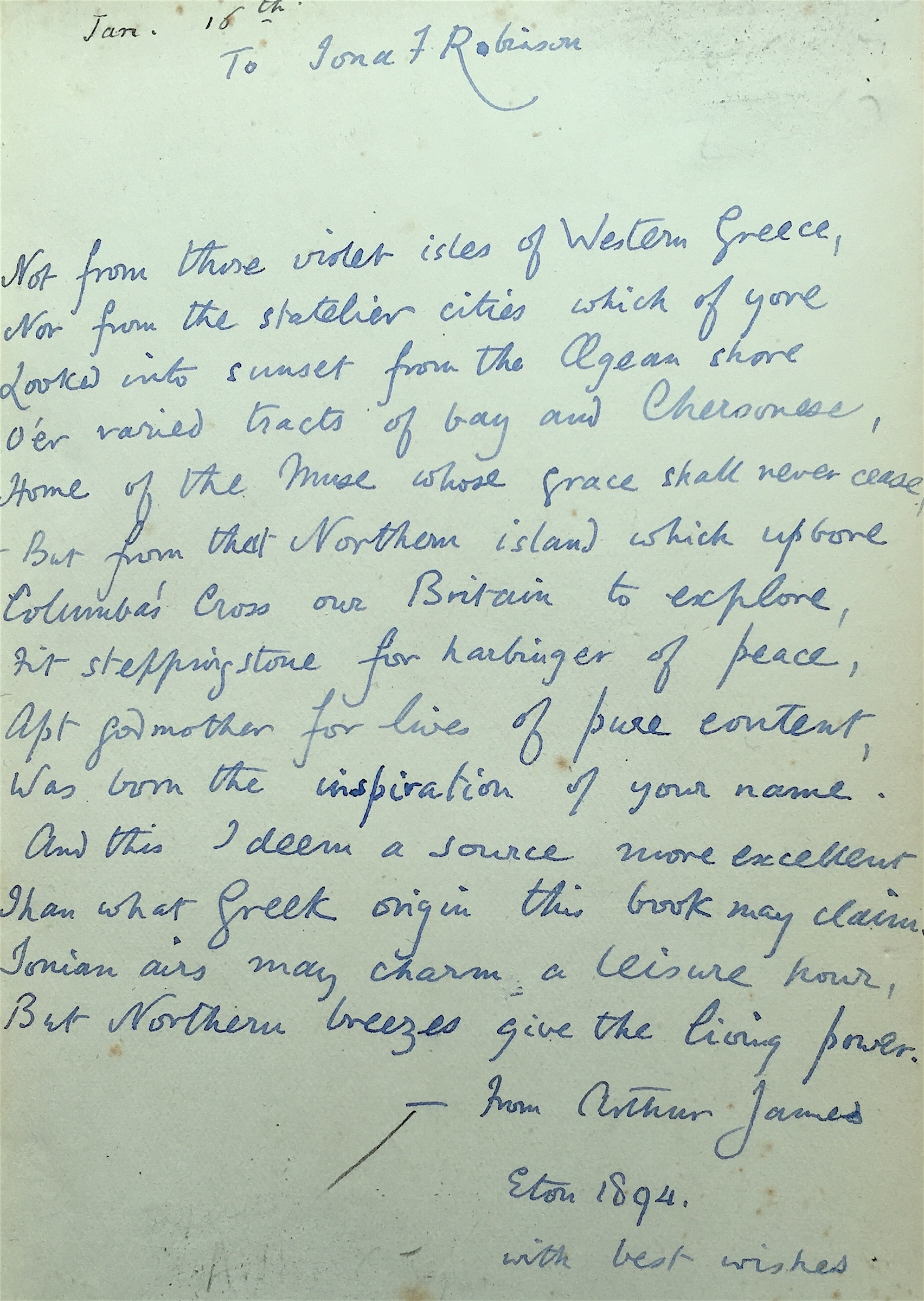
IMG_1597Found – a copy of Ionica – a book of  verse by Eton master William Johnson Cory  – this edition published anonymously by George Allen in 1891. It has been bound in an expensive full leather binding with gilt decorated inner dentelles. The book was presented by minor poet Arthur C James* to one Iona F Robinson on whom he appears to have been very keen given the title of the book, its sumptuous binding and the poem he has written to her on the front endpaper. Ironically Johnson Cory, a fellow master at Eton, is known for the gay themes in some of his poems.

Jan 16th. To Iona F Robinson

Not from those violet isles of western Greece,

Nor from the statelier cities which of yore

Looked into sunset from the Aegean shore

O’er varied tracts of bay and Chersonese

Home of the muse whose grace shall never cease;

-But from that northern Island which upbore

Columbus’s cross our Britain to explore, Continue reading

On Notes and Note Books

Notes and notebooks 001Now we are in the Digital Age, when as much data as we like can be stored in a note-book sized device made of plastic and metal, note-taking as a aid to memory is less important. As recent as fifteen years ago if we needed to record the gist of books, articles etc., we resorted to a note book made of paper and card which had to be small enough to be carried around in a pocket. In practice what we tended to do, however, was to write too much in too big a hand than was appropriate, thus making our notebook less efficient as a means of storing an accumulation of facts and opinions.
The solution, according to a self-published booklet of c 1934 entitled On Notes and Note Books by someone called David B. Muir of Dresden Road, Holloway, north London, was to accommodate more notes on literary material that interested us by reducing our hand to the size of newsprint, abbreviating words and compiling an index.

In Muir’s system of abbreviations a series of short straight or curved strokes above the missing letters, dots above and below, and other symbols for prefixes, would indicate the types of contractions intended. Discrete items of information would be separated by double or single vertical strokes. In the Index the keyword would be followed by a normal sized page number and a very small number, indicating the line. According to Muir, the secret to success with his system of note-taking lay in memorising these symbols plus any other symbols that the individual note-taker might care to use. Continue reading

Two John Fothergill letters

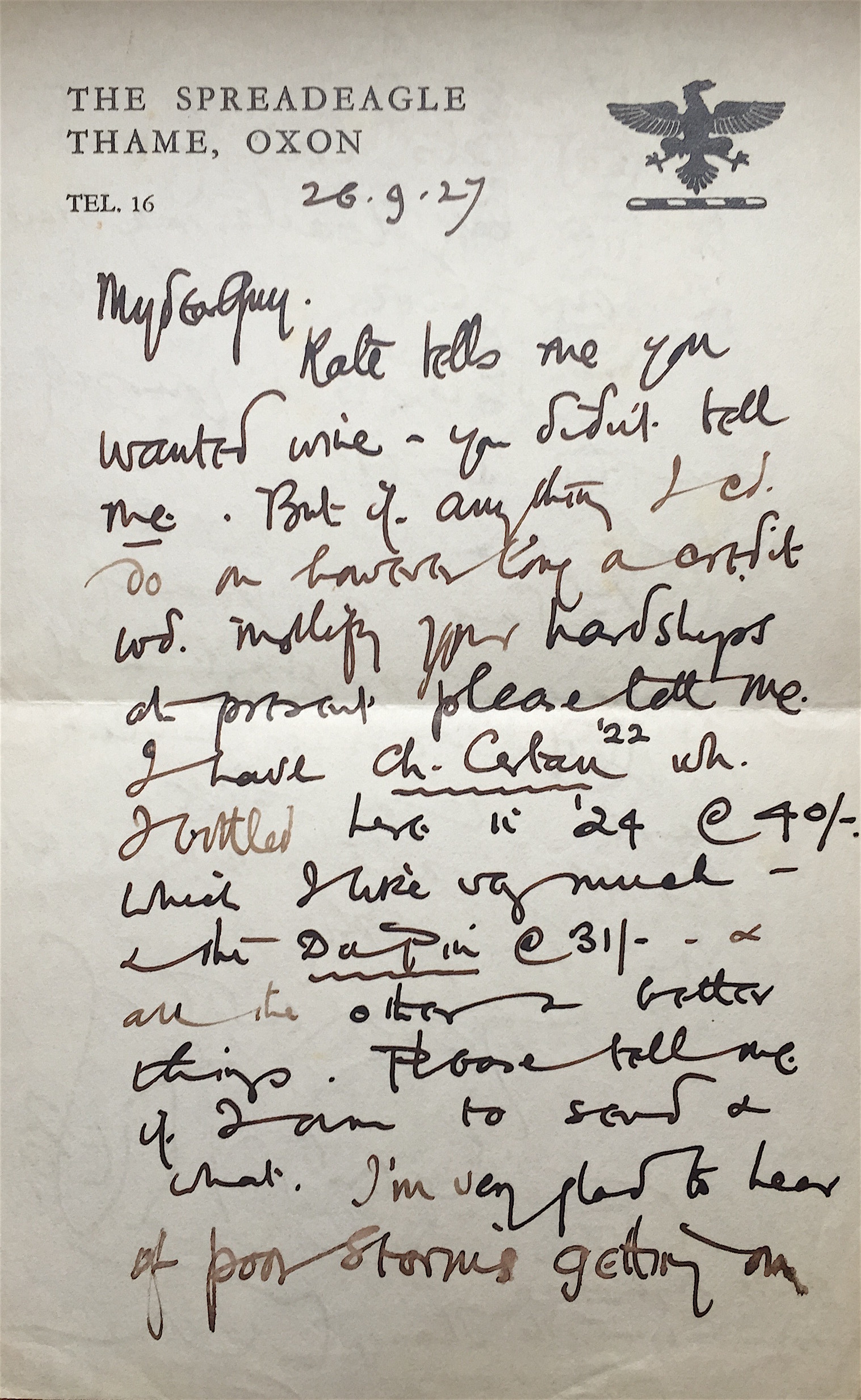
IMG_1595Found – two signed handwritten letters from John Fothergill author of An Innkeeper’s Diary.  He was the proprietor of The Spreadeagle in Thame, the ‘inn’ he managed to make a cult destination during the 1920s and 30s. To quote travel blogger Ian Weightman:

‘In its heyday, The Spreadeagle near Oxford became a mecca for holiday makers, and the great and the good of the country. Many people booked to stay or dine there, purely because of Fothergill’s notoriety. But many others – including a “glitterati” of writers, actors, artists and heads of state – arrived as a result of the hotel’s widespread reputation as one of the best in the land… Fothergill was not only an illustrious innkeeper, but also an outstanding chef, connoisseur of wine, and an early campaigner for “Real Food”’.

The letters are to the writer Guy Chapman (author of the WW1 account A Passionate Prodigality and husband of Margaret Storm Jameson, English journalist and author.) They were associated with the writer’s organisation PEN – hence Fothergill asking for advice about republishing a gardening book he had written in 1927 (The Gardener’s Colour Book -now quite collectable.) The first letter is from the Spreadeagle and the second from his inn in Market Harborough which he ran from 1934 to 1952. Anybody writing a biography of Fothergill in the future would appreciate these letters, but when they are sold they tend to disappear – so following the original Jot mission we are recording them here. Continue reading

Alien sightings in Pembrokeshire


Pembrokeshire UFOs 001A recent Jot about Alec Maclellan’s The Lost World of Agharti focussed on the links that one reader made between this work and the series of Seth books. But another reader, a certain J.S.A Lewis of Romsey, Hants, whose letter dated April 1986 can be found in the Haining archive, also tried to persuade Maclellan to consult a particular book. This was Ghosts of Wales by Peter Underwood, which he said confirmed Maclellan’s theory that UFOs came from his lost underground world rather than outer space.

Underwood’s story recounts ‘frightening and inexplicable ‘sightings in May and June 1977 and March 1978 of UFOs and alien figures at and near Ripperston Farm, west Pembrokeshire, the home of the Coombs family. Apparently, Mrs Coombs was driving home with three of her children when a bright light in the sky approached them with terrific speed and then, having shot over the car stopped, turned back and then followed alongside the vehicle. Mrs Coombs described the object to a reporter from Woman’s World:

‘ It was the same size and shape as a rugger ball but the colour was yellowish on top and silvery underneath, and beaming a sort of torch-like beam of light underneath it.’

The object kept pace with the car until it reached the lane up to the farm, when it rose and appeared to hover over the passengers. It was then that the car began to misbehave:

First the headlamps began to flicker and then they went out completely. The engine stopped, leaving the terrified occupants sitting in an immobile vehicle with the alien object hovering over them. The family managed to escape to their home where they found that the eldest boy who had been left there had also seen the strange object, which had sped towards the coast. Continue reading

An Acrostic and an Alphabet

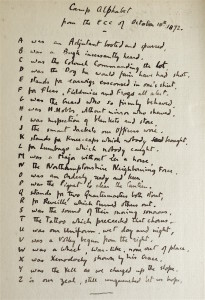
IMG_1590Found in Herbert Kynaston.  A Memoir. (Macmillan, 1912)  an acrostic for a bazaar to raise money for a home for ‘Friendless Girls’ (below). The book has the ownership signature of F.E. Balfour (1922). This is almost certainly  Ronald Edmond Balfour , who among other things, wrote a bibliography for E.M Forster’s 1934 book on Goldsworthy Lowes Dickinson. In World War 2 he was something of  a hero and there is much on him at the Monuments Men site. He had a huge book collection and went to Eton and King’s College Cambridge (hence the Forster connection.) Possibly inspired by Canon Kynaston’s acrostics (and double acrostics) he wrote out an alphabet at the end of the book. It is headlined ‘Camp Alphabet from the ECC of October 10th 1872.’ This is probably the Eton Cadet Corps, who are still in existence (David Cameron was a member- hence his fondness for The Jam’s Eton Rifles.)

A was an adjutant booted and spurred,

B was a bugle incessantly heard

C was the Colonel commanding the lot

D was the dog he would fain have shot

E is for earwigs esconced in one’s shirt

F the fleas, field- mice and frogs all alert.

G was the beard who so firmly behaved

H was H. Hobbs without mirror who shaved

I was inspection of blankets and store

J the smart jackets our officers wore

Continue reading