 Some of the celebs who ‘approved’ restaurants and inns in The Good Food Guide of 1961 – 62 were poets, journalists, novelists and literary translators. Two of them—Keidrych Rhys (1915 – 87), the Welsh poet and veteran editor of the literary magazine Wales, and Michael Meyer, the prize-winning translator and biographer of Ibsen and Strindberg, and a friend of Raymond Postgate—feature prominently in the London section of the Guide.
Along with drama and good conversation , the greatest passion of Meyer (1921 – 2000), according to a friend, was food. He writes about his passion for it in his autobiography, Not Prince Hamlet (1985), and doubtless he was instrumental in recommending good eating places to his friend Raymond Postgate. Certainly, he is one of the more frequent ‘approvers‘ to appear in the Guide and at one point was expected to succeed as its editor. Eclectic in his tastes and apparently prepared to trawl London for good places to eat, one of his favourite restaurants was Fiddlers Three in Beauchamp Place, Kensington, very close to the trendy Parkes ( see earlier Jot). Appropriately for such a fan of European culture, the food seems to have had a pronounced East European flavour; dishes included ‘ goulash, boiled silverside and dumplings, whole small pigeon, stuffed baby marrows, prune and orange jelly, home-made soups, kedgeree with cheese sauce, and home-made cream cheese’. Translation work often pays well, which explains why Meyer was also able to afford Chelsea’s La Carafe, a branch of the famous fish restaurant Wheeler’s, where lobster Cardinal ( 15/-) and 32 varieties of sole were on the menu. Continue reading

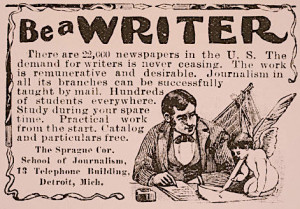 In the fascinating Thousand Ways to Earn a Living (1888) the section on ‘Literary Work’ covers journalism, authorship, and something called ‘compilation’. In the journalism chapter modern-day readers might be surprised at the high rates of pay awarded to humble London hacks ( up to £10 a week in 1888—more than a skilled surgeon or a junior barrister might earn ), but few could argue that in late Victorian Britain , as in 2017, in the newspaper world ‘ the majority of new ventures are promoted by newspaper men who have been underpaid or unfairly dealt with by their employers ‘.

 Another in the series “I once met” and the sub category “I once danced with..” used when the meeting was only with someone who knew the person (almost always famous.) This is a reference to the popular song “I danced with a man who danced with a girl who danced with the Prince of Wales.” An earlier Jot concerned a meeting with a

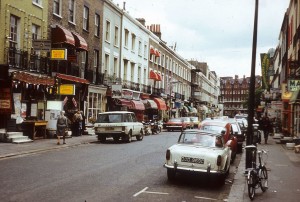 In his Good Food Guide of 1961-62 Raymond Postgate describes the trendy Parkes’ Restaurant at Beauchamp Place (above) in Kensington as ‘ a personal restaurant, dependent upon Mr Ray Parkes, the chef and owner, who offers in his basement at high prices what is claimed to be , and up to date is, haute cuisine.’
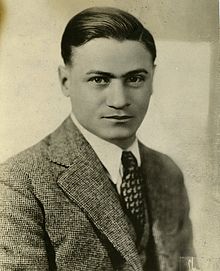 Few American publishers can boast that they have printed 300 hundred million books. Emanuel Haldeman-Julius (1889 – 1951), however, was one who could. An atheist and socialist who believed that the average American had a right to own a library of enlightening, useful and entertaining texts for a few cents a volume, Haldeman-Julius established the Little Blue Book series in the 1920s. Pocket-sized and ranging in subject matter from ancient culture and classic literature to self-help books and handbooks on making your own candy, the Little Blue Books sold in their millions each year, figured in the early education of such American writers as Saul Bellow and Studs Terkel, and anticipated in some respects the very popular ‘Dummies’ of today, though they were very much cheaper.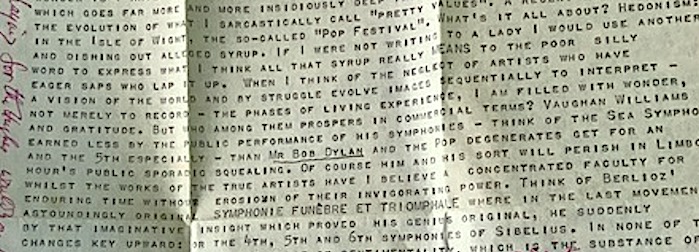

 Discovered in an 1928 issue of John O’ London’s is an anecdote illustrating the importance of punctuation in a legal document.
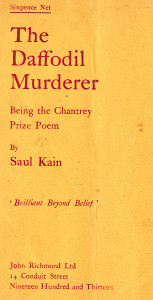 Found – a rather battered copy of Siegfried Sassoon’s early book The Daffodil Murderer (1913) published under the pseudonym ‘Saul Kain.’ In decent condition it has auction records like this from Bloomsbury Book Auctions in April 2009: