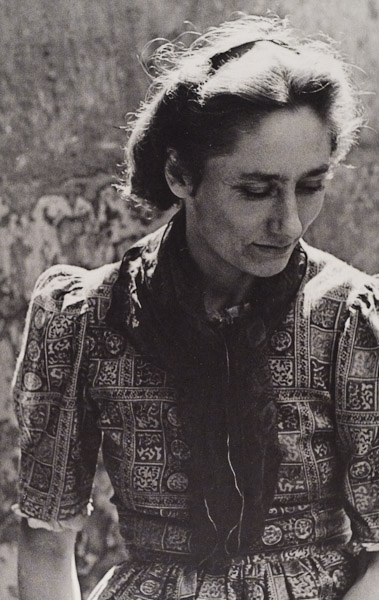
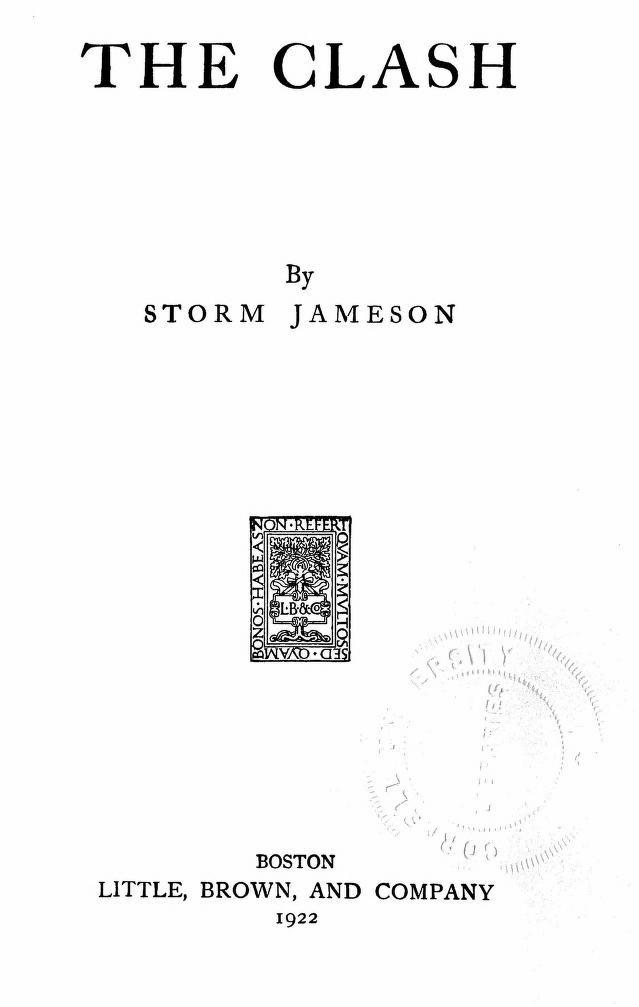
 The Clash was formed in 1976. Storm Jameson died ten years later, aged 95. I don’t know what sort of music Ms Jameson liked, but I doubt if she was a great fan of punk rock. But if at 85 she was an enthusiast for this music genre she might have been delighted if Paul Simonon, The Clash’s bassist, had taken the name of their band from her 1922 novel The Clash.
She might have been even more pleased if, when the band members had finished putting together their difficult second album, they named it after another Jameson book, London Calling (1942).
But of course, it’s unlikely that either of these borrowings took place. One could ask Mr Simonon for the truth, but he might not be willing to admit it. After all, it’s not very rock and roll to name your band after a fusty old ‘twenties novel. Joe Strummer (1952 – 2002) is no longer on the planet to spill the beans. Other former members of the band might not be able to recall the stories behind the two names.
There are countless examples of musicians borrowing the names of their bands from books, movies and even newspaper headlines, but for a punk outfit to take the names of both their band and their second album from two books written by the same largely forgotten octogenarian female writer seems beyond belief.
And yet….It has been said that the band Generation X, fronted by Billy Idol ( aka William Broad), took its name from a book published in 1964 by Jane Deverson ( see previous Jot ) that Mr Broad had found in his mother’s home . Was Storm Jameson a favourite author of Simonon’s or of any other member of The Clash ? [RR]
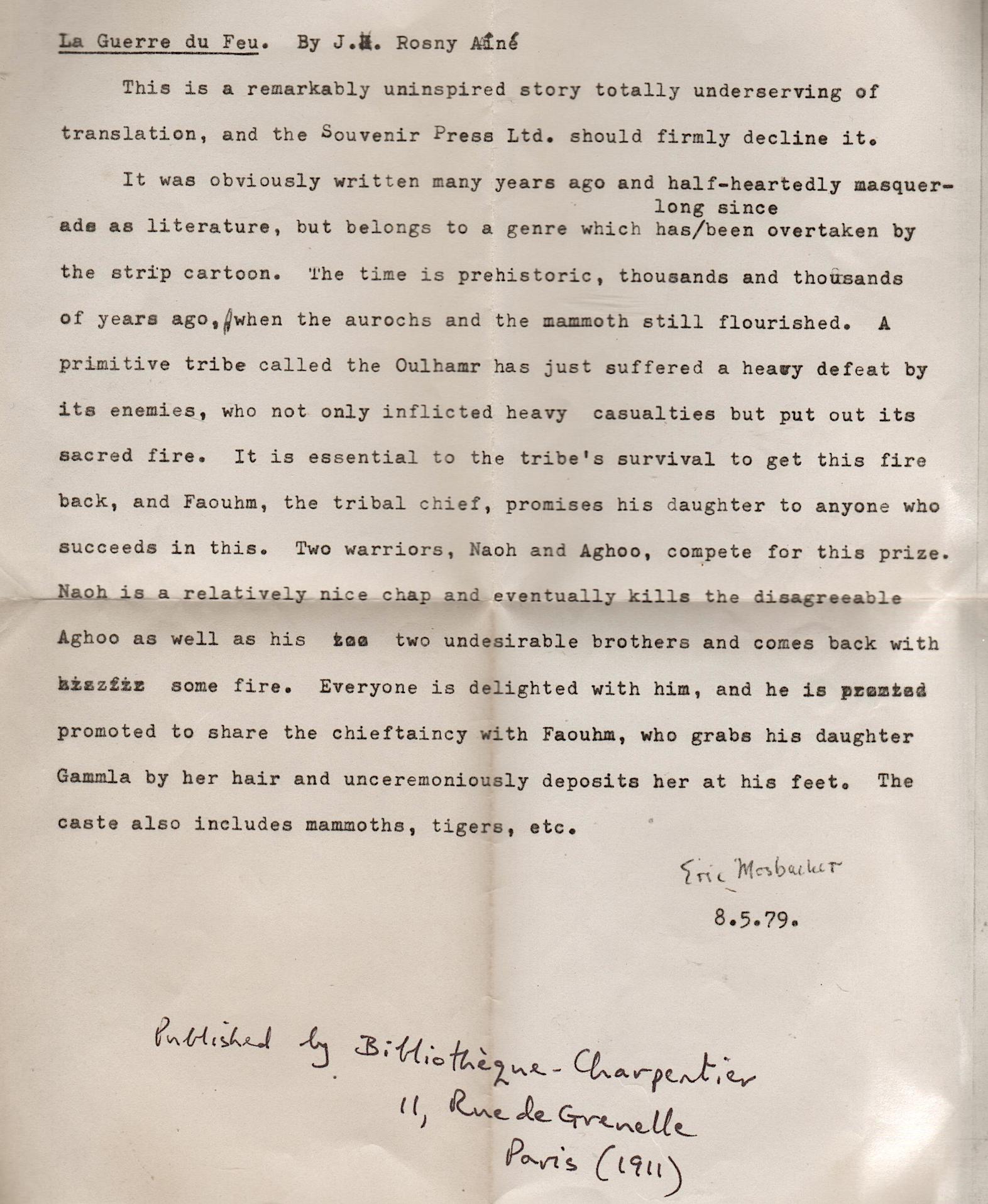
 La Guerre du Feu, an early fantasy novel, probably written by Joseph Henri Honore Boex (1856 – 1940), one of two Belgian brothers who often wrote fiction together under the pseudonym J.H Rosny-Aine. was published in 1911 by the Bibliotheque-Charpentier in Paris. It is said to have been first translated into English by Harold Talbott in 1967. If this is true, it is odd that the acclaimed journalist and translator Eric Mosbacher in his note of 8.5.1979 ( shown) stated that this ‘ remarkably uninspired story’ was ‘ totally undeserving of translation ‘ and that the Souvenir Press should decline it. It is possible, of course, that a translation into a language other than English was proposed. Mosbacher translated from French, Italian and German.
 Banned books: No 12: Lummox by Fannie Hurst