Imagine Mike Ashley or Philip Green sitting down every day to compose a feature article in a leading national newspaper for the amusement and edification of regular or prospective customers of their department stores. It’s impossible to contemplate. Yet in the early years of his flagship store in London’s Oxford Street this is exactly what Gordon Selfridge ( 1858 – 1947) did to publicise the enterprise he had founded in 1908.
Each day for 27 years Selfridge, under the pseudonym ‘ Callisthenes ‘, published a short essay reflecting ‘ the policies, principles and opinions of this House of Business upon various points of public interest.’ The articles appear to have begun around 1910, only months after his store had opened for business. From 1924 they appeared in the ‘ entertainment’ page of the Times and two hundred of these Times articles from 1930 were collected in book form under the Selfridge imprint in 1933; further articles continued to be published for another four years.
In collecting together these articles, which in their original form provoked responses from all over the world, Selfridge was at pains to emphasise that they were never written to be collected as serious literary essays. Rather they represented ‘a unique feature of modern publicity ‘framed as ‘modern, topical journalism’. Continue reading

 poem entitled ‘The Dawn’ by the famous Spanish experimental writer


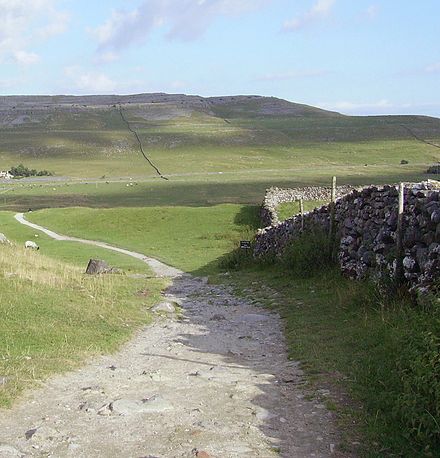
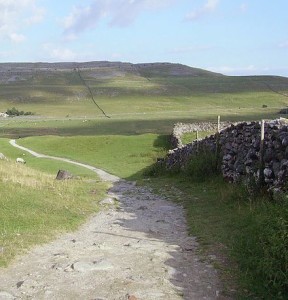 Connecticut 1928) – a special American edition. The great historian ‘s paean to the joys of walking (” I have two doctors, my left leg and my right..’) was published first as an essay in 1913 in Clio, a muse, and other essays literary and pedestrian and the American introduction by J. Brooks Atkinson notes that the walking world has changed much since then: “..the motor car has completely separated the walkers from the riders. It lays a new responsibility upon the walkers to conduct themselves nobly in God’s light.. they cannot be road walkers now, like Stevenson, since roads have become arteries -hardened arteries- of traffic. They are pushed willy-nilly into the hills, meadows and woods beyond the clatter and the evil fumes of the highway..” (he then launches an attack on the new walking clubs- ‘their walking is a bastard form of motoring.’) Trevelyan’s essay recalls a world now largely lost, although our great modern walkers (Iain Sinclair, Robert Macfarlane, Will Self) still find great places to ramble. GMT writes:


 Found– Moonlight at the Globe;: An essay in Shakespeare production based on performance of A `Midsummer Night’s Dream at Harrow School (Joseph, London 1946). It was written by


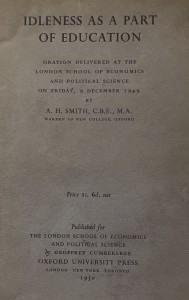 delivered at the London School of Economics in December 1949 by A.H. Smith, the warden of new College Oxford.
 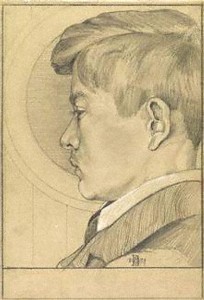 Found –Life (Dent, London 1921) a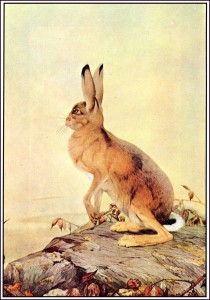
 Most of the Common-Place books you find in auctions or second-hand bookshops date from the nineteenth century—usually before about 1860—and are dull, dull, dull! They invariably contain passages from history books, books of sermons, and extracts from poems by Felicia Hemans and Robert Southey. Often they are illustrated by amateurs who like to think they can draw. Occasionally there are exceptions to this rule, but these rarely surface. So it’s nice in this Age of the Internet to find a Common –Place book that contains some information that is not always easy to find using Google. Such is the volume that we at Jot HQ discovered in a box of ephemera the other day.