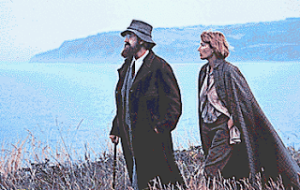
 In part one we looked at the way John Thaw tried to disguise a leg injury he had sustained as a teenager. Later on in his audition for RADA he had played Richard III with a limp and as Morse he had tried to disguise his limp. But some actors can easily affect a certain gait for dramatic affect. Both Alec Guinness and Laurence Olivier maintained that once they had got the walk right the rest of the role fell into place. In an adaptation of Ivy Compton Burnett’s ‘A Family and a Fortune’ Guinness had to leave a room to get out into the cold. The way he flung a scarf round his neck and trod stutteringly before leaving told you everything you needed to know about the climatic conditions and preparing to brave them.
Gielgud was once seen coming out of L’Etoile in Charlotte Street. His grey Rolls Royce awaited him. He had to cover about three metres. The only word for what he did is ‘process’. There is a funny scene in ‘Cage aux Folles’ ( the American version is better in this instance ) when one of the guys does the ‘John Wayne Walk ‘ in order to appear a proper heterosexual. He does it perfectly—but somehow it is very camp. At least one burglar has been arrested because his distinctive John Wayne style swagger had been caught on CCTV. Cowboys also walked with bow legs, which is obviously an occupational distinction like that of sailors, with their ‘rolling gait’. The TV detective Hercules Poirot, as played by David Suchet, affected a rather silly short-paced walk and we all know how John Cleese played the civil servant at the Ministry of Silly Walks. Saul Berenson (Mandy Patinkin) , CIA head in Homeland affects a memorably fast and determined walk with plenty of arm movement.. The actor Richard Beckinsale, well known for his parts in ‘Rising Damp’ and ‘Porridge ‘, used hardly to pick his feet off the ground. He shuffled.
We’d surely all like to know a little more about how certain writers and artists walked. Unlike most ‘ celebs ‘ they are generally invisible to the public, unless they take part in literary conferences, symposia and arts festivals. Does anyone know how Grayson Perry, Tracey Emin or Martin Amis walk ? The novelist Frederick Raphael is very tall and affects what might be called a don’s stoop, though why fellows of Oxford and Cambridge colleges should be more likely to stoop while walking hasn’t been explained. Perhaps it’s just the tall male ones who stoop. A few writers may have had disabilities which affected the way they walked. Bruce Cummings ( aka ‘W. B. Barbellion’) developed disseminated sclerosis early in his life, so his gait must have been unusual. Alex Pope’s scoliosis must also have been reflected in his walk, though there are few, if any, references to it. As for Charles Dickens, the last five years of his life were blighted by the extreme pain he suffered in his left foot through what Dr Chris McManus describes in a recent article in the Lancetas a ‘right parietal temporal disorder ‘, which might have heralded the stroke which eventually killed him at the age of 58. Many of his friends had diagnosed gout, but the symptoms that affected other parts of his left-hand side, such as his hand and eye, suggest otherwise. The gait of Dickens must have been severely affected by this affliction and indeed those with something similar or who suffered with gout, would have had distinctive ways of walking. Continue reading
 Advances
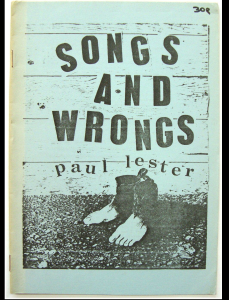 If you search for ‘Paul Lester’ online most the results will concern Paul Lester, the prolific rock critic and biographer; but anyone interested in performance poetry over the past 45 years will hopefully ignore these references and refine their search by adding ‘ poet ‘ or ‘Birmingham’ to ‘ Paul Lester’. They could also add ‘Protean ‘. For ever since Lester published his first poetry pamphlet in 1975 he has been regularly issuing slim volumes ( some very slim) , usually under his own imprint, Protean Publications, from an address in Knowle, near Solihull, although he actually lives in Rubery, in the far south-west edge of Birmingham.
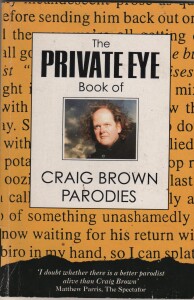 Around 2002 I was interviewing celebs on their book collection for Book and Magazine Collector while also researching the life of acclaimed poet and critic Geoffrey Grigson. One day I read an interview with the famous parodist Craig Brown, whose brilliant contributions to Private Eye had always had me in stitches. Judging from the interview, Brown’s library was dominated by biographies and especially memoirs of living figures in all fields, but with an emphasis on show biz. Interviewing him, I felt, would be a change from talking to rather dour politicians and academics on their first editions. And so it turned out.
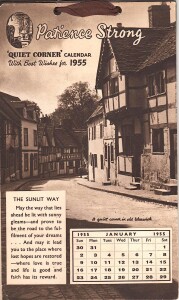 Found amongst a pile of books at Jot HQ, the pocket-sized ‘Patience Strong ‘Quiet Corner ‘calendar for 1955 with its sepia photographs of ‘ picturesque ‘ spots in England. We had almost forgotten that publishers still used sepia photographs as late as this, but then remembered the lifeless and dispiriting photographs of landscapes and empty streets in Arthur Mee’s ‘King’s England’ series of county guide books. No wonder the county guides published by Shell from 1934 were regarded as such a welcome change from these dreary volumes. Mee’s totally predictable descriptions of towns and villages in each county were matched by Strong’s trite and cliché-ridden verse formatted as prose in her calendar and exemplified in ‘ The Sunlit Way ‘which accompanied a traffic-free photo of a ‘ quiet corner of old Warwick ‘ on the page for January 1955.

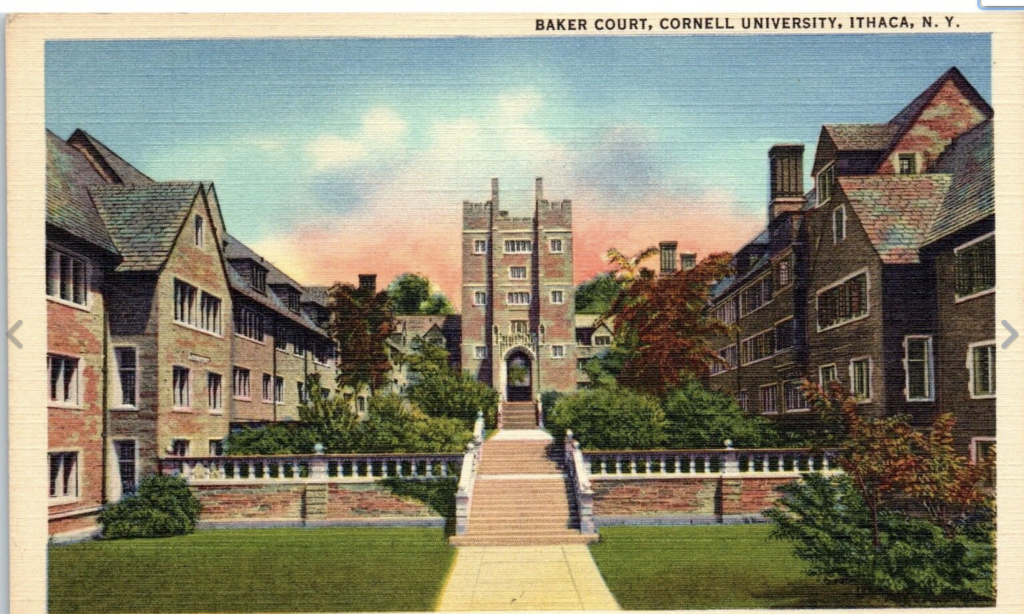


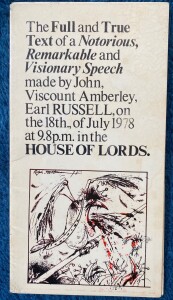 Open Head Press about 1980 at 50p. It came from the estate of the Dutch radical Simon Vinkenoog whose birthday (18th July) was the same day as this revolutionary (not to say crazy) speech was given. It has the full text of Earl Russell’s 1978 maiden speech to the House of Lords.