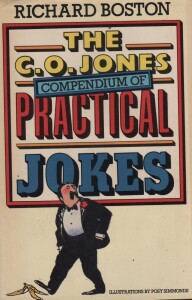
In The C. O. Jones Compendium of Practical Jokes(1982) Richard Boston narrates some entertaining anecdotes concerning the humorist Max Beerbohm. Most of those involving the ‘ alteration ‘ of books remind us of the hilarious alterations made in the ‘50s and 60s by Joe Orton and Kenneth Halliwell on books borrowed from Islington Public Library, where they are still displayed. It is possible that the two men got their idea from Beerbohm.
One joke, according to Boston, was played on ‘a volume of exceptionally solemn poems by a dullard called Herbert Trench ‘. Boston doesn’t identify the collection, but since it contained a ‘ romantic dialogue between Apollo and a mariner ‘ it was definitely Apollo and the Seaman(1908).This is what Beerbohm did.
‘With a sharp knife and painstaking care Max scraped out the aspirates at the beginning of every word beginning with ‘h’ spoken by the mariner, and substituted an apostrophe. The result was that a speech intended to be of a classical dignity was turned into straight Cockney. Max then sent the book to the author, commenting that he had notpreviously come across this edition of the book.
The work had been done so carefully that it appeared to be perfectly genuine. At first Trench was horrified. When he tumbled, he was offended. Max made it up by explaining to Trench that he considered him to be a true poet —-‘Otherwise there wouldn’t be any fun in making fun of you’.
Some lines altered by Beerbohm may have appeared thus:
Apollo: “ And whence did that craft hail, sailor,
Of which you seem so fond ?”
Seaman: “ It was some ‘ arbour of the East
Back o‘ beyond, back o’ beyond. Continue reading
 ‘Magdalen, both the most beautiful and the most intellectually diverse. Christ Church is an unreconstructed sanctuary of the worst in British snobbery; Balliol is like an American law school, full of politics and ambition. Magdalen has everything : class warfare on even terms, superb tutors, an immense spectrum of interests and tastes’. Other colleges are available…
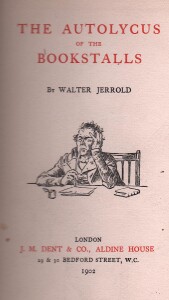 We at Jot 101 had not imagined the travel writer and biographer Walter Jerrold ( 1865 – 1929 ) to be a frequenter of second-hand bookstalls, but there he is as an unabashed collector of ‘unconsidered trifles ‘ in Autolycus of the Bookstalls (1902), a collection of articles on book-collecting that first appeared in The Pall Mall Gazette, Daily News, the New Age, and Londoner.
 f laughter after hearing that Charles II had been restored to the throne, and the editor of the short-lived magazine The Vole, a pioneering ecological magazine. Boston lived in the same village ( Aldworth ) as Richard Ingrams and was friendly with him. He was also a pal of the artist and writer John Piper ( though Frances Spalding’s biography neglects to mention this fact ) and it was Piper, who may have supported The Vole

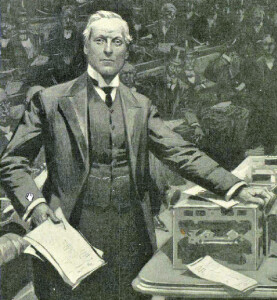 Found among papers at Jot HQ is this carbon copy of an anonymous typescript article on the Liberal Prime Minister H. Herbert Asquith (1852—1928). The author—evidently a Liberal supporter and a great fan of Asquith—reveals various tantalising clues as to his identity, but remains a mystery, despite intensive online research by your constant Jotter.
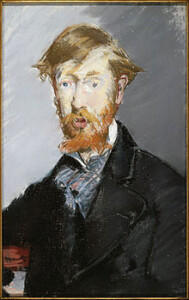 It’s always revealing to learn which books were the favourites of certain writers—and which books or writers were reviled. We know what Wyndham Lewis felt about the Bloomsbury set. It’s all in The Apes of God. It’s not a secret that Martin Amis worships Nabokov and Saul Bellow or that Kingsley Amis was a Janeite. The likes and dislikes of pre-modernist writers, however, tend to be less well known today, so it’s good to find someone expressing their secret admiration for a certain writer or a certain passage of prose or poetry.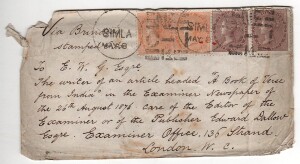

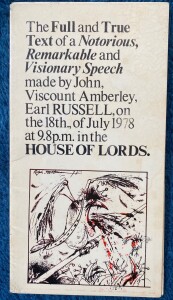 Open Head Press about 1980 at 50p has the full text of Earl Russell’s 1978 maiden speech to the House of Lords.