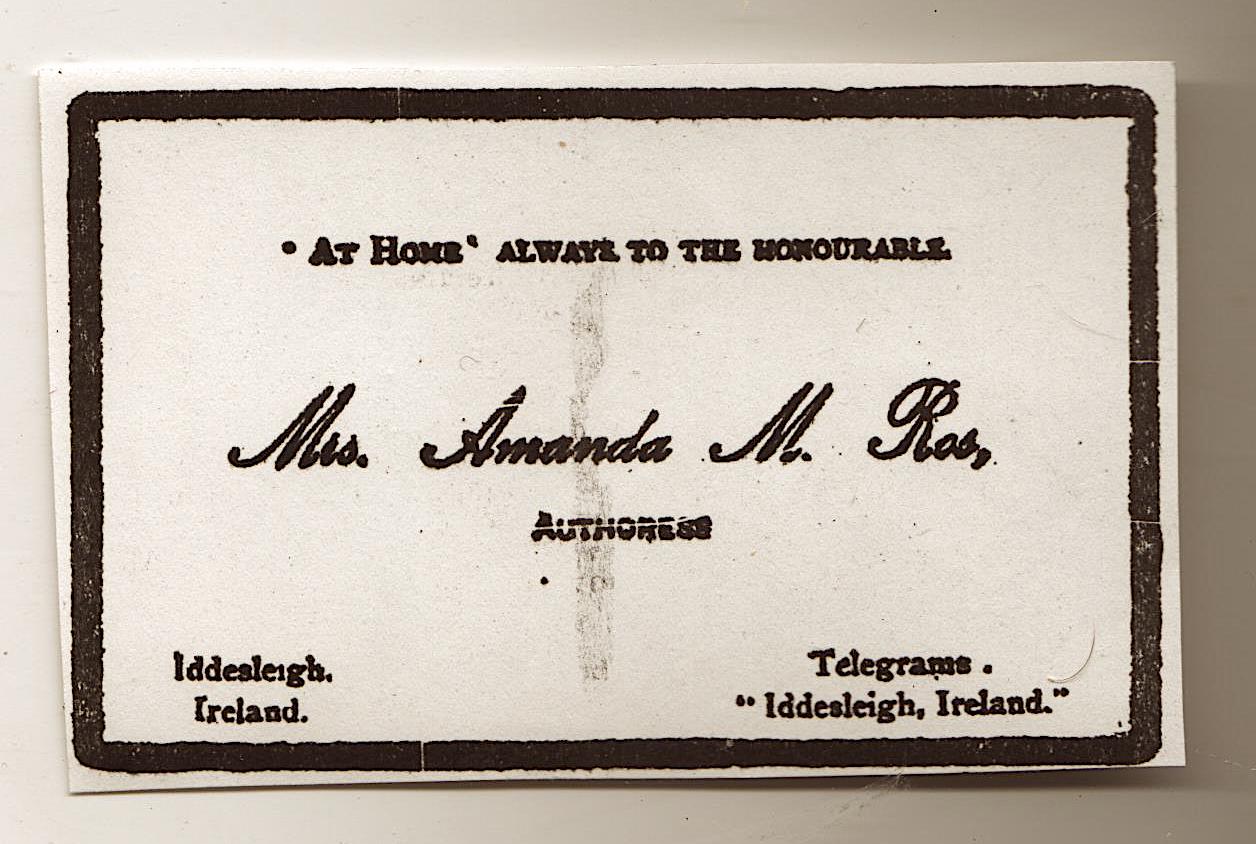
In June 1973 Bevis Hillier, connoisseur of English porcelain and friend and biographer of John Betjeman, wrote a piece in The Times concerning an archive of manuscripts, published books, letters and photographs of Larne’s best loved citizen and arguably Britain’s worst writer, Amanda McKittrick Ros, that had come onto the market. The collection, assembled over many years, mainly from members of her family, by journalist and founding member of the British Communist Party, Eric Mercer, had been sold by him to the bookseller A.F.Wallis just before he died in 1972 aged 89, and Wallis now wanted £4,500 for it.
Forty-six years ago this was a tidy sum for a writer mainly known for her comedy value. Back in the 1920s, when smart Oxford undergraduates like Betjeman and Waugh took part in competitions to discover who could read out passages from Ros’s novels and poetry without laughing, such an archive might have fetched more. But even in 1973, years after her star had faded somewhat, £4,500 for such a unique collection seems a bargain today, especially when we learn that the MS of Enemies of Promise by the minor writer Cyril Connolly was up for sale at the same time for a cool £2,000 !
Few would dispute that Ros has ever been truly fashionable, but her books, all of which were originally privately printed, are still collected and first editions, especially of her verse, are hard to come by, mainly because of their small print-runs. But no publisher in 2019 would dare bring out large editions of her books partly because she is still not well known enough and partly because we have become rather po-faced about ridiculing people who evidently had no talent, whether as writers or marathon runners. Continue reading


 It’s often enlightening to read very early reviews of major writers, especially modernist writers. In 2019 we have the benefit of knowing how certain ‘ big names ‘ developed and influenced others, while the innocent reviewer of an early work has only the words on a page. A gifted reviewer may sense that a writer under review is destined for greatness, but most reviewers are hacks and care little. In the case of Ezra Pound, the anonymous review of his third collection, Personaethat appeared in The Literary Worldof August 15th1909, suggests that the reviewer was already an admirer of his first two collections, A Lume Spento(1908), which had been privately printed in Venice in a tiny edition of just 150 copies, but which Pound had persuaded the London bookseller Elkin Matthews to display in his window—and the follow up, A Quinzaine for this Yule—also in a tiny edition. A London Evening Standardreviewer described the former as ‘wild and haunting stuff, absolutely poetic, original, imaginative, passionate and spiritual’. It seems that the Literary World reviewer was of a similar mind:
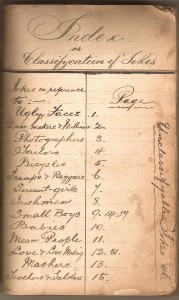 Found at Jot HQ the other day a small scrapbook containing pasted in humorous cuttings from magazines and newspapers that once belonged to the late prankster Jeremy Beadle (1948 – 2008). The date 1897 on the cover was very likely the year in which the compilation was begun, since many of the jokes and anecdotes are clearly of a later date. The high quality of much of the material strongly suggests that the compiler may have been a comedian of some sophistication who was prepared to devote a long period in search of the best gags.
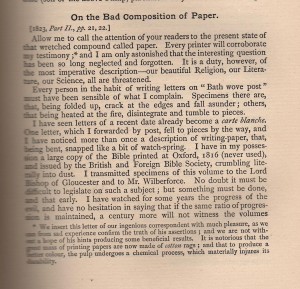 Researchers in newspaper and magazine archives often complain about the horrendous quality of newsprint they encounter. Sometimes whole pages are brown and need to be handled with extraordinary care as they are turned, lest they crumble to dust— to the embarrassment of the researcher. The decline of paper quality seems to have begun towards the end of the nineteenth century and is attributed to the high acid content of the wood pulp used for printing cheap publications—mainly newspapers and periodicals, particularly adventure and school stories for boys, but also mass produced books issued in serial form. The decay of newsprint appears to accelerate with exposure to sunlight, which explains why single issues of newspapers and magazines are much more likely to turn brown and crumble than bound volumes.

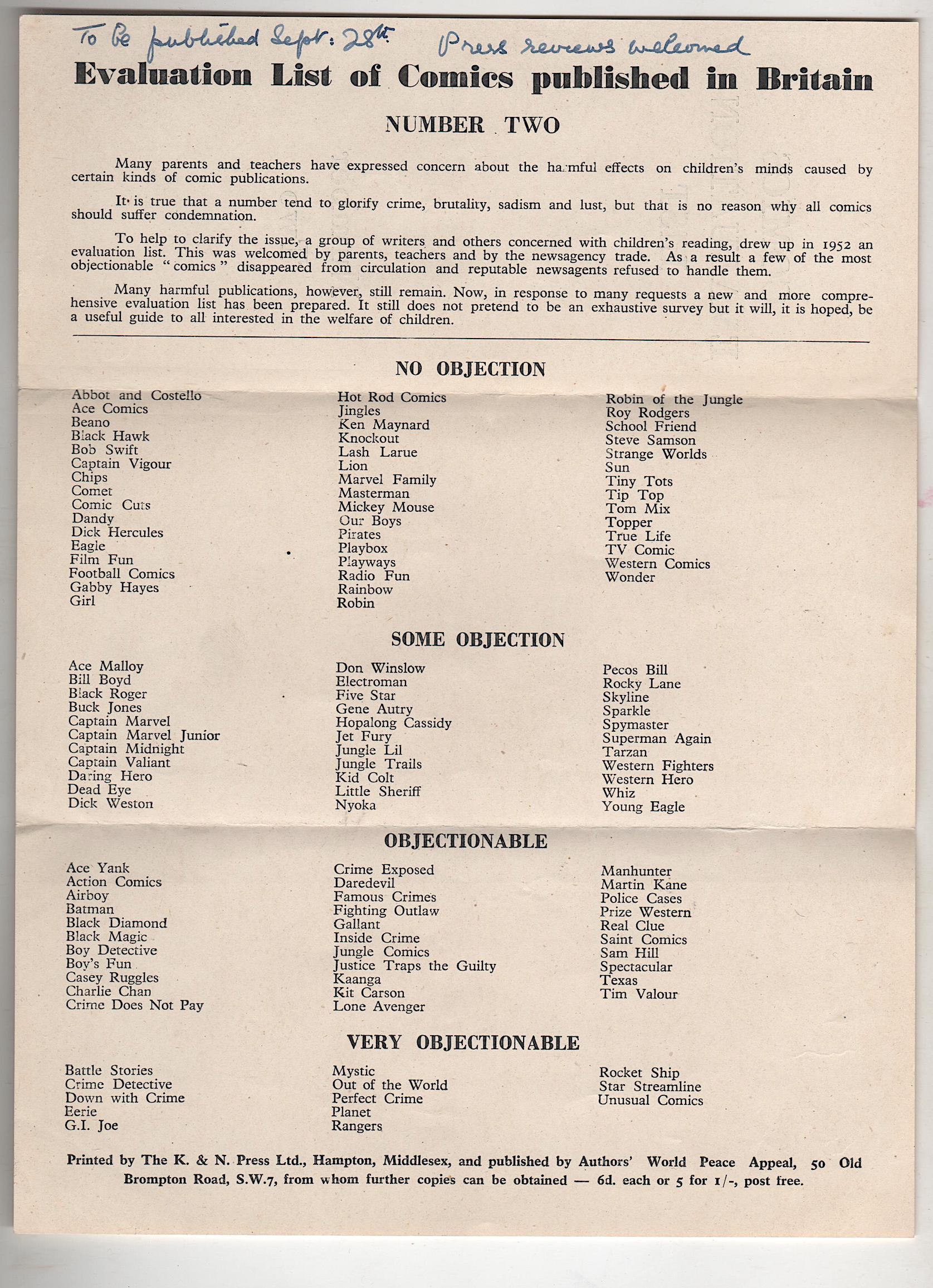
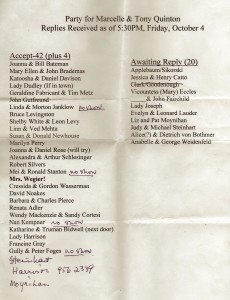 Found among papers at Jot HQ ( heaven knows where it came from ) is this printed list of the good and great ( some not so good) who were invited by a friend or friends to attend a party for the philosopher (Lord)
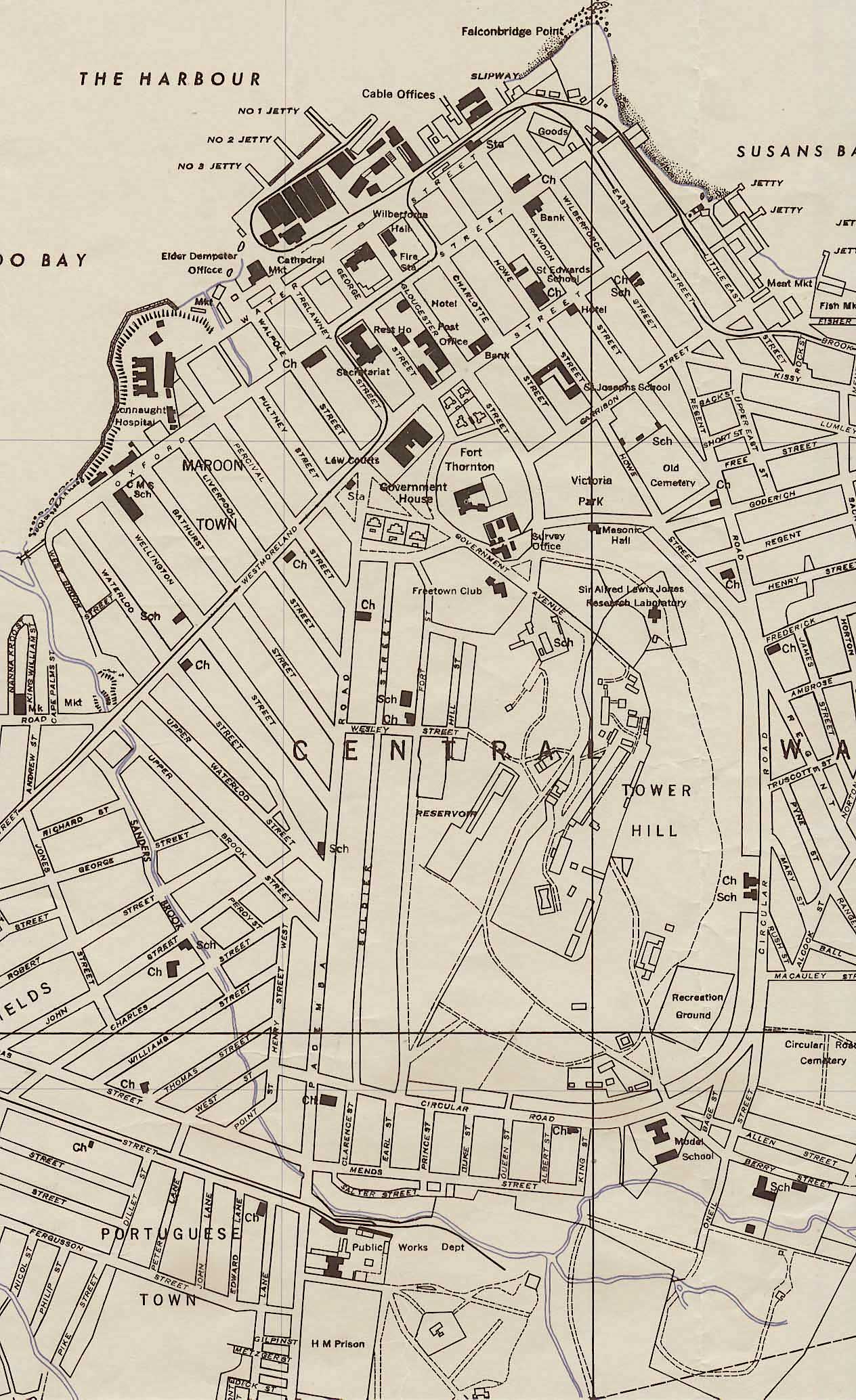
 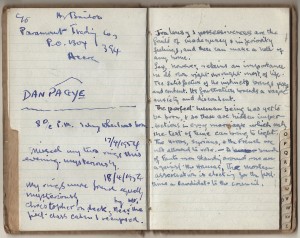 This fragmentary, though fascinating Diary, that occupies a section of a tiny Address Book, was found in the Jot HQ archives. It records a visit to west Africa in the first few months of 1954 by an anonymous male diarist whose remark that Africa’s dry season of Harmattan was ‘our winter ‘ suggests that he may have been a native African or have had African heritage. He also mentions visiting his mother in Ghana. Moreover, a solo entry in the Address Book dated two years before the Diary mentions ‘ English lessons ‘, and the erratic spelling and awkward grammar of the Diary entries are also strongly suggestive.