Radiesthesia—–the swing of the pendulum

Radiesthesia---or dowsing, as it is more familiarly known-- has become trendy again. With devotees such as The Duchess of York, Jerry Hall, Cherie Blair and ahem… Dr Radovan Karodicz, who could fail to be curious about this ancient art of self-exploration? Indeed, the well know poet, psychiatrist, alleged war criminal and Santa Claus lookalike, was actually making a living out of radiesthesia, among other 'alternative therapies' , when he was captured in 2008.

This 1950 first edition of Elementary Radiesthesia, a 48 page pamphlet by devoted dowser, naval officer and veteran of two World Wars, F.A.Archdale, was discovered in a pile of similar oddities that once belonged to the fantasy and penny ballad collector Leslie Shepherd. Printed in Christchurch, Hants, it was published by the author from his home, just down the road in Bournemouth, and sold, according to the sticker inside its front cover, by The Psychic News Book Shop at  140 High Holborn.

The foreword was provided by another local Hampshire bigwig , this time from Barton-on-Sea, one C. L .Cooper-Hunt, M.A.,M.S.F., PsD.,MsD.,D.D., who called himself  ‘Radiesthetic Consultant and Late President of the Radionic Asssociation of Great Britain’. Just what the middle seven of these letters meant in 1950 is beyond me-- I suspect they are made up, like his Doctorate in Divinity. Cooper-Hunt was a very active lecturer in the Bournemouth area, where, in giving talks, he added Major to his name. One thing is certain --- he had been an Army Chaplain (third class) in the Great War.

Continue reading

John Osborne observed in 1959

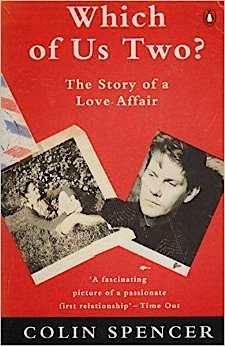
Reading Which of Us Two? The Story of a Love Affair (Viking, London 1990).It is the record of a 'youthful, illicit and intense' relationship between John Tasker (1933 – 1988) the theatre director and Colin Spencer (born 1933) artist and writer. Spencer uses a  collection of letters the lovers wrote to each other (his were returned after John Tasker's death) and considers the relationship and why he 'murdered its future'. Spencer makes acute and amusing comments on literary figures including John Osborne (whose library we bought last year). This entry was starred by Osborne in his copy:

17.iii. 59. Yesterday I began drawing the great Mr Osborne, tall, thin, spectral: in black skin-tight trousers that showed a cute bottom and a huge lunch. And camp, my dear – not 'arf.  And the musical, my dear, cor that's a queer dish too, everybody changes their sex halfway through and deliciously lovely Adrienne Corri grows hair on her chest. Most peculiar: he was moving about so much, it's only the second week of rehearsals...though I did some lightning things with a brush, it just won't do so I'm going back after Easter and try some more. He has a curiously camp voice and he appears to stare at one with his teeth...

Colin Spencer says of this letter:

The John Osborne musical was of course The World of Paul Slickey, soon to become the only commercial failure of his early years. [We]admired Look Back in Anger, our generation felt that Osborne encapsulated the rage we all felt over the limitations of the British theatre.Yet like so much of the later Osborne the play now seems an hysterical diatribe, the characters thin and invalid,the plot negligible..it was brilliant journalism.. masquerading as theatre.

Djuna Barnes ‘The Ladies Almanack’ (1928)

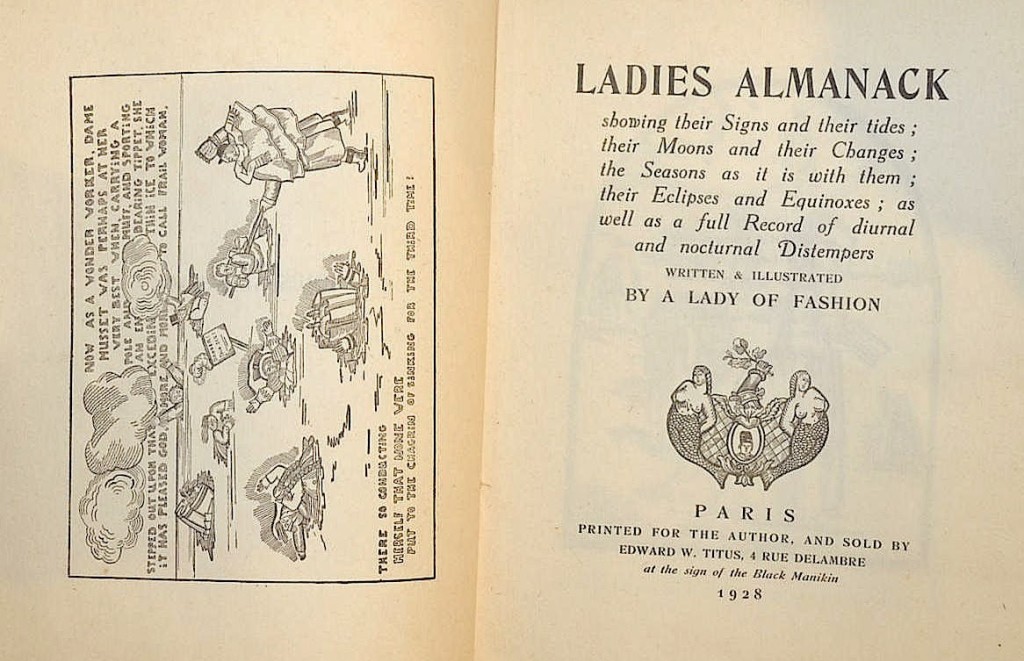
Found in one of our catalogues from 2002 a very limited and exquisite edition of Djuna Barnes's The Ladies Almanack. It was found by Martin Stone in Paris and was catalogued by him for us. It sold fairly easily to a high end London dealer for £5000.

Djuna Barnes 'The Ladies Almanack' (Privately published, Paris 1928)

Small 4to.  pp 80. Illustrated. Number 4 of  10 copies on Verge de Vidalon with illustrations hand coloured by Djuna Barnes. The  complete first edition  was 1050 copies  In full vellum wraps with highly attractive hand coloured cover. Signed on the limitation page in Djuna Barnes hand as 'A Lady of Fashion' and also on fep presented  to Lady Rothermere signed  'Djuna Barnes, Paris 1928.' Lady Rothermere was married to the press baron Viscount Rothermere (Lord Harmsworth) and was  the patron of various writers most notably T.S. Eliot who was able to give up his bank job due to her financial assistance. 'Ladies Almanack'  was printed by Darantiere in Dijon and has a curious publishing history - it was originally to be published by Edward Titus at the Black Manikin Press in Paris. However when Djuna Barnes found out how much Titus was charging her she decided to publish and distribute the book herself with financial help from Robert McAlmon. The name Edward Titus is blacked out on the title page in all copies. The ordinary edition was $10, the hand coloured one of 40  $25 and the ten hand coloured and signed copies were $50 a sizeable sum in 1928. The work, a celebration of female sexuality and a rebuke to heterosexual patriarchy, portrays in disguised form, many of the cultural and artistic elite of the Parisian avant garde of the time- epecially the Lesbian circle which was gathered around Natalie Clifford Barney - Janet Flanner, Romaine Brooks, Solita Solano, Dolly Wilde ('Doll Furious') Lady Una Troubridge ('Lady Tilly Tweed-in-Blood') and Radclyffe Hall. Janet Flanner called her 'the most important woman writer we had in Paris.' In fine  fresh condition - an exemplary copy of this beautiful expatriate book; in tirage de tete the black orchid of Lesbian literature.

Laurence Ambrose Waldron

Found in a collection of other examples, this is rather dull little bookplate, considering it came from the library of Laurence Ambrose Waldron (1858 – 1923), one of Ireland’s great and good in the first two decades of the twentieth century-- a patron of the Arts, a Nationalist politician, public benefactor, and ardent book collector with a library of several thousand volumes.

The conventional design of the bookplate is even more bewildering when we consider that Waldron was such an Arts and Crafts enthusiast, that in the early 1900s he built a mansion, which he christened ‘Marino’ in this style at Ballybrack, just outside Dublin. He later commissioned the Beardsley-influenced cult illustrator Harry Clarke to create nine exquisite stained glass illustration of Synge’s Queens (below) for his new library there. In 1998, after having not been seen since 1928, these were sold by Christies for over £300,000.

The only possible explanation seems to be that Waldron had the bookplate printed some time before his enthusiasm for Arts and Crafts and Clarke took off. As he succeeded his much more conservative father (also called Laurence) at the age of 17  in 1875, the design was probably made between this date and the building of ‘Marino’. [RH]

Bookplate of Waldron's father *
*Many thanks Mullen Books

An emblematic title page fully explained

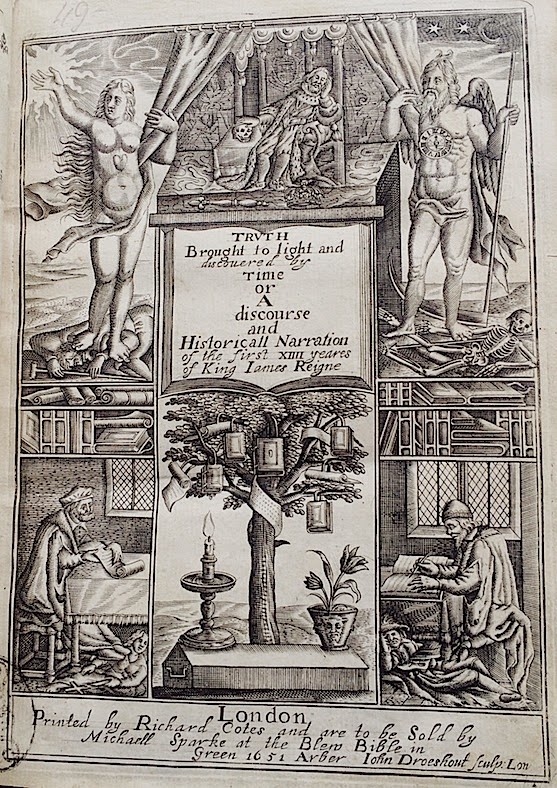
Found - this emblematic title page by John Droeshout in TRUTH BROUGHT TO LIGHT AND DISCOVERED BY TIME, or, A discourse and Historicall Narration of the first XIIII yeares of King James Reigne.[London, Printed for Richard Cotes and are to be Sold by Michaell Sparke at the Blew Bible in Green Arber, 1651.]

The book relates the history of the early years of the reign of James the First,the history of the divorce of the Earl and Countess of Essex, the divisions between the Scottish and the English, 'the lascivious courses at court' the arraignment of Sir Jervase Yelvis and an account of the murder of Sir Thomas Overbury. It also "reckons the revenue of the crown, gifts, pensions, disbursements ; and contains the commissions and warrants for the burning of two heretics." The 1870 catalogue of the Prints and drawings at the British Museum describes the title - page thus:

The print represents Truth, a naked female, who tramples on the body of a person with a crutch ; and Time, who tramples on a skeleton, drawing back curtains so as to show James the First seated, as if sleeping, on a throne beneath a canopy of state, his right hand on a skull. Below these are two other compartments : one side represents Memory as an old man, seated in a study with a scroll ; at his feet a female figure reclines and holds a cross. On the other side is History, seated in a study, with books on the shelves of a library, and writing in a book ; at his feet lies Sloth, a sleeping man. Between the latter two designs is a tree which is rooted in a coffin, on which stands a candlestick with a lighted candle in it, and a flower-pot on which is a satyric mask containing a blooming flower ; hanging from the branches of the tree are books and scrolls.

Continue reading

Visitor’s Book for Calcot Park

In about 2007 we acquired  a collection of books from the estate a kinsman of the Heber-Percy family in a cottage close to the country house of the eccentric musical composer Lord Berners at Faringdon near Oxford. In the collection was this visitor's book (which later sold on the web for a low four figure sum..)

VISITOR'S BOOK FOR CALCOT PARK AND HUNGER HILL (EARL OF ROSSLYN 1914-1935). Oblong 4to (13" x 10"). Handsome red grained full leather binding with coat of arms in gilt on cover, slightly rubbed and slightly stained but sound VG. About 60 leaves. The visitor's book from 2 country houses owned by the Earl of Rosslyn (1869-1939)- Calcot Park and Hunger Hill. 3 photographs of these imposing houses pasted to first page. The first part, at Calcot, runs from 1914-1918. The second, larger part at Hunger Hill from 1925-1935. Signatures from Calcot include Diana Wyndham, Lord Wemyss, Countess Sutherland, Blanche Somerset, Arthur Balfour, Joseph Joffre, Admiral Jelicoe, Dame Nellie Melba, George Robey, Horation Bottomley, J. M. Barrie, Raymond Poincare, Douglas Haig, Herbert Asquith, Eleanor Glyn, George Vth and Queen Mary (the last 13 all appear to have stayed over one weekend in the summer of 1916). The visitors to Hunger Hall combine the old grand Rosslyn friends and the Bright Young Things crowd of their son Hamish St. Clair Erskine (Erskine had been at Eton with Robert Byron and James Lees-Milne and was leader of a "thoroughly irresponsible set." His name cropped up in a Home Office report on the greatest Eton scandal of the day when the actress Tallulah Bankhead was rumoured to have held an orgy with Hamish and his friends in a hotel at Bray.) Erskine, a "reckless charmer", was engaged to Nancy Mitford- this came to nothing; he was the first of a series of unavailable men that she fell in love with. Visitors during this time included Lady Rosslyn's great friend and mentor R. H Bruce Lockhart almost every weekend, Tom Mitford, John Betjeman (seven times, sometimes with Penelope Chetwode), Alan Pryce Jones (4), Peter Watson (3), Robert Byron, Nancy Mitford (3), Nancy Beaton (5), James Lees-Milne and Alvilde Bridges (5), Randolph Churchill, Peggy Evans (4), David Tennant, Victor Rothschild (3), Honor Guinness, Anthony Blunt, Henry Yorke (ie Henry Green). Calcot Park is now a Golf club.

Show me the Money, Coutts

Sent in by Hertfordshire's top jotter Robin Healey for which much thanks. The tradition of writing family histories appears to be alive and well.

I’ve always been mildly amused at why the heir to a banking fortune ends up with the name Money-Coutts. And I’m equally certain that my aunt, who wrote a history of the Coutts family, was also tickled by the name.

Anyway, here’s an attractive bookplate which an inscription in pencil on the reverse assures us was designed by the gifted painter and book illustrator, John D Batten (1860 – 1932), in 1889, at the age of 29. The design is eclectic, featuring a central circular panel that owes much to Burne-Jones, and spandrels that are crammed with writhing Art Nouveau-style  foliage.

We can be sure that the design was very much to the taste of Batten’s patron, Francis Money-Coutts, 5th Baron Latymer ( 1852 – 1923), who had studied Law at Cambridge but  was considered too unstable to join the family firm. Instead he practised as a solicitor in Surrey while pursuing under the pseudonym ‘ Mountjoy’ his preferred vocation as a poet and general man of letters, safe in the knowledge that he was not likely to end up in a garret. He also befriended the composer Isaac Albeniz, becoming his benefactor and contributing the lyrics to a series of operas.

John Batten had a similar background to Money-Coutts. He also read Law at Cambridge, though at a later period, and like his future patron, was called to the Bar. Again, like Money- Coutts, Batten abandoned Law for his true passion, which in his case was Art. In 1886 he exhibited for the first time at the Grosvenor Gallery, which was owned by a kinsman of Money-Coutts, Sir Lindsay Coutts. So, it is very likely that the artist and the banking heir met through their shared association with the Gallery.

It would be interesting to know how the relationship developed over time, and particularly whether Money-Coutts became a keen collector of Batten’s striking, Pre-Raphaelite-influenced paintings.

Pemmican pemmicanised

Found in this comprehensive work aimed at serious travellers, explorers and survivalists - a letter about pemmican. The book is a two volume work, seemingly not transcribed at Google books, although it went through many editions: Hints to travellers: Organisation and equipment, scientific observations, health, sickness and injury. Edward Ayearst Reeves. (Royal Geographical Society, London, 1938.)

The typed letter headed What is pemmican? was a response to 'Questions & Answers' at the magazine Geographical of September 1998. It was sent in by one Alan Gurney from the  Isle of Islay.

Sir Alexander Mackenzie (1764-1820), the first European to cross the full width of North America, described pemmican as the food used by North American Indians on their travels. It was made from dried and pounded caribou meat mixed with an equal proportion of melted caribou fat. The resulting mixture was then packed into bags, eaten, uncooked, on the march. This high calorie convenience food was adopted by the North American fur traders on their long cross country travels. Pemmican -- made from beef rather than caribou -- heated in a Nansen cooked former the famous "hoosh" of Arctic and Antarctic explorers. The Bovril company made a man-pemmican (about half protein and half fat) and a dog pemmican (two thirds protein and a third fat). JD Beauvais of Copenhagen made two mixtures. The "Knud Rasmussen" containing meat, rice, vegetable and fat, packed into tins. The Amundsen containing dried meat powder, vegetables and fat, all pressed into cakes and wrapped in foil. As to taste, Mackenzie said that "time reconciles it to the palate," and Gino Watkins said that "it kept the body twitching but not the soul".

Continue reading

Baedeker advises on tipping at the Blue Grotto

Found in an 1889 edition of Badeker's Southern Italy this description of the Blue Grotto at Capri:

Blue Grotto. — A visit to the Blue Grotto from the Marina at Capri, where suitable light boats will be found, occupies 1 3/4 to 2hrs. The best light is between 10 and 12 o'clock. The authorised fare for the trip (there and back) is 1 1/4 fr. for each person, but almost no boatman will undertake it without an additional fee of 1-2 fr. The skiffs are not allowed to take more than three passengers. If the wind blows strongly from the E. or N. access to the grotto is impossible.The Blue Grotto is situated on the N. side of the island, about l 1/4 m. from the landing-place of Capri.

Continue reading

Tales from the Second Hand Book Trade 6

There is a variant British version of the last tale from America...

A small provincial bookseller is called to a substantial mansion on the edge of town, full of valuable books. The new owner has inherited the collection and is selling the house and trying to sell all the contents, including the books. The bookseller is overwhelmed by the sight of rows of pristine signed Rackhams in limpid vellum, rare bound books of 18th century travel, 19th century literature fine in the original cloth, even the odd 20th century classic like a first signed Ulysses and a wrappered Gatsby and  many 1930s first editions almost fine in dust jackets (Greene, Hemingway, Tolkien, Orwell etc.,) And then are the rows of exquisitely bound classic works including a superb Jane Austen set... He decides the collection is far too rich for his blood and and, as they now say, 'above his pay grade' - so he puts the collection on to a prestigious West End shop for a 10% finder's fee.

Later that week the London dealer swings by his local side street shop in a bloody great long wheel base Merc van full of boxes of books and hands him a £1000 in cash. Somewhat put out, the local bookseller asks what happened. 'I asked the chap if he had a figure in mind and he said he wanted £10,000,' replies the suave metropolitan bookseller.

Tales from the Second Hand Book Trade 5

Sent in by Stateside jot watcher JK this piece of fascinating second hand book folklore...

The first time I heard it, it concerned a dealer on the west side of the Hudson, not far from West Point. The second time it was another dealer, this time on the east side of the Hudson, near Garrison. I don't believe a word of it but even so.

Continue reading

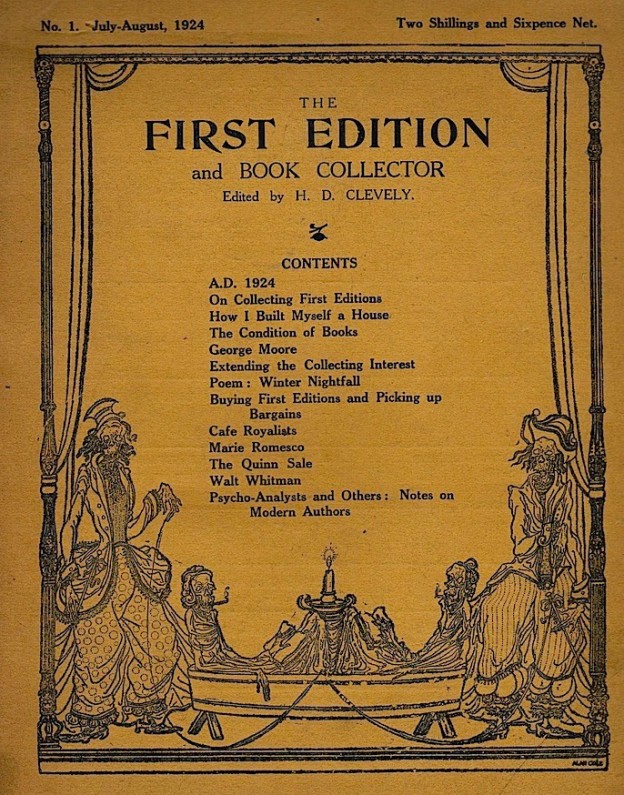
The First Edition and Book Collector (1924)

Sent in by jot watcher RMH (a man who knows a bad book magazine when he sees one) this neat analysis of why magazines fail. The Alan Odle cover and illustrations seem to be the only saving grace...

When a magazine folds after a handful of issues there are usually just a few reasons why:

1) The editor dies and no replacement can be found
2) The financial backing dries up
3) There are too few new contributions in hand
4) No-one buys the magazine.
5) The magazine is really not that good

In the case of The First Edition and Book Collector, which expired after just  two issues in the autumn of 1924, the latter was probably the reason. The only redeeming features of this real stinker of a first issue are Thomas Hardy’s first publication, a short story   that was first published in 1865, and some wonderful black and white illustrations by Alan Odle, a genuine heir to the mantle of Aubrey Beardsley. But even the genius of Odle cannot save this one.

Continue reading

Tales from the Second Hand Book Trade 4

This is the (not entirely apocryphal) tale of the young dealer who bought a first edition of Adam Smith's Wealth of Nations for £90,000 without having the money to pay for it. Let's call him Ralph Barton. Ralph was a young bookdealer wanting to deal in important books but was not really possessed of the funds needed. He got by and occasionally got lucky. He had a studio flat in Wandsworth shared with his girlfriend Serena -a city analyst who, along with her friends, thought Ralph was a bit of a loser for dealing in books. She felt he should join her in the financial quarter or go into the law, for which he had trained. They had a heavy mortgage but with his occasional windfalls and her decent salary they were able to manage.

One July morning Ralph was at another important London auction and bought a few job lots of rare and quite valuable  18th century pamphlet considerably under the sum he was willing to pay. Encouraged by this he started to bid on a superb 1776 first of Wealth of Nations which the chatter in the rooms had reckoned would break the £100,000 barrier. He was still bidding at £90,000 when suddenly the bidding stopped and the hammer came down. The book was his. For Ralph this was probably the worst moment of his young life. The flat would go, Serena would leave him and he would be a pariah in the trade.

Worst of all people were now congratulating him as if he had the money to pay for the thing. As he dejectedly sloped out of the rooms he bumped into a flustered figure in a ridiculously expensive suit. The man inquired anxiously "what did the Adam Smith make?" When Ralph told him £90K the man said - "I would have gone well over that, damn and blast it..." Needless to say Ralph sold him the book then and there - pocketing a quick £30K profit.

Ralph is now a proper dealer, well able to afford five figure books and has even become slightly pompous. Serena no longer thinks of bookselling as a trade for failures and they have moved to a proper house in Battersea.

Innkeeper John Fothergill lampooned

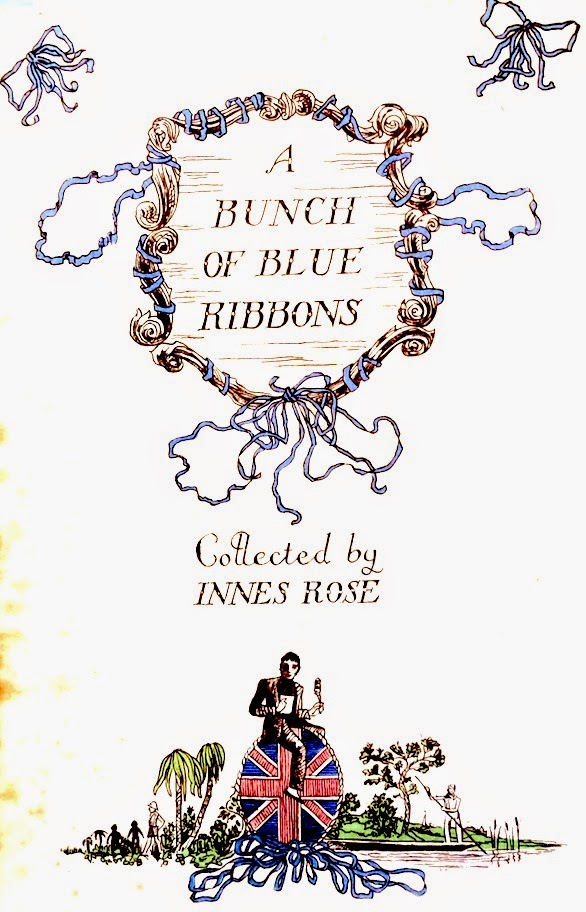
Found - in A Bunch of Blue Ribbons.A Volume of Cambridge Essays [Collected by I. Rose. London: Chapman & Hall, 1933] a satirical poem lampooning the celebrated innkeeper John Fothergill. Fothergill wrote a best-seller Diary of an Innkeeper and was known to Oxford students for his inn at Thame, frequented by, among others, most of the prominent members of  the Brideshead set. Oddly, he is unknown to Wikipedia but has a good entry in the DNB. His Diary was republished fairly recently by the Folio Society. A Bunch of Blue Ribbons was a sort of counter blast to a recent work Red Rags -a record of pet hatreds and aversions by bright young students at Oxford and Cambridge. This poem is in a chapter called A Sob Sister defends Oxford by Christopher Saltmarshe (a Cambridge poet also unknown to the all-knowing Wikipedia):

I am giving below a disgraceful and insulting lampoon which fell into my hands. The subject is an inn-keeper, whose name is dear to the immediate generation of Oxonians, which learnt to appreciate him as a host, an epicure and a gentleman. As an example of the depths of scurrility to which the enemies of Oxford can stoop I, as an old Cantab., believe these verses to be unparalleled.

Continue reading

Auberon Herbert poet and voluntaryist

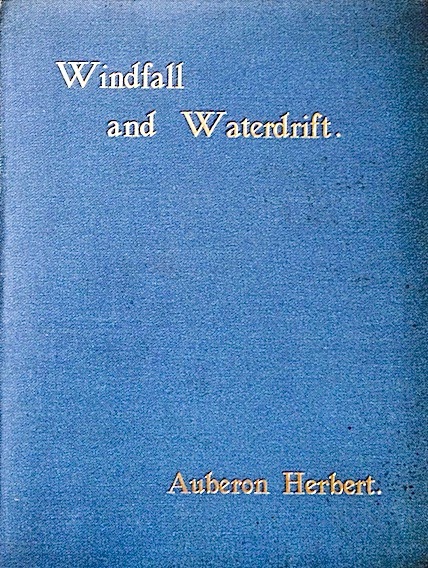
Found in Windfall and Waterfall (Williams & Norgate, London 1894) a volume of poetry by Auberon Herbert  - an advertisement for his journal The Free Life - the organ of Voluntaryism. Auberon Edward William Molyneux Herbert (Highclere, 18 June 1838 – 5 November 1906) was a writer,poet, theorist, philosopher, and 19th century individualist. A member of the Parliament of the United Kingdom, Herbert was the son of the 3rd Earl of Carnarvon, brother of Henry Herbert, the 4th Earl, and father of the 9th Baron Lucas. He promoted a classical liberal philosophy and took the ideas of Herbert Spencer a stage further by advocating voluntary-funded government that uses force only in defence of individual liberty and private property. He is known as the originator of voluntaryism.

The poetry is competent and clean limbed, somewhat of its time but counter to the prevailing decadence of much 1890s verse. We are quoting the tract on voluntaryism and preceding it with a couple of poems. His ideas are still alive, especially in the libertarian fringes of American republican thinking...

THE UNKNOWN SHORE.
It falls on my ear, now faint, now strong,
The thunderous note of the distant roar,

The surf of the sea I have sailed so long - ,
As it beats at last on the unknown shore.

Oh ! how will it be, when the hour has come,-
Unlike all hours that went before, —

Will help be near, or in pain and fear,

Shall I win my way to the unknown shore ?


IN BORDERLAND.
For strange deep longings move us,
As betwixt the two we stand,

Continue reading

Oliver Madox Brown’s ‘Gabriel Denver’ – a rarity

Found - Oliver Madox Brown's novel Gabriel Denver (London: Smith, Elder 1873) - a late Victorian rarity with Pre Raphaelite Brotherhood connections. The binding was designed by the author's father, Ford Madox Brown and is said to be the only book cover he ever worked on. A loosely inserted catalogue clipping from about 1920 prices the book at 18/6 and states;

'...  a novel of great promise, the first and only production of the author, who died in his twentieth year. In A Birth Song Swinburne refers to him in the following lines:
"High hopes and hearts requickening in thy dawn,
Even theirs whose life-springs, child,
Filled thine with life and smiled,
But then wept blood for half their own withdrawn."

70 years late in 1992 a slight used copy turned up at Christies New York (from the collection of librarian and poet Kenneth A Lohf) and made $1210. The cataloguer described it thus:

Original tan cloth, pictorially blocked in black, lettered in gilt and black ..binder's ticket of Leighton Son and Hodge at inside rear cover, fraying at ends of spine, rear cover slightly soiled, cloth slipcase. FIRST EDITION, published when the author was eighteen years old (he died tragically the following year); this is the only book cover his artist father designed. Fredeman 47.1 and Plate VII for illustration of the front cover; Robert Lee Wolff, Strange Stories (Boston, 1971), pp. 37-43 and illustration of the front cover. "The death at nineteen of this brilliantly versatile and precocious artist and novelist, son of Ford Madox Brown, and brother-in-law of William Michael Rossetti and Francis Hueffer, deeply distressed the boy's father and all the brethren of the Pre-Raphaelite movement. Both [this and The Dwale Bluth in the next lot] his books are rare ... By 1883, [Gabriel Denver] was already a rarity. Only 300 copies were sold and the rest pulped. See also a remarkable passage in George Moore's Vale (Hail and Farewell, III, 1914, pp. 47-51) in which Moore describes his friendship with Brown formed at art school. During the model's rest periods Brown read aloud from a novel of his which must have been Gabriel Denver..."The model was so entranced, she let her robe slip from her and listened quite naked"--Wolff 881.

A lost Rossetti letter

Found in the front of an 1866 first edition of Swinburne's  Poems and Ballads (Moxon) this cutting from a catalogue from about 1920. The dealer is unnamed, possibly Maggs or Quaritch, and the catalogue seems to be entirely made up of autograph letters. This is an important letter but does not appear to be recorded anywhere or published. It was possibly bought by a wealthy collector and sits in a drawer in a mansion now owned by his indifferent philistine heirs...the catalogue gives a good taste of it however and it is good on Swinburne and Milnes...Swinburne's book was disowned by the publisher Moxon and scandalised Victorian England by its sensual and decadent themes and lack of respect fro Christianity...

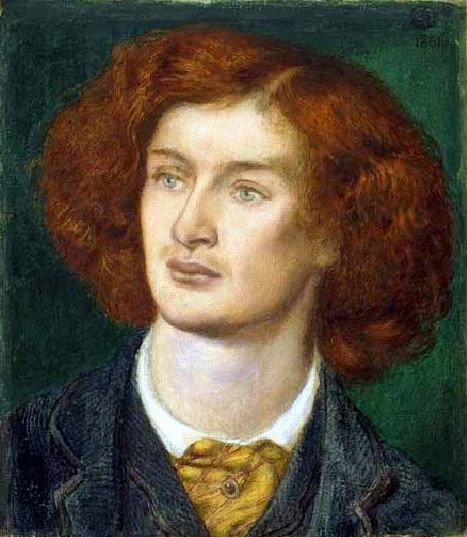
Swinburne by Dante Gabriel Rossetti

Rossetti (Dante Gabriel, 1828-1882). English Painter and Poet. A.L.S. to Frederick Sandys, the painter and book illustrator. 9pp, 8vo. N.D. circa 1857 £15 15s.

Continue reading

The Potato Man and the MP —a First World War Story

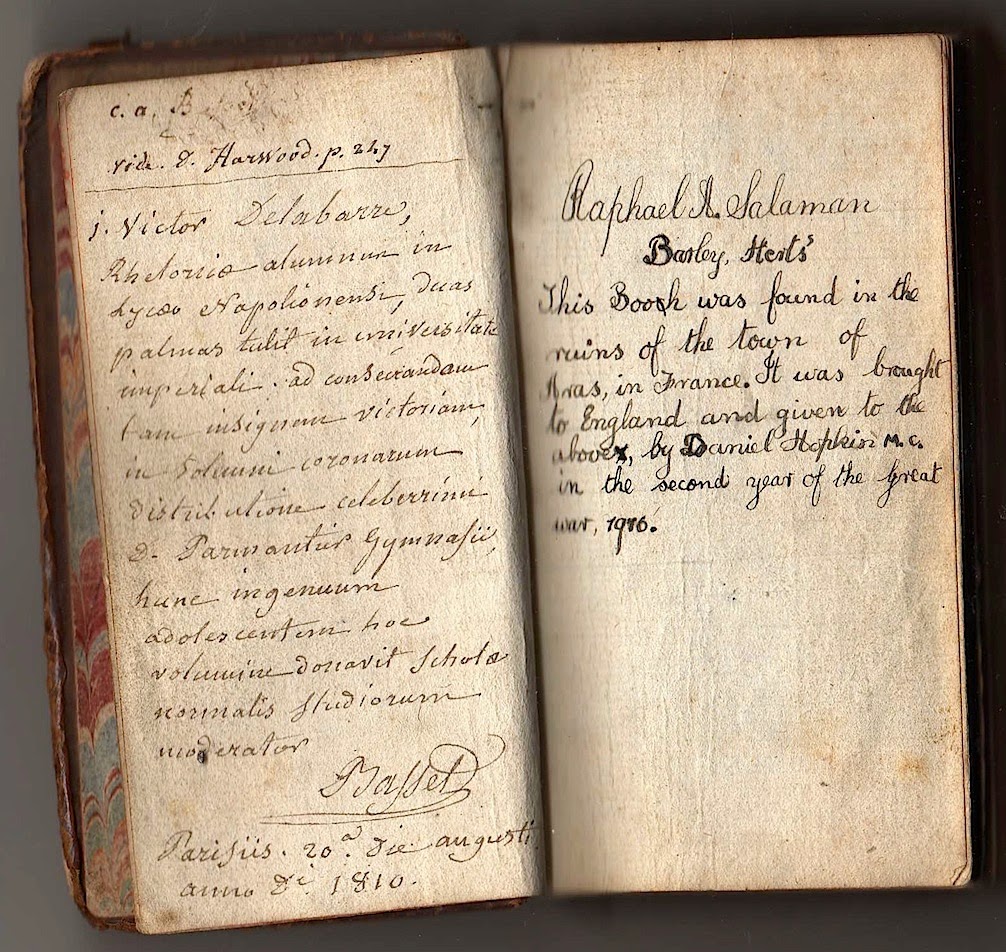
Discovered in the library of descendants of geneticist Dr. Redcliffe Salaman, author of The History and Social Influence of the Potato (1949 ) is the final volume of an Elzevier Press  edition of Lucan’s Pharsalia,  dated 1671.

It’s fitting that the poem treats of the civil war between Julius Caesar and the forces of the Senate headed by Pompey the Great, because it was found among the rubble of Arras, blitzed by the Germans in 1916, by a soldier, Major Daniel Hopkin, MC, who on returning home to England presented it to Salaman’s son Raphael (then aged about 10 ), who just happened to be one of his  private pupils. On further investigation, the friendship between Salaman senior (b 1874) and Hopkin, his junior by 12 years, becomes even more intriguing.

Continue reading

C.S. Lewis and women

Found in a slim volume of verse a letter by the poet Herbert Palmer about an evening spent with C.S.Lewis. The book was A Sword in the Desert: a Book of Poems and Verses for the Present Times (Harrap 1946.)

It is a signed presentation copy: 'With best Birthday wishes to Edgar from Bert August 1946.' Edgar is unknown (so far.) Tipped in at the front is a handwritten signed letter from the author to Edgar written on a Tuesday (probably 1946). It reads thus:

Dear Edgar. I think I have remembered your birthday to date this year.

I spent very exciting evening with Lewis (in) the middle of June.He is not the ascetic people think – but a convivial Irishman. Looks something between a jolly priest and a country publican with a dash of St Francis thrown in. A very good poet too. Which means he has his feet very firm on the ground. We sat up till midnight reading our poems to one another. He doesn't like women - says all the women he knows are either 'saints or devils, – chiefly devils.Hell. I presume from his standpoint, is chiefly populated by women.

Love to Mary & Winifred, Bert.'

On the verso of the letter is a signed typed note from Lewis to Palmer written from Magdalen College, Oxford and dated 9th May 1946  consisting of about 20 words in which he confirms the day they are to meet. Palmer has CROSSED OUT the signature and the typing in ink, although they are still very legible. In about 1945-46 Palmer was responsible for introducing Lewis to Ruth Pitter, of whom Lewis said that if he was the kind of man who got married, he would have wanted to marry her. The book's printed dedication is to Robert Gathorne-Hardy, poet and botanist.

Tales from the Second Hand Book Trade 3

Another (tall) tale from the trade. This Fahrenheit 451 related story could be apocryphal or exaggerated. The movie was mostly shot in Naples according to one eyewitness at our old site Bookride (where these tales first appeared) but, as they say in Napoli, se non è vero, è ben trovato.

It's 1965 in a sleepy provincial bookshop where trade is slow. The dealer has a sale of the books upstairs, lesser books but useful stock--even after severe reductions there are 10,000 books left. Rather than haul them down to the dump he decides to give the whole lot to the young girl who comes in on afternoons when he is out doing house calls, fishing, watching cricket etc., She graciously accepts them and says she will arrange to have them out as soon as possible. He sets off to a local auction and on his return is greatly surprised to find all the books have gone. The girl explains that a guy came in from a movie company needing 10000 books - for the book burning scenes in Fahrenheit 451 that they were filming nearby. She only charged £1 per book.With this seed money she set up a highly successful book business that has now migrated to the web…