Author Archives: Jot 101

Samp soup—a recipe from Count Rumford

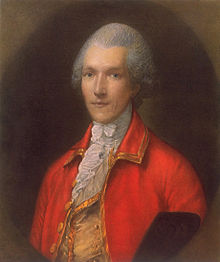
Count_RumfordFound in a pamphlet of c 1796, entitled On Food, and particularly of Feeding the Poor by the pioneer of cheaply produced dishes , Benjamin, Count Rumford, is a recipe that is not likely to catch on among modern foodies, though those who like experimenting with trendy cereals such as Quinoa, might find it intriguing. To me it sounds like a superior thickened gruel, but others might disagree.

Receipt for a very cheap Soup

‘Take of water eight gallons, and mixing with it 5lbs of barley-meal, boil it to the consistency of a thick jelly.—Season it with salt, pepper, vinegar, sweet herbs, and four red herrings, pounded in a mortar.—-Instead of bread, add to it 5lb. of Indian Corn made into Samp, and stirring it together with a ladle, serve it up immediately in portions of 20 ounces.

Continue reading

The Unknown Country

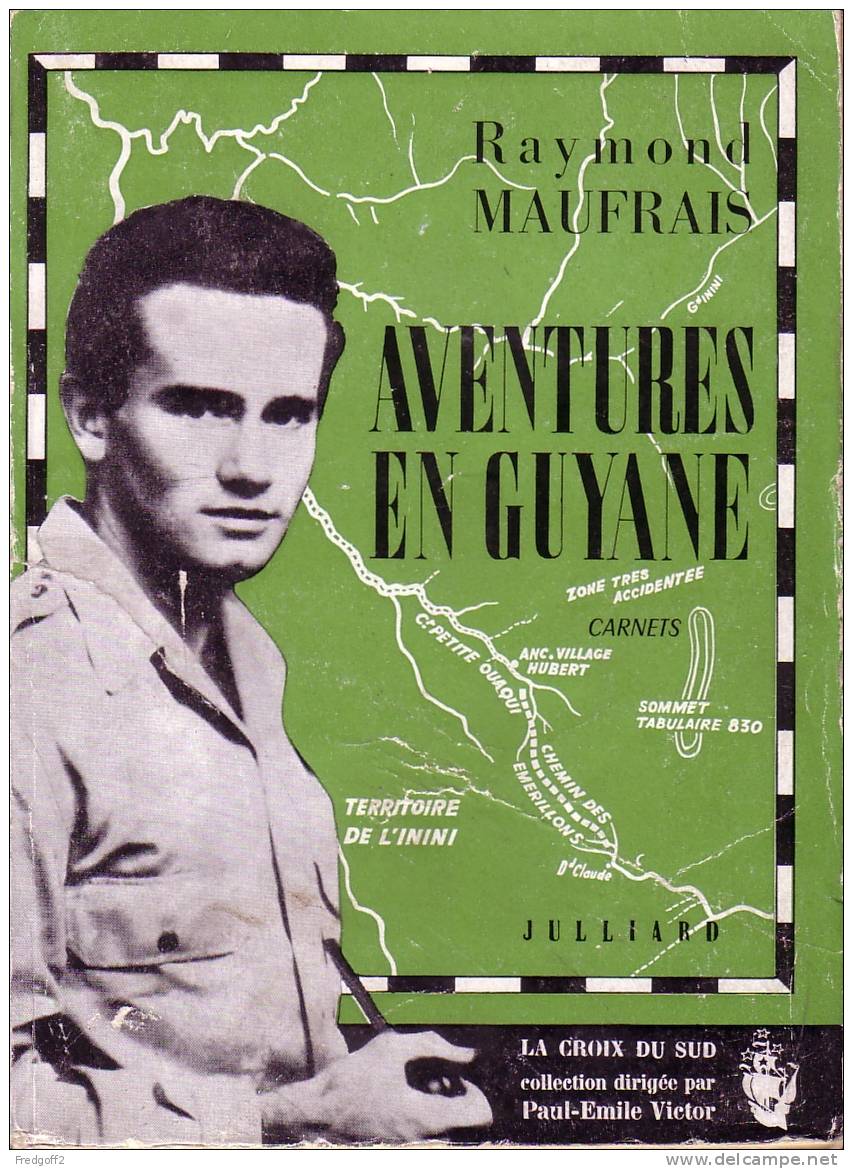
RM coverRaymond Maufrais (1926-50) was a French paratrooper, journalist and explorer. In September 1949 he attempted to travel solo from French Guyana to Brazil. His route would take him through the densely forested and sparsely populated Tumuk Humak mountain range. In February 1950 his notes and equipment were found in a hut by the River Tompok. Final entries show that the exhausted Maufrais intended to swim to the nearest habitation – a distance of some 70 km. His body was never found. His father Edgar journeyed to Guyana in 1952 and spent many years in South America, publishing an account of his search for his son – whose fate has never been determined – in 1956.)


Thursday, 12th January [from the penultimate entry]

For a month now I’ve lived in the virgin forest, living entirely on what it provides and working hard meanwhile. And I’m nothing unusual, physically; I’m the average Frenchman – if that – the average European with his habits, his tastes, his modest scale of life – and his misadventures during the last twenty years. So that I’ve given the lie to those who asserted after their third round of punch that Guiana is “death to the European. He can’t exist in it without taking every possible precaution, keeping to a fixed diet, and avoiding physical effort. Hunting, for instance. You’ve got to go slow with your hunting; if you don’t, it’ll wear you to a shred. Kill you, in the end, it will”.

But Guiana is an unknown country. It’s not Guiana that kills the European, and it’s not hard, physical work, either. It’s the European who kills himself; and, as he needs an excuse, he pins the crime on Guiana.

Continue reading

A Georgian Giles Coren (concluded)

Georgian eateries117Virginia, Newman’s Court, Cornhill.

This house is much frequented by ship carpenters, and ship brokers. Dinners are very well served up at 15d a head. Rural city merchants, that is, those who sleep in the country, generally dine here. The entertainment is good, and the charge moderate. As to the mistress at the bar, she is very obliging; she is as prolific in curtseys as a Frenchwoman, and as prolific in issue as a rabbit.1)

Mill’s, Gerrard Street, Soho

This house is remarkable for good red port, and good spirits. They dress dinners and suppers in style —and the breakfast are very comfortable. Several intelligent gentlemen, stricken in years, are it’s constant guests, and the conversation is both pleasing and instructive. The charges are indeed very reasonable, and the attention prompt and agreeable. It is celebrated for being the very first house that reduced the prices of wines and spirits, after the commencement of the French treaty. 2)

Batson’s Coffee House, near ‘Change.

Continue reading

A Regency Scam ?

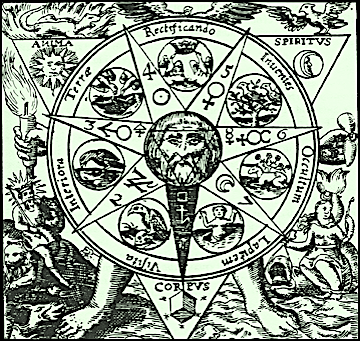
alchemyIn the classified section of the London Times for October 12 1820 appeared this intriguing advert:

AN INCOME of from £200 to £400 per annum may be OBTAINED by a CHYMICAL PROCESS on certain Mineral Matters as taught by a respected private individual, a professed Arcanist in docimastical philosophy residing near town: the manipulations not inconvenient to, nor militating against, the life and habits of a gentleman: the premium for instruction will be 200 guineas, for which security will be given till the full satisfaction of the party as to the verity and yield of the process, which will be imparted to only a select few. Applications by letter only, post paid, with real name and address, will meet with attention; to be left for W.,care of Mr Cartwright, 79, Long-Acre.

Are we taking about alchemy here? It sounds like it. Although the word arcanist is nowadays associated with the occult, back in 1820 most educated people would have linked it to something less devilish, such as alchemy; and the word ‘ docimastical ‘, though absent from many dictionaries of the time, was a serious technical term connected with the assaying of metal, which was borderline alchemy. We should also remember that Michael Faraday, one of the greatest scientific intellects of the nineteenth century, believed sincerely that alchemy should not be dismissed entirely, although this opinion was probably influenced by his admiration for Sir Isaac Newton, who had spent years of his scientific life on doomed alchemical experiments. In the absence of a personal address we will probably never know who this ‘W’, the respected private individual ‘ in question was. Moreover,among the various Cartwrights listed in Boyle’s Court Guide for 1819 no one of this name lived at 79, Long Acre. It’s all a bit reminiscent of the Susannah Clarke novel, Jonathan Strange and Mr Norrell, which was dramatised on TV not long ago. [R.M.Healey]

Exiled King Theebaw and his exotic cheroots

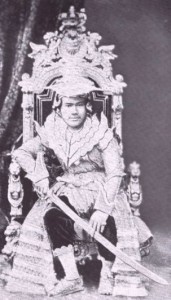
Konbang-ThibawThibaw Min (sometimes Theebaw) (1859 – 1916) was the last king of Burma. His reign ended when Burma was defeated by the forces of the British Empire in the Third Anglo-Burmese War, on 29 November 1885. King Thebaw was put in a bullock-cart with his queen by the British and in the presence of a great crowd of weeping subjects, they were conveyed to a steamer on the Irawadi and thence into exile. Without much of the wealth and jewels he had formerly possessed, while in exile he recorded this testimonial for Esoof Cheroots (a brand of Indian cigarettes). This appeared in The Times in 1890.

My late father, the Royal Mindon Min, the golden-footed lord of the white elephant, master of a thousand gold umbrellas, owner of the Royal peacocks, lord of the sea and of the world, whose face was like the sun, always smoked the Esoof cheroot while meditating on his treatment of the bull-faced, earth-swallowing English. Had I done the same I should never have lost my throne, but I used the opium-drugged cheroots from Manila and the trash which was sent to me from San Francisco, and I fell.

Umbrellas are used ceremonially in Burma – when his wife Queen Supayalat died in 1925 she was described as lying in state, ‘shielded under eight white royal umbrellas…’, attended by 90 Buddhist monks and the British Governor Sir Harcourt Butler with a guard of honour of the Mounted Police complete with a 30 gun salute. She lies buried at the foot of the Shwedagon Pagoda in Kandawmin Gardens between the tombs of Aung San Suu Kyi’s mother Khin Kyi and the former UN Secretary General U Thant. King Theebaw was buried at Ratnagiri, India (where he had received a state pension of 100,000 Rupees a year) in a small walled plot adjacent to a Christian cemetery, along with one of his consorts.

Barry Ono (1876–1941) collector of Penny Dreadfuls

440px-Barry_Ono_Songbook_coverBarry Ono was a British variety theatre performer,music hall singer and collector of Penny Dreadfuls. Part of his is collection was bequeathed to the British Library in 1941. It is still there and available for research. This obituary was found in Collectors Miscellany (Fourth Series Issue 3 – February, 1942). It was an ephemeral “paper for anyone interested in old boys’ books, type specimens etc.,” and was founded in 1917 by Joseph Parks.

Barry Ono

An appreciation by his friend, John Medcraft.

The recent sad death of Frederick Valentine Harrison, better known as Barry Ono, at the comparatively early age of 68, came as a shock to his many friends. Although apparently in good health at the time, he had a severe heart attack at 11pm on Wednesday, February 5, 1941, and died from angina pectoris four hours later. An able and talented man, Barry Ono had the ability to shine in more than one profession, nut his activities and interest were many, and his life too full of permit just that little extra effort necessary to reach the top. An ex-councillor of Camberwell, he was also an active member of the Water Rats, the well-known music hall charitable organisation. Music hall audiences will remember his dual act with Maud Walsh, billed as Barry and Walsh, and afterwards as a solo turn in ‘An Old-Time Music Hall in 12 Minutes,’ which heralded a boom in the old songs about ten years ago. Latterly, he had retired from the Halls and devoted more of his time to the old Bloods and Dreadfuls he loved and with which his name will ever be associated. Known to the book trade as the ‘Penny Dreadful King,’ and to collectors and sentimentalists as the high priest of the cult of the penny dreadful, Barry Ono was proud of having attracted many new collators to the hobby. His fine collection contained many extremely rear items, some of which were probably unique, and was a never-failing source of wonder, admiration, and good-natured envy to those who were privileged to view it. Barry Ono retired to Barnstaple in September, 1940, but keenly felt the severance from his old friends and the haunts and interests of a lifetime. His collection is stored for the duration of the war, and will probably be handed over to the British Museum at the end of hostilities. Wartime railway restrictions denied Barry Ono a last resting-place in his beloved London, and he was buried at Barnstaple, on February 10, 1941.

Oswell Blakeston on Drinking in the City

Posted by jotter HB this piece by Oswell Blakeston – of whom his partner Max Chapman said- “.(he had) a quick eye for the bizarre and the outrageous”. The portrait of him is by fellow avant-garde film maker Bruguiere.

george-eastman-house-bruguiere-series-1379746538_bBut of course ‘drinking in the City’ means different pleasures to different people. One can drink the whole fascination of a nation’s trade with the gentlemen who (say) leave their bowler hats on the mantelpiece in The Capataz in Old Broad Street. They may look ‘ordinary’, these quietly cultured men, but they have much strange lore, and maybe one deals in tea leaves which have been grown on a mountain called ‘The Thousand Acres of Cloud’ and another in furs caught by trappers in a landscape that is so chill that words turn into icicles. One may imbibe in the City in tall rooms with one great sheet of mirror behind the bar and stand next to dark-suited clerks who know all about jungles where the vegetation gasps for air or about Arctic wastes that exist as fables agreed upon.

Oswell Blakeston, the pen name of Henry Joseph Hasslacher (1907-85), was an editor, travel writer, film critic and poet. He also wrote cookery books, including Edwardian Glamour Cooking Without Tears (1960).  – lib.utexas.edu

The Book of the City, a collection of essays, was published by Ian Norrie (d. 2009), the owner of the High Hill Bookshop in Hampstead. (We have more from Ian Norrie in recently purchased archives.) [HB]

Proust a la Wodehouse

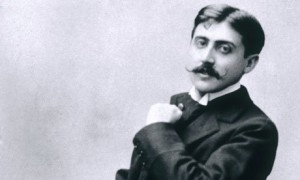
Marcel ProustThis the last part of a two part posting. See here for the first and the way that it was found. The photo of Proust is the jolliest I could find apart from the one before of him strumming a tennis racket. It is unlikely that both men met, although Proust was only 10 years older, as they moved in rather different worlds. Jeeves, however, may have read A la recherche du temps perdu.

Proust a la Wodehouse

Swann Upping

After one of those awful Paris soiree evenings at Madame Verdurin’s, when they play that maddening little tune which gets on your wick, I was being carted back to the old ancestral homestead, when I noticed a familiarly cove sauntering along the boulevard.

‘What ho, Swann!’ I cried. ‘Going my way? Take a pew in the dickey.’

I said I’d just returned from Deauville where I had spent days trying to lure Albertine out of her bathing machine for a splash around. Her trouble is she talks volumes and never gets anywhere. I told Swann I’d reminded her, when I could get a moan is edgeways, that, as fellow Candide said, – ‘It’s all for the best dans le meilleur des mondes possible, n’est pas? Is this the fin-de-siecle or not – wot, wot?

What I didn’t blab out was i’d had this call from aunt Leonie, blaring down the wrong end of her ear trumpet – ‘That blighter Swann should be drummed out of our society. It’s time, depraved nephew, you ceased lounging on that chaise-lounge – as the English call it – and took action.’ Sounding like a military band in jack-boots, marching on cobbles, she bellowed, ‘If you have any sense of honour you’ll call him out’.

No Proust takes that sort of thing standing up. Once goaded to inaction I addressed Swann from my couch, bounce on pillows. ‘Pass the madeleines’, I said ‘Never forget about remembrance of the old temps p.’

He took it like a lamb off to the proverbial what’s it. I dictated a million words without raising said bounce from said c. lounger, breaking off once a decade to allow him to nip round to Baron Charlus’s den for a dollop of what that royal chappie – the one who was King – labelled the entente cordiale. One way of putting it, wot?

Wodehouse a la Proust

proustbig-thumb-615x748-113940

Marcel Proust on air guitar

Going through a large collection of modern Christmas cards sent to a well connected literary figure, looking for bankable names. It’s not easy because most are signed ‘John & Susan’ etc., so you have to recognise the handwriting or find a clue. Sometimes a book is mentioned or the address is given –  e.g ’Vladimir and Vera, Montreux’ (I wish!)  There are many different styles, from tiny cheap cards with robins, to elaborate, large, arty and expensive cards. Many are from charities, either bought or received for free, some are hand made, some have original photos on the front, some large classy ones from members of the House of Lords, some with round-robin annual newsletters or long catch-up messages… This one is from someone (’Noripoll’) who appears to send out a parody every year. It’s ‘Wodehouse a la Proust’, next time we will post his ‘Proust a la Wodehouse’:

Wodehouse a la Proust

Life Sentence

When Jeeves, on the morning following that reunion with Augustus Fick-Nottle, Esq., at the Drones, proffered me a phial containing one of his special life-restorers, memories came flooding back of the long journey down country lanes to Totleigh Towers during which not only the corn shimmered but Jeeves, in his inimitable manner, shimmered too, black against the black Tarmacadam, as we approached the village close to the Towers, a company, nay a caravan, of gourmet penitents come to entreat the incomparable Anatole, my aunt Dahlia’s chef, not to abscond to the kitchen of Sir Watkyn Bassett; all of us barefooted behind out slowly moving limousines, and one of us, Catsmeat Potter-Pirbright, Esq., on his actual knees (as was not, for him, unusual), in desperate dedication to our mission, while I, wretched Bertram, scion of the Wooster line, who had twice filched Sir Watkyn’s silver cow creamer, under pressure to complicate the plot and provoke frolicsome incidents on tops of wardrobes and up and down ladders propped against the walls of ancient, country mansions, had vividly become aware, my heart throbbing violently all the while, of a refracted light from the late evening sun gleaming upon the brass fitments of an upturned policeman’s helmet, suspended by Agustus, on Totleigh church’s simple, slender spire, from which Anatole’s unsurpassable sauce vinaigrette flowed, lava-like, down the steeple, on to the battlemented tower, thence via gargoyle (one notably resembling Sir Watkyn himself), via pipe and conduit, just clearing the clerestory but developing a tendency to ooze into the nave through a fissure, yet signifying all the while, to those who put their trust in the power of Jeeves, that the great chef would return to my aunt Dahlia’s, once the final drop of precious liquid had dribbled over a flying buttress to reach, not only its elemental origin as it were, but to come, at last, to a full stop.

John Rylands on the art of the bookplate

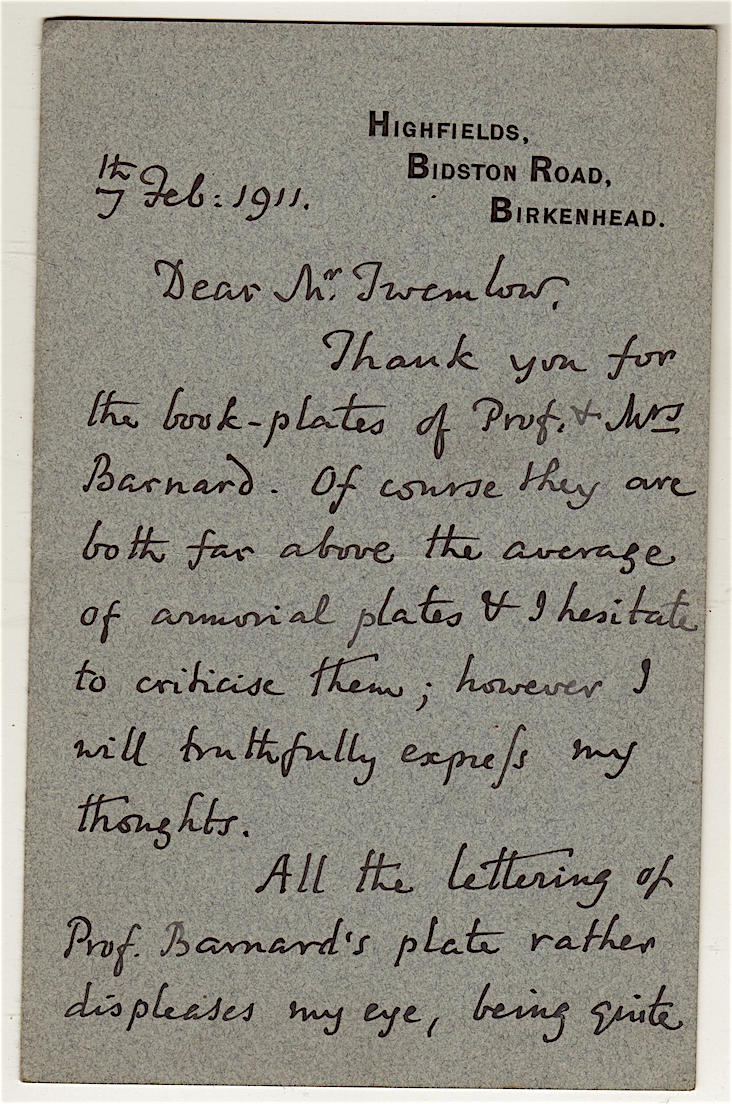
Rylands letter 001Bookplates have been out of fashion for many decades, but throughout most the nineteenth century up to the early twentieth century, bibliophiles spent good money commissioning artists to design these very personal items. The bookplate craze reached a sort of height in the Edwardian period and the following unpublished two letters from the lawyer, antiquarian and businessman, (1846 –  23) dates from this era. The addressee is J.A. Twemlow (1867 – 1954), a medieval historian and archivist who became an authority on the early history of Liverpool.

Highfields,

Bidston Road,

Birkenhead,

7th Feb: 1911

Dear Mr Twemlow,

Thank you for the book-plates of Prof & Mrs Barnard. Of course they are far above the average of armorial plates & I hesitate to criticise them; however I will truthfully express my thoughts.

                                 All the lettering of Prof. Barnard’s plate rather displeases my eye, being quite modern. I should have liked more mantlet; but that is merely a matter of taste, for the present mantlet follows some excellent examples.

Continue reading

Old Radio Shows of the Fifties

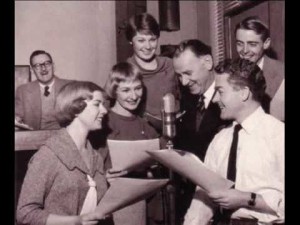
0Found – an article in an Australian comic book collectors magazine from about 30 years ago. Slightly truncated but a view of radio before internet radio quietly revived the medium. The author refers to himself as part of ‘…a lost race of knob-twiddlers, racing up and down the dial in search of something other than canned music, football and talkback.’

Listening to repeats of the Glumms on BL’s City Extra a few years ago stirred in me a deep well of nostalgia for the fifties and sixties, when radio still had a lot more to offer than pop music, sport and Parliamentary frolics. To an isolated child, as I was, radio was friend, entertainment and to a large extent, education. During the day, as part of my correspondence schooling, I listened to the schools broadcasts, but at night I had a galaxy of choice, from situation comedy and soap opera, to suspense, variety and science fiction.

‘Life with the Glumms’ was a regular part of the comedy show ‘Take it From Here’. It was a satire on the saccharine family show ‘Life with the Lyons’, starring Ben Lyon, Bebe Daniels and their children. The Lyons had strong American accents, and the whole show had a definite American bias – I preferred the Wodehousian delights of the divinely decadent George Cole in ‘A Life of Bliss’, who was forever getting into scrapes with his girlfriends – how innocent people were then. The theme of the show was ‘a Bachelor Gay’, and no one doubted George’s sexual preferences for a moment.

In Australia, the doyen of the serials was Blue Hills.
In England, it was The Archers. They droned on week after week, stolidly discussing their way through births, marriages, deaths, accidents, disasters, and more plot convolutions in a week than Sons and Daughters might face in a year. Dan, Philip, Grace and Gwen et al had been chewing the bacon fat ever since I could remember, and the Ancient Walter Gabriel got ever more ancient, but never died…

Continue reading

Bermuda’s Coral Strand

Found- a handwritten poem. Not sure where it came from but it looks about 90+ years old. The anonymous author calls it ‘doggerel’ in his closing lines. William Plomer might have called it ‘Tough Verse.’ The style is of the stand-up ‘dramatic monologue’ as exemplified by Milton Hayes’s ‘There’s a one-eyed yellow idol to the north of Kathmandu…’ or possibly the Grenadier’s marching song (“Some talk of Alexander…’) The reference to fox-hunting in England may indicate the writer was a British expat.

"Bermuda's Coral Strand".

------------------------------------------------

I've heard of men tell of Clusium
And of the Chinese war,
Of troubles in the East and West,
Of Delhi and Cawnpore,
Of brave Horatius Cocles
Who battled hand to hand,
But never yet in all my days
Have I heard a single word of praise
Of Bermuda's Coral Strand.

2.

Now it does seem very strange to me
That such should be the case
For though there's not much of it
It's a very pretty place,
So, off my coat and up my sleeves
And with my pen in hand
I'll call the Muse to my aid and write
Doggerel verses with all my might
Of Bermuda's Coral Strand.

Continue reading

How to be larned, like what I am

1786astro6detail-1

Chambers Cyclopaedia 1786

The following advertisement appeared in a provincial newspaper and was sent as a curiosity by someone living in Newport, Shropshire to a reader of The New London Magazine in Wolverhampton. He in turn forwarded it to the editors, who published it in the issue for October 1786.

‘Larning has always been desired and esteemed, and it has always been a matter of dispute , and is yet amongst the abellist philosophers, wheather the earth or the sun moves, and how far distant the sun is from the earth , and how big the sun is , and also the moon and stares; and thousands of the greatyest schollors of every age, who have travelled into farin nations, and spent large sumes to get larning, and have taught and wrote the greatyest part of their life of artes and sciences , yet known of them all ever found out , or left any rule behind them, which infalabley proved, wheather the earth or the sun moved, nor how big the sun is, nor how far distant the sun is from the earth, nor the moon nor stares, yet all of them desired to know them—Therefore I, James Bagnall, of Newport , does hereby most respectfully informe the Ladyes and Gentlemen of Newport and it’s environs , and those that love the knolledge of artes and sciences, that he has from good phelosophey geometry invented sume curious geometrickal tables of the earth, and sun, moon and stares which point out and visabley shew, and infallabley prove, wheather the earth or the sun moves, and far distant the sun his from the earth; and with sume curious observations of the sun , taking the earth as such a size , with the power of figures in the mathematicks, proves the exact bigness of the sun, and moon and stares ; he also from good philosophy, gives a more perfect account of the earth, sea, rivers , wind and the different sorts of aire , and of the moon, stares and their properties, thunder and lightning, than any heretofore given. He also from good phelosophy and astrology, proves that the stares do not predestinate or influence the will of man, to make him luckey or unluckey, good or evil, and that he cannot avoid it; and therefore for their instructions and edifycations, and that those who choose it, may have the honour to see the performance of these very great and desirable and noble artes and sciences, the first time they ever wheare taught or made publick in any part of the world, by the person himself, who found out the understanding of them; therefore he has taken the market hall of Newport for five nights only, where he will go through the whole of them; and the weakest capacity, who comes the five nights to be instructed by him, will in so short a time larn more true knolledge of these great and desirable and truly eddefying artes and scinces then all the great phelosophers of the world, all put together, ever got of them, till now, with all their expence and pains’ and by these rules found out or done almost everything that can be done by figuers.

Continue reading

A Georgian Giles Coren 2

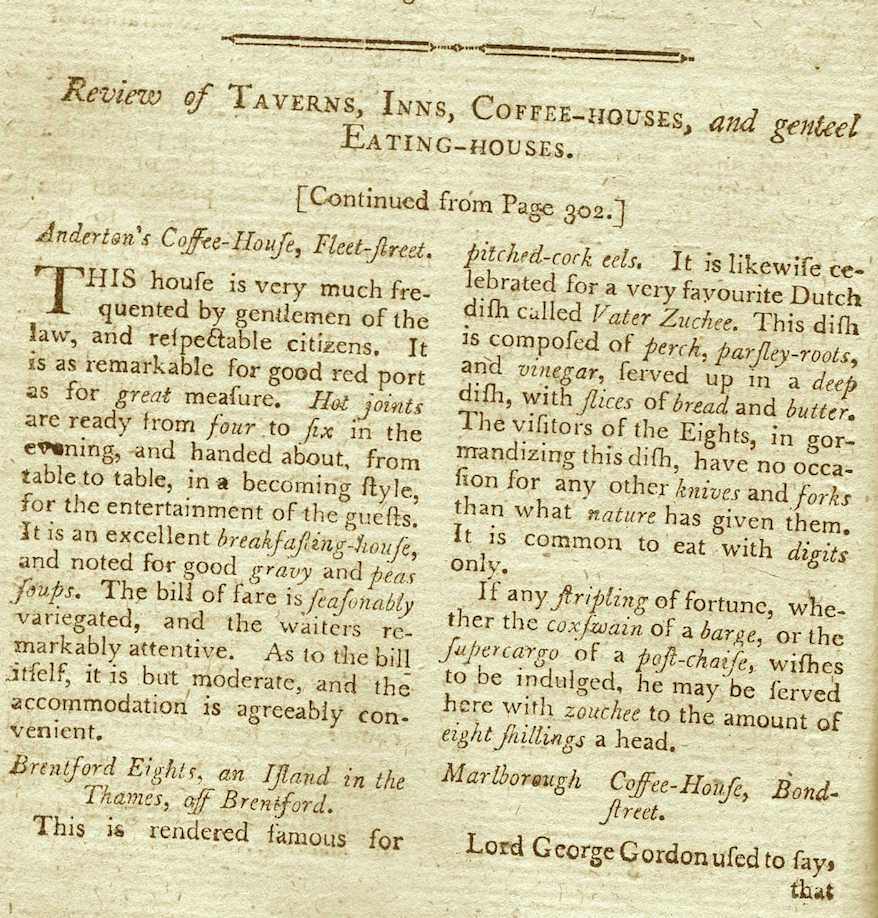
More extracts from an anonymous ‘Review of Taverns , Inns, Coffee Houses and Genteel Eating Houses’ published in the New London Magazine, July and August 1788. The web has done part of the work  by publishing the first part of this survey of eating places, which appeared in the June 1788 issue of The New London Magazine. Luckily, the second and third parts of this series remain offline. So here are some of the highlights of this witty and very politically incorrect survey of eateries in late Georgian London. See our earlier posting A Georgian Giles Coren for more..

Spread Eagle, Strand.

Long noted among the society of the humorous and intelligent. The rooms are here remarkably spacious. Indeed they are in stile. As to the bill of fare, it abounds with every article in the season, from a mutton chop to a bustard or John-dory. The wines are all pure and well flavoured. If there be any preferable to others, it is the sherry and the port. The master and waiters are as civil and patient at four in the morning as at eight in the evening; and the prices of the various articles are very moderate.

58791Toy, Hampton-court.


Pitch-cock eels are here in the utmost perfection. Being in the vicinity of the palace, it is ever frequented in the summer months, by the great, the dissipated and the inquisitive. The apartments are airy, the bill of fare is rich and diversified.
The wines are all excellent. If the bill appears stretched sometimes, strangers cannot much repine, as they have always the best of everything for their money, and likewise the utmost alacrity of attention. The guests would rather pay a guinea at the Toy, from experience, that fifteen shillings for the same fare any where contigious.1)

August 1788

 Windsor Castle, Richmond.

 Long has this house been in estimation. Rigby, who often formerly used to bait here, en tete a tete, used to say “ that further up you may fare worse! “ . The apartments are all spacious, and the view from behind a most luxurious landscape! Good eels, good fowls, and good venison, are found here. The various courses are all served up in style, and there is not a wine but what is of the highest flavour, and best quality. The stables too are excellent in equestrian accommodation; and that is no secondary consideration with a man of feeling, who feeds his horse himself, while the cuisineur is preparing his own feed. The charge is by no means extortionate, and there is as grateful a fair hair’d curtsey at the bar to be had for a shilling as for a guinea. In the left front parlour is a room befitting even Middleton himself. It was lined by India, at least in painting—the panels were formed for the room, and then sent out for Asiatic gilding!

Continue reading

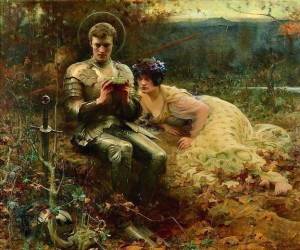
Arthur Hacker R.A. (1858 – 1919)

Copyright Leeds Museums and Galleries / Supplied by The Public Catalogue Foundation

The Temptation of Sir Percival

Found- an anonymous article in Pearson’s  Magazine (London 1898)  on the artist and Royal Academician Arthur Hacker. Of note because there is not much about him – a short Wikipedia entry and this piece from Art Magick. He mainly painted genre and historical scenes,mythological and allegorical subjects (some verging on kitsch) and for the middle part of his career was a successful portrait painter. He studied in Paris under Leon Bonnet, renowned portrait painter and life long friend of Degas. The article, chatty and light in tone, sees the artist in his successful mid career.


Pictures and their Painter – Arthur Hacker

Born in London in 1858, Arthur Hacker. became a student at the Royal Academy when he was seventeen.. As Millais said when he presided for
the first and only time at the annual banquet, so soon to be followed by his death: “I received here a free education as an artist – an advantage many a lad may enjoy who can pass a qualifying examination, and I owe the Academy a debt of gratitude I can never repay.” The qualifying examination is a full-length drawing from a Greek statue carefully shaded, with another drawing showing the anatomy of the figure. It is a matter of three or four month’s hard grind, and brings out the faculty for taking pains, for not only has the drawing to be very accurate, but the modelling must be intelligently and delicately rendered, and to do this the drawing must be stippled very finely, a trick which can only be acquired by practice.
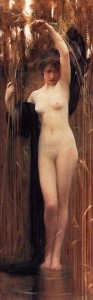
240px-Hacker_Arthur_SyrinxMany clever students have had to try two and even three times before they have sent in a drawing acceptable to the Academician. Arthur Hacker was successful at the first attempt.
He was a student at a time when attention was directed to the training given in the Paris studios, and thither he went at the end of the three years spent in the Academy Schools to the atelier Bonnat, where he worked hard for two years. And students do work hard in Paris, for they begin at eight in the morning, working to twelve. Then comes the breakfast-lunch, which is taken in some cheap cafe, where you get four or five course for a franc, including a glass of vin ordinaire.

Work goes on again from two till five, and again in the evening, and though there are students’ balls and parties, and outings to Fontainebleau, a Paris studentship is a time of unremitting hard work, with the added problem of making both ends meet.

Many a student has starved in an apartment at the top of one of those large houses which in Paris house so many families, in order to take advantage of the training offered by the Beaux Arts or Julien’s, and though, when you look back upon those days from the standpoint of success they seem bathed in the colour of romance, the hard work, neglect, poverty, and unsatisfied longing of frustrated ambition is bitter indeed at the time.

Mr. Hacker has lived to work out some of the ideas which came to him doubtless in his student days, and from dreaming of fame to winning the guerdon the time had been very short, for at the early age of thirty-five the Academy elected him to an Associateship; and, furthermore, two years ago purchased his large picture (now in the Tate Gallery) under the terms of the Chantrey Bequest. Between two and three thousand pounds is spent annually in pictures and sculpture, interest on the money left to the Academy by the sculptor, Sir Francis Chantrey.

Mr. Hacker is much sought after for portraits, and this year’s Academy will see no subject-picture from his hands. We shall give in a subsequent number a reproduction of his most charming portrait of that clever artists, Miss Ethel Wright. This picture hangs in Mr. Hacker’s studio. The sitter gave him as many as fifty sittings, and the result is that the portrait has subtle charm about it which is not always found in all great portraits.

Mr. Hacker ought to be a happy man, for he has found customers for all his important pictures, and this is a great stimulus to ever increasing effort. It takes away one’s belief in oneself to find one’s work returning time after time to adorn the studio walls or little the place, the frames having been used for newer works. The painter who can make a collection of his own pictures, as did Corot and our own Linnell, must have an abundance of belief in himself, for painting for posterity is a poor business. Recognition is so stimulating.

A Ghost Story of Princes Risborough

20604_fullsize

Catalogue of 1997 Contents Sale

From some papers relating to the Grubbe family of Priory House, Blythburgh, Suffolk and Horsenden Manor, Princes Risborought, Buckinghamshire this true ghost story with diagrams etc., The haunted Horsenden Manor is now inhabited by a rock musician, one Jay Kay of the band Jamiroquai. A Ghost Story and some Considerations thereon. L.C. Grubbe, Southwold, Suffolk. The following pages may be of service to seekers after the truth about ghosts and indeed interest many people not yet attained to the omniscience necessary in order to exclude such things altogether from the pale of possibility. I say ‘omniscience’ because in a universe so vast as ours, one must manifestly know everything that is there, before he can assent positively what is not. The discoveries constantly being made by science of secrets that for ages have lain concealed in our midst prove the immensity of the fields open to exploration as well as the dense ignorance about them in which the human mind is still wrapped. Every new fact brought to light concerning nature and her resources is as a window added to the chamber of human consciousness opening on visas of possibility never before entertained, and stretching away again into the dim haze of the absolutely unknown. What I have to relate is a very plain matter of fact story. In a secluded part of one of the midland counties stands an old country house, the home of many generations of my family, out of whose hands it passed some 60 years ago. Possibly the site has been occupied ever since Roman times, for Roman masonry was found in the foundations during alterations, but he present main building though added to and in some part of the 7th century altered is probably the same as stood during the civil wars. I am however only concerned with a certain small portion of it, which during my grandfathers time bore the reputation of being haunted, though neither he nor his children have ever been accused of undue prejudice in form of what is to my mind miscalled ‘The Supernatural’. Continue reading

R.M. Dawkins – The most eccentric professor (ever)

Osbert Lancaster

Found in Osbert Lancaster’s With an Eye to the Future (John Murray, 1967)– this account of Oxford professor R.M. Dawkins (1871-1955):

No eccentric professor of fiction could possibly hold a candle to the reality of Professor Dawkins whose behaviour and appearance placed him, even in an Oxford far richer in striking personalities than it is today, in a class by himself. Ginger-moustached, myopic, stooping, clad in one of a succession of suits which he ordered by postcard from the general store of a village in Northern Ireland, he always betrayed his whereabouts by a cackling laugh of great carrying power. (Once when passing alongside the high wall of Exeter, startled by this extreme sound, I looked up and saw the professor happily perched in the higher branches of a large chestnut tree hooting like a demented macaw.)

Richard MacGillivray Dawkins was an archaeologist and a scholar of classical and modern Greek. After studying  engineering, a windfall enabled him at the age of twenty-six to enter Emmanuel College, Cambridge, to read classics.  After graduating he became associated with the British School at Athens, eventually becoming its director. He studied Greek dialects and was involved in excavations in Crete, at Sparta and elsewhere. From 1916 to 1919 he served as an intelligence officer in the Royal Naval Volunteer Reserve, in eastern Crete. In 1920 he was appointed to a chair of Byzantine and modern Greek at Oxford, and in 1922 he became a fellow of Exeter College (from which he retired in 1939, continuing to hold rooms there until his death) and an honorary fellow of his old college, Emmanuel. He had known Evelyn Waugh, Ronald Firbank and was very generous to his friend the difficult and impecunious genius Baron Corvo. He was also an early collector of watercolours by Edward Lear. Most of this info and a portrait by the British Vorticist William Roberts can be found at English Cubist. Lancaster illustrated his piece with a drawing of the professor perched in the tree.

Joan Abbay – Art & The Holy Grail

IMG_1131

Found —  a slim volume of poetry from 1927 Lodequest: A Ballad of the Grail (Ancient House, Ipswich 1927) by Herbert Hudson. His wife produced the illustrated cover and also contributed one of the poems. She was Joan Abbay an East Anglian artist, and this is the only example of her work currently online, although it is possible some of her paintings are occasionally sold at auction.

The introduction to the book places the Grail legend in context, quoting from Jessie L Weston’s The Quest of the Holy Grail (1913)- (also an influence on a somewhat better known poem*):

“Every student of mediaeval literature will bear witness that there were strange current stirring in those days, that more was believed,that more was known than the official guardians of faith and morals cared to admit; that much, very much of this undercurrent of yearning and investigation was concerned with the search for the source of life; life physical, and life immortal. I contend that the Grail romances were a survival that period of unrest….The secret of the Grail I hold to be above all a human problem. When seekers after Truth will consent to work together in harmony, doing full justice to each other’s views, then,and not till then, the secret of the Grail will cease to be a secret.” Continue reading

A Georgian Giles Coren

The Red Lion in the 1930s

A Georgian Giles Coren

Extracts from an anonymous ‘ Review of Taverns , Inns, Coffee Houses and Genteel Eating Houses’ published in the New London Magazine, July and August 1788.

The web has done part of my work for me by publishing the first part of this survey of eating places, which appeared in the June 1788 issue of The New London Magazine. Luckily, the second and third parts of this series remain offline. So here are some of the highlights of this witty and very politically incorrect survey of eateries in late Georgian London

July 1788

Brentford Eights, an island in the Thames off Brentford

This is rendered famous for pitch-cock eels. It is likewise celebrated for a very favourite Dutch dish called Vater Zuchee. This dish is composed of perch, parsley-roots and vinegar, served up in a deep dish, with slices of bread and butter. The visitors of the Eights, in gormandising this dish, have no occasion for any other knives and forks than what nature has given them. It is common to eat with digits only.
If any stripling of fortune, whether a coxswain of a barge, or the supercargo of a post chaise, wishes to be indulged, he may be served here with zouchee to the amount of eight shillings a head.

Continue reading

Sea Glass Beachcombers

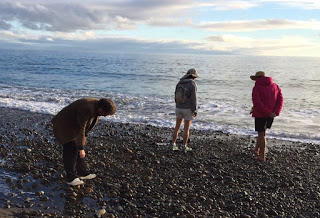
New Brighton Beach, Capitola

Having returned to Northern California recently I noticed a new phenomenon on a beach that I regularly walk on when here - people looking intently at the stones and digging about in the sand. I asked one guy what it was all about and he said they were looking for sea glass, and that he had heard about this beach online. People make jewellery with this glass and also sell it online or just wear it. It is attractive stuff especially the more unusual colours (red, blue and the very rare black). So popular is it that people fake it - this type of glass is known as ‘tumbled.’ Some of the glass is not that old - a type of frosted white glass is said to come from Skyy vodka bottles. The best beach is at Fort Bragg (Glass Beach) in Northern California. The photo below is probably from before the recent craze, although remoter parts of the beach still have good yields. The amount found there is something to do with passing passenger ships and tides etc., The best time to look is after a storm. Some sea glass jewellery, especially in fancy settings, sells for $500 plus. See this high end  seller in Santa Cruz.

There are a few shops selling nothing but sea glass rings and bracelets and a few colourful books...

Many thanks Find Sea Glass