The combative poet and critic Geoffrey Grigson was not known to be a great fan of female poets. He rarely reviewed their work and when he did he was invariably scathing. This refusal to be a hypocrite when confronted by poetry for which he had no enthusiasm got him into hot water with the more politically correct band of literary critics, one of whom was the Mexican poet Michael Schmidt, editor of Poetry Nation.Luckily, Schmidt’s views are not shared by most genuine lovers of poetry.

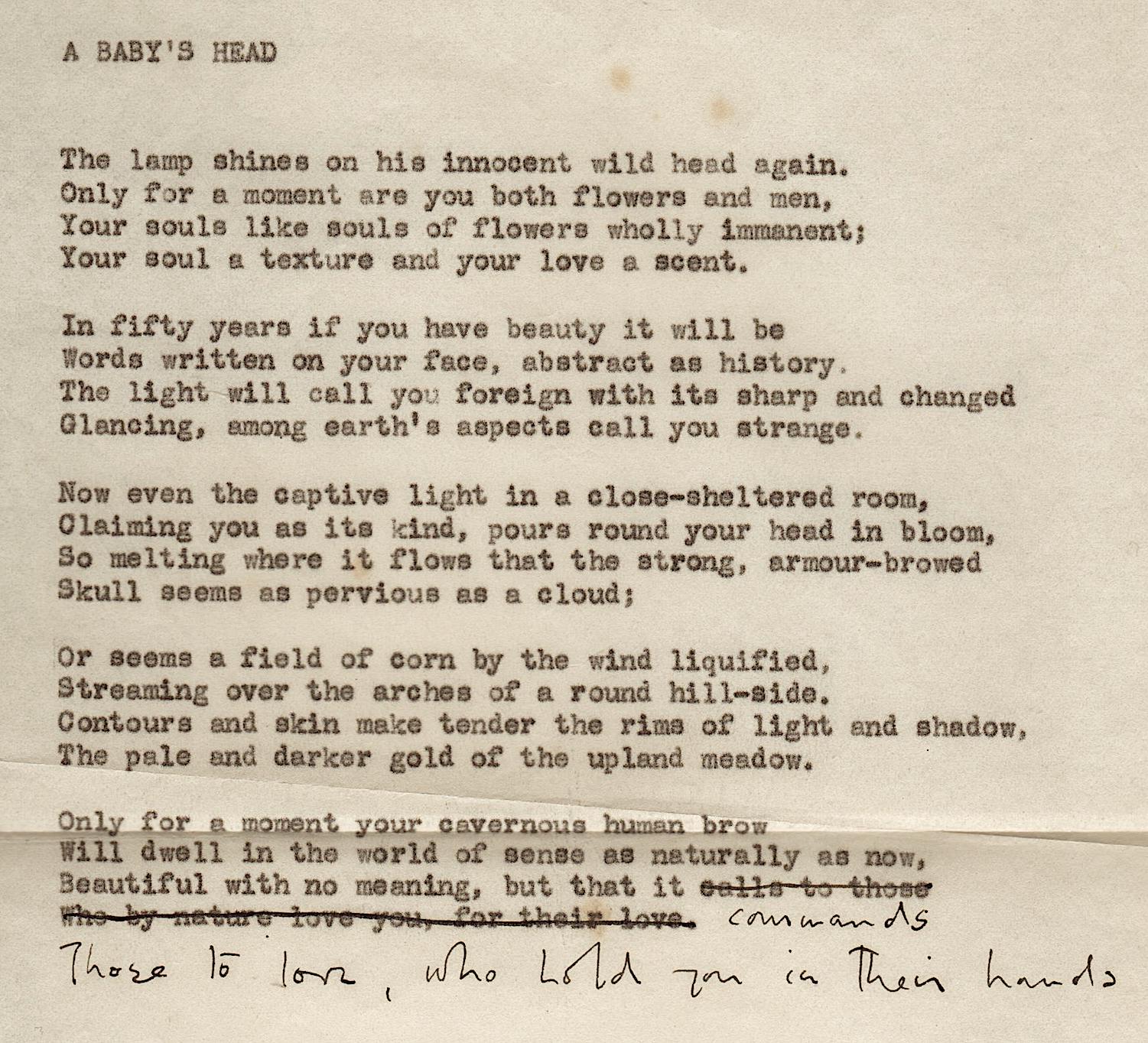
But Grigson did admire two female poets of the twentieth century—Fleur Adcock (b 1934) and E. J. Scovell (1907 – 99). Both wrote the sort of poetry that Grigson admired—visual, precise and closely observed. Scovell‘s work was particularly to Grigson’s taste and the admiration was mutual. So here is a letter dated 23 April 1945 which we at Jot HQ found interleaved in a copy of Scovell’s third collection, The River Steamer(1956), along with a carbon of ‘A Baby’s Head’. In the letter Scovell responds to Grigson’s invitation to submit a poem for publication in his new literary miscellany The Mint(1946 by sending nine poems, including presumably ‘A Baby’s Head ‘. She also apologised for the fact that ‘so few of them escape being about children’. Book, poem and letter were bought from Grigson ( see previous Jot) by the bookseller and publisher Joan Stevens, at whose death it was retrieved from her archive by us at Jot HQ. At the time Miss Scovell, who was married to Charles Elton, the animal behaviourist, was working at the Bureau of Animal Population in Oxford (this fact alone would have prompted Grigson’s interest). It seems that Grigson was impressed by the submissions , for he duly published two of the nine poems in The Mint(1946).
Reading ‘ A Baby’s Head’, which was eventually published in The River Steamer, one can easily imagine Grigson being delighted by its opening line:
‘The lamp shines on his innocent wild head again ‘.
And it gets even better:
‘Now even the captive light in a close-sheltered room,
Claiming you as its kind, pours round you head in bloom,
So melting where it flows, that the strong armour-browed
Skull seems as pervious as a cloud…’ Continue reading

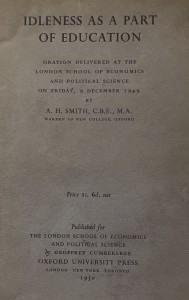 delivered at the London School of Economics in December 1949 by A.H. Smith, the warden of new College Oxford.
  Found –Life (Dent, London 1921) a
 Most of the Common-Place books you find in auctions or second-hand bookshops date from the nineteenth century—usually before about 1860—and are dull, dull, dull! They invariably contain passages from history books, books of sermons, and extracts from poems by Felicia Hemans and Robert Southey. Often they are illustrated by amateurs who like to think they can draw. Occasionally there are exceptions to this rule, but these rarely surface. So it’s nice in this Age of the Internet to find a Common –Place book that contains some information that is not always easy to find using Google. Such is the volume that we at Jot HQ discovered in a box of ephemera the other day.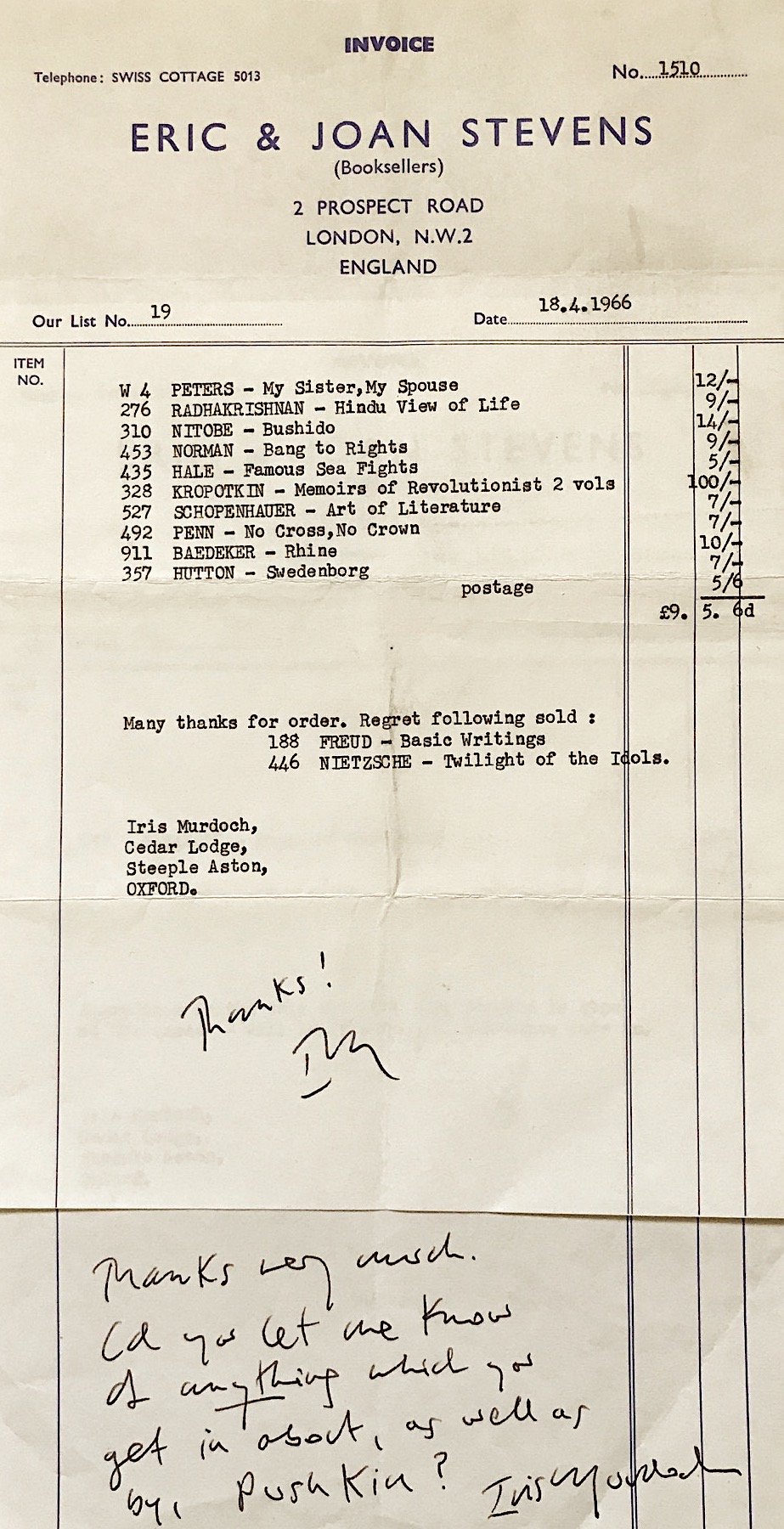





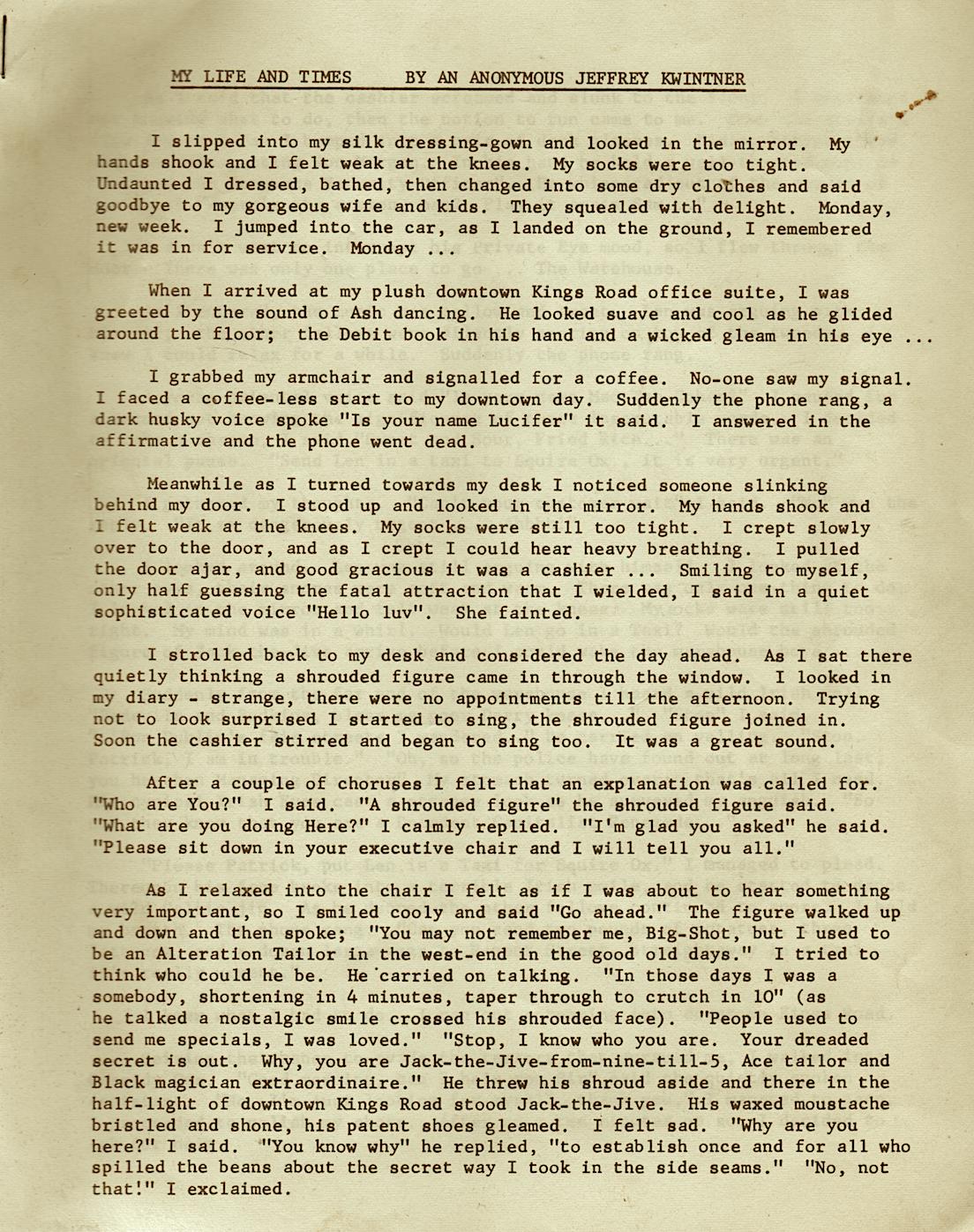


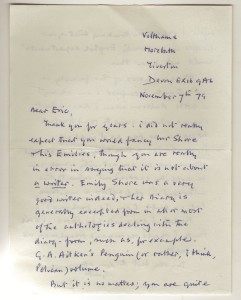 Gleaned from the archive of the publishers Joan and Eric Stevens are two letters to Eric from the novelist and biographer Oliver Stonor, aka Morchard Bishop (1903 – 1987), from his home in Morebath, on the Devon-Somerset border. The first letter, dated November 1979, mostly concerns the worth of the diarist Emily Shore, who Eric doesn’t consider a ‘ writer ‘, but who is stoutly defended by Stonor as being ‘ a very good writer indeed ‘. Stonor, however, does share Eric’s opinion that ‘people in University English departments ‘would be unlikely to know about her. Stonor also feels that the academic study of English is ‘an activity which can happily be carried out without the intervention of pastors and masters ‘. Stonor, it should be noted, did not attend University.
 If you fancied a change of scene during WW2 there were problems that needed to be considered if you chose to stay in a hotel or B & B. In his wartime edition of Let’s Halt Awhile(1942) ‘ Ashley Courtenay ‘ offered this advice to the holidaymaker.
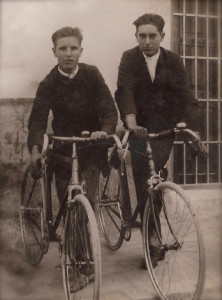 Found among a pile of newspaper clippings at Jot HQ is this substantial analysis in the 2 December 1935 issue of the Financial Timesof the thriving bicycle industry.