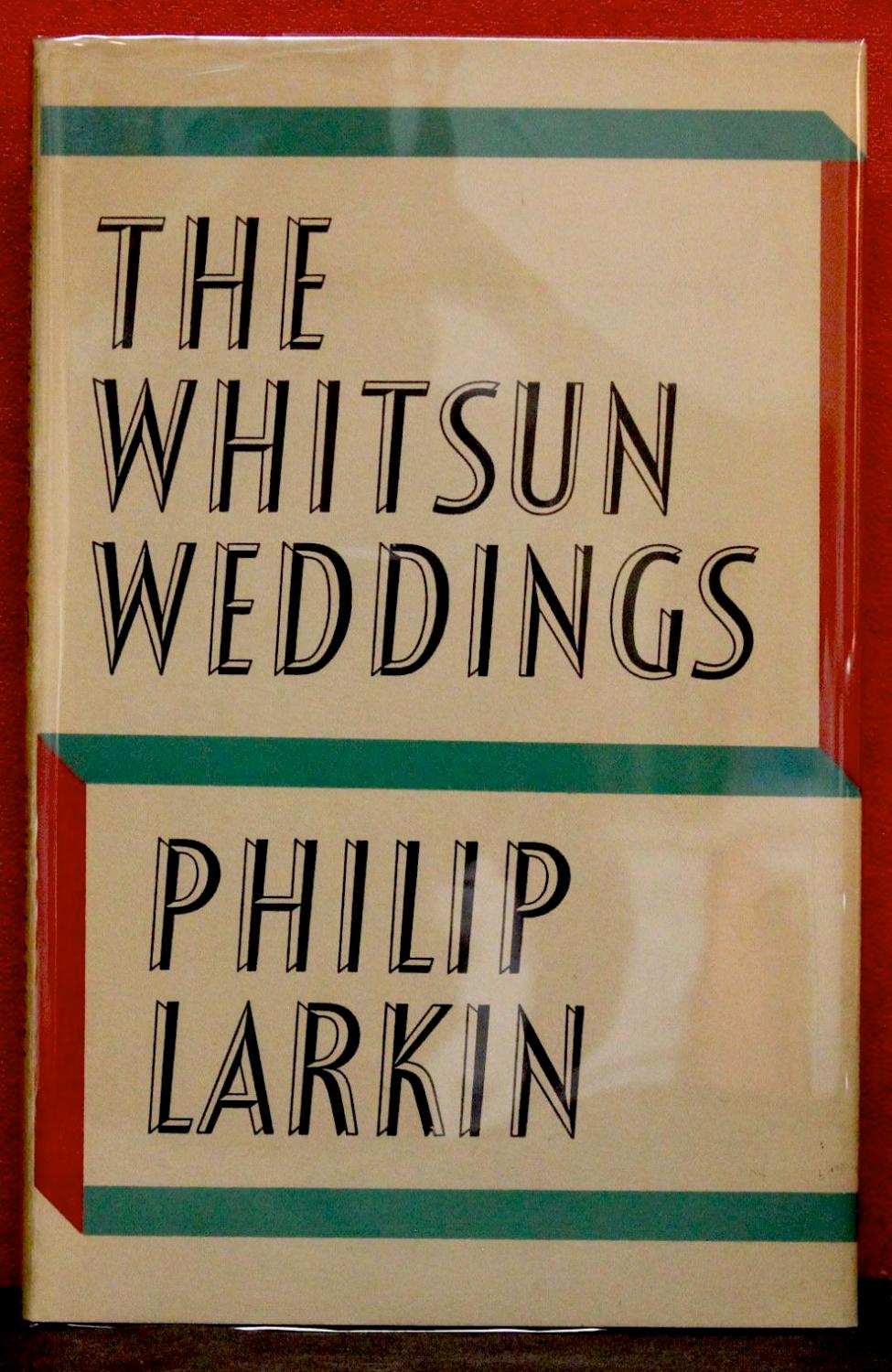
Never likely to become a ‘ national treasure ‘, like his fellow centenarian Philip Larkin, Donald Davie has become, in stark contrast, a rather forgotten figure. An academic, like Kingsley Amis and D. J. Enright, but from a very different background ( Yorkshire Baptist ) he was a fellow ‘ Movement’ poet, but not being a novelist like Amis, he became better known as a critic, rather than a poet, though his poetry perhaps deserves to be better known by the ‘ man in the street ‘.
His earliest poetry, such A Winter Talent 1955 was a direct response to the Apocalyptic school that flourished during the Second World War and spilled over into the late forties. The collections that followed, notably Events and Wisdoms(1964) showed a residue of the influences of the Imagism of Ezra Pound, twentieth century Russian, Chinese poetry of all eras, and American poetry. By the sixties he had become a significant figure in English letters as a critic, and it is as such that he wrote for the New Statesman. Two of his reviews here appear among the archive of the academic Patrick O’Donoghue.
In the first, a review of Eliot’s Collected Poems, 1909 – 1962 (11 October 1963), Davie’s perceptive appraisal is a sort of fan letter to the American. As a poet he is seen as a master of self-control, unlike so many poets, preserving only those poems that he feels deserve to live. Continue reading

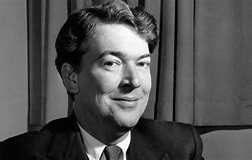
 By the time The Whitsun Weddings had appeared in 1964 Larkin had become a major voice in contemporary poetry. As such he deserved a decent reviewer and he got one in D. J. Enright, a poet and critic two years older, who had reviewed XX Poems. The irony ( if that is the right word) is that the review of The Whitsun Weddings appeared in the New Statesman. Fast forward to the furore that accompanied the biography by Andrew Motion and the published letters edited by Anthony Thwaite, when left-wing readers of the ‘Staggers’ were among those who denounced the racist and xenophobic attitude of Larkin that he must have held at the time when The Whitsun Weddings came out. Of course Larkin, being Larkin, had kept his politics and racism out of this second collection.
 Part one



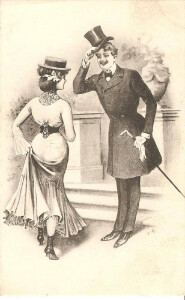 If Everybody’s Best Friend ( 1939) is to be believed, people were still debating the propriety of men giving up seats to women, whether or not it was necessary to doff a hat to a lady or where a man should walk on a pavement when accompanying a lady, as they had done for centuries before and perhaps still do. On the question of who should pay on a night out, to an earlier generation brought up before the advent of Women’s Liberation, there is no question that a man should pay for everything. Notice that it is tacitly assumed that once the man and woman are married, it is certainly the husband who must pay for a meal and for seats in a theatre or cinema, even though the wife may have an income from her job. But have things changed that much ?
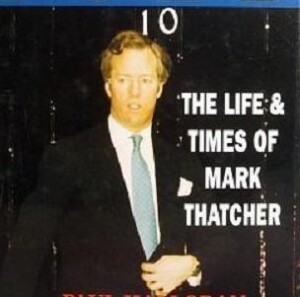
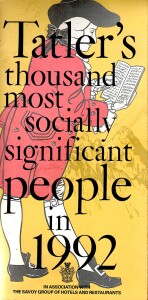 and perhaps still newsworthy, according to Tatler’s Thousand Most Socially Significant People in 1992.