Chiff – Chaffs in March

Found -- a couple of pages from a magazine loosely inserted in a bird-spotter's book. They are from 1967 and seem to me from a magazine about or sponsored by PNEU -the Parents’ National Education Union -an affiliation of  schools throughout the British Isles and the world**. In an article  by Dinah Lawrence* a freelance journalist and novelist she discusses wild life in March. The style is reminiscent of the nature notes still found in The Guardian and gently parodied by Evelyn Waugh as long ago as 1938 in Scoop. After discussing Jung and Freud Dinah Lawrence talks about Professor Hardy's recent Gifford Lectures which, as in his book The Living Stream, make a link between Natural History and religion.... she then discusses bird life:

Continue reading →

The earliest reference to television in literature

Sent in by loyal jotter RR. Interestingly we recently catalogued a literary magazine edited by Lawrence Durrell 'International Post' (1939) -- it had a TV critic and was full of promise but went to just one highly elusive issue. Our copy sold immediately at a substantial premium.

One strong contender ( I would welcome more examples from readers) must be this poem which appeared in Poems (1936) by Michael Roberts. We don’t have a date for this composition, but it was doubtless written when very short experimental broadcasts using the Baird process were being made late each evening from Alexander Palace during the period 1933- 36.My Christmas 1934 issue of The Radio Times lists these in the radio section. They consisted mainly of a series of dances performed by an elegant lady who was obliged to wear a special designed TV- friendly costume that emphasized stripes and zig-zags. There were also vocal recitals and other simple performances that would easily fit into the twenty minute slot.

When, in 1936, the largely unsuccessful and decidedly clunky, Baird method was replaced by the electronic EMI-Marconi process, a greater flexibility in programming was possible. The time allocated to television was greatly extended and in the three years in which it operated, television gave broadcasters like John Betjeman, John Piper and Geoffrey Grigson, opportunities to become well known to an albeit ( the broadcasts only  reached London and parts of the Home Counties) limited audience.

Alas, all this growing potential came to an abrupt end with the outbreak of the Second World War. [RR]

Minor Symbolists 2 (Nicholas Kalmakoff)

More from  this article Unisex, 1910-Style found in a forgotten antiques bulletin The Four in Hand Letter from May 1970.

It was in 1962 that the work of a rather more bizarre artist, Nicholas Kalmakoff, was newly discovered in the Paris Flea Market. Kalmakoff was born in Russia in 1873 and the earliest influence on his life was a German governess who taught him to believe in the Devil -- a recurring theme in his paintings. He studied painting in Italy and returned to St. Petersburg in about 1903. He became immersed in all sorts of strange mystical and sexual cults and probably even attended the satanic meetings that Rasputin was holding at the time.

In 1908 he was commissioned to do the costumes and decor for Wilde's Salome and his interpretation was so shockingly extravagant (the interior of the theatre was designed to closely resemble the most unmentionable part of a woman!) that the production was taken off on the first night.

Continue reading →

Minor Symbolists

Found - this article Unisex, 1910-Style in a forgotten antiques bulletin The Four in Hand Letter from May 1970. It billed itself as The Fortnightly Guide to Collecting for Profit (Art Antiques Junk Valuables). Very much for the intelligent dealer and stall holder of the time with its eye on prices and trends. It tips the fringe PRB painter Simeon Solomon as an artist to watch, a painting of his recently made a 6 figure sum but he could then be bought for less than a £1000 for an oil. The artists mentioned here are still quite obscure with no art books or Catalogues Raisonnées available ...[in 2 parts with the first mostly on Eric Robertson and the second on Nicholas Kalmakoff]

Unisex, 1910-Style

Eric Harald Macbeth
Robertson (1887-1941)
Continue reading →

How to be Happy on the Riviera 2

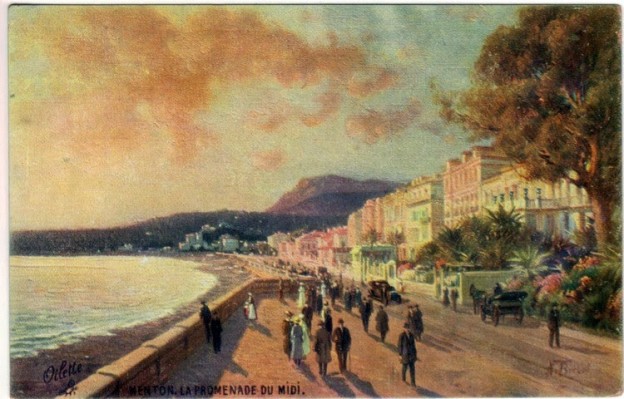
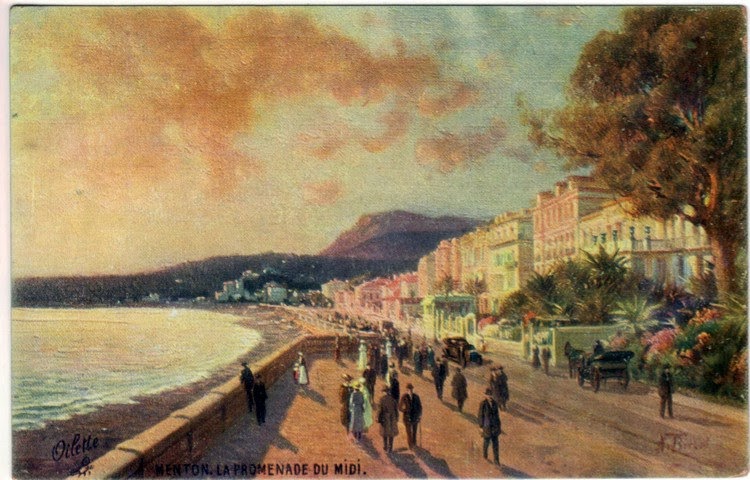
The second part of a posting of a complete book How to be Happy on the Riviera by Robert Elson W. (Arrowsmith Ltd., 11 Quay Street, Bristol, 1927). There is plenty on food and restaurants (including menus and tips on coffee, ice cream and liqueurs) and some good descriptions of gamblers in Monte Carlo - 

"Little old women in Victorian black silk dresses and bonnets; others attired in the fashions of twenty or thirty years ago; exotic-looking young women, wearing extravagant parodies of the fashions of to-day – some exactly like cinema vamps; women like men, and girls like boys. A duke who is a frequent visitor summed it up neatly: 'There are always a lot of queer wild-fowl about'...you may see incredibly ancient men; wild-looking men with immense manes of hair; gaunt men with sunken cheeks and bony hands who might have come out of a novel by Mrs. Radclyffe, unnatural-looking young men who might have been created by Mr. Michael Arlen; people who impress you as half crazy, others who look as if they had been dead a long time, only they don't know it.'

Continue reading →

The Air of Bloomsbury 3

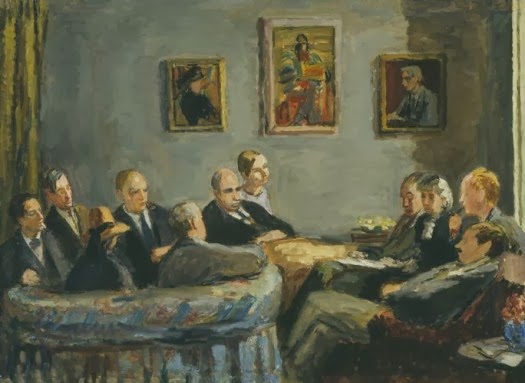
The last part of an article found in a Times Literary Supplement from 1954 - a very lengthy anonymous review of J.K. Johnstone's The Bloomsbury Group. This part is good on on their attitude to mysticism (see Cambridge conviction). At the time there was still a debate as to whether the Bloomsbury Set actually existed. In Clive Bell's slightly irascible article in Century in February 1954 What was 'Bloomsbury'? he continually asks whether it actually existed - as far as he could see it was just 'a dozen friends..between 1904 and 1914 (who) saw a great deal of each other...' He names these '...the surviving members of the Midnight Society -Thoby Stephen (died in the late autumn of 1906) Leonard Woolf...Lytton Strachey (who actually lived in Hampstead) Saxon Sydney-Turner, Clive Bell. There were the two ladies. Add to these Duncan Grant, Roger Fry, Maynard Keynes, H.T.J.Norton and perhaps Gerald Shove...certainly Desmond and Molly MacCarthy and Morgan Forster were close and affectionate friends but I doubt whether any of them has yet been branded with the fatal name..' Bell refers to these as the 'old gang' and names a few younger candidates: David Garnett, Francis Birrell, Raymond Mortimer, Stephen Tomlin, Ralph Partridge , Stephen Sprott, F.L. Lucas and Frances Marshall ((later Mrs Ralph Partridge). This review is anonymous but is certainly by someone who knew his (or her) stuff.

Yet as temperaments appear to run in families they retained a passionate individualist faith, though without obligations. 'We were,' says Maynard Keynes, 'in the strict sense of the word immoralists, we recognized no moral obligations on us, no inner sanction to conform or to obey.' It was this rejection of tradition, combined with 'comprehensive irreverence,' which made them suspect to the outer world. lt was 'I think a justifiable suspicion,' he says, and proceeds with admirable candour, wit and yet loyalty to show that there was something both brittle and far too narrow in their early views, and perhaps dubious about their later lives, when 'concentration on moments of union between a pair of lovers got thoroughly mixed up with the once rejected pleasure.'

Continue reading →
Iris Murdoch and friends

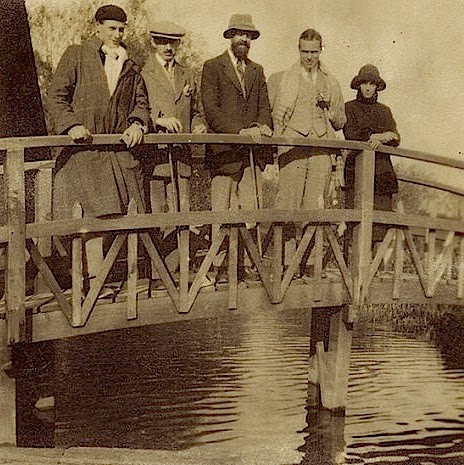
Found – a photo of a crowd of writers and intellectuals. The novelist Iris Murdoch is recognisable, with her husband John Bayley to her left and the man in suit and tie second last to the right is possibly Isaiah Berlin (without his usual heavy specs) described in an obituary ‘as the most prominent thinker of his generation.’ Probably from the early to mid 1970s and possibly taken in the garden of Iris’s house Cedar Lodge at Steeple Aston near Oxford. Oxford may well have provided most of the guests, some of whom look vaguely familiar. Identifications welcome.

Mona’s 440 Club – dancing at the Lesbian Bar

Found, folded into an American thriller from the Donald Rudd collection of detective fiction, this napkin - a memento of Mona's 440 Club generally credited as being the first lesbian bar in the United States -'Where Girls Will be Boys.'

James R. Smith's San Francisco's Lost Landmarks (2004) says the following about Mona's:

Mona's 440 Club was another [club] that took advantage of the city's tolerance and tourism. Opening in a Columbus Street basement in North Beach in 1936, Mona Sargeant's tavern quickly hit the travelsheets as a place "where girls will be boys." The first openly lesbian club, Mona's female waiters and performers wore tuxedos and patrons dressed their roles. Within a couple of years, Mona's moved to 440 Broadway and took the address as part of the club's new name, Mona's 440 Club. Great entertainment, first local and later national talent, made a night at Mona's an event.

Continue reading →

Etiquette for young ladies at Cambridge

Found - this scarce pamphlet: Say "Thank you" : a manual of university etiquette for young ladies. It is known to be by Jean Olivia Lindsay and is light-hearted in tone. Jean Lindsay was at Girton in the 1930s and published several books on Spanish and Scottish history. The text of this book has (so far) been unavailable. Google Books note the existence of the book but have no text. Although she is very down on jeans and corduroys ('deplorable') the work is quite modern in tone, at one point she suggests you could meet men by joining a religious club 'but there the young men are apt to have very honourable intentions...' There is also a lot of practical advice, some of which probably still holds, like 'It is more important to be polite to gyps and bedders than to the Bursar or Senior Tutor.'

A MANUAL OF UNIVERSITY ETIQUETTE FOR YOUNG LADIES

FOREWORD

Almost certainly no bluestocking would ever worry whether her behaviour was ladylike or not, so a book of University etiquette for young ladies may appear to be so much wasted effort. However, as the great majority of young women who come up to the University every autumn would hotly repudiate the title of bluestocking, some of them may find these notes useful. Some dyed-in-the-wool donnish bluestockings may even find them amusing.
Continue reading →
Survival in a Nuclear Attack

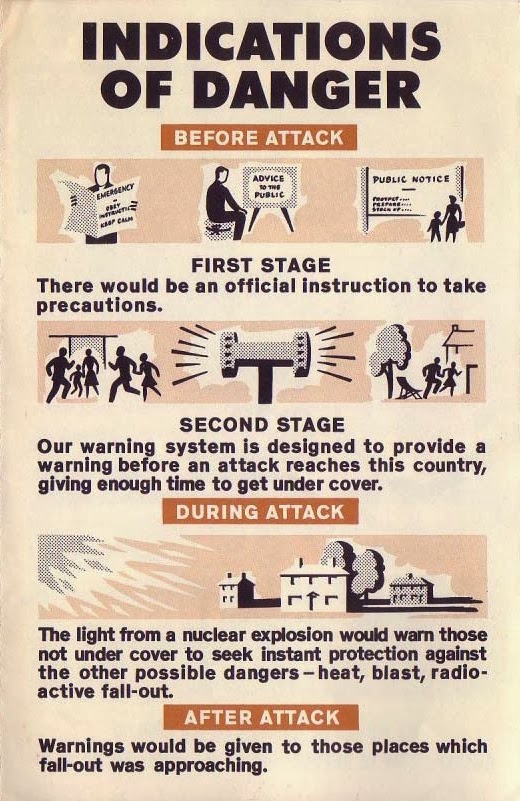
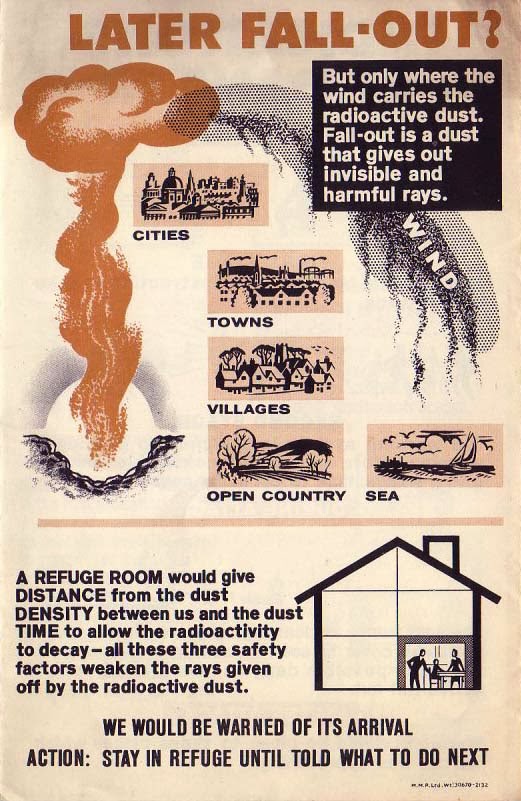
A chilling piece of ephemera from the Cold War era - a  graphic 6 page folding pamphlet published in the UK by the Central Office of Information. Unsure of the date. Assume early 1960s. It advises "...stay in refuge until told what to do next" - but who exactly will be issuing orders at this point?

Wonders of the 1930s

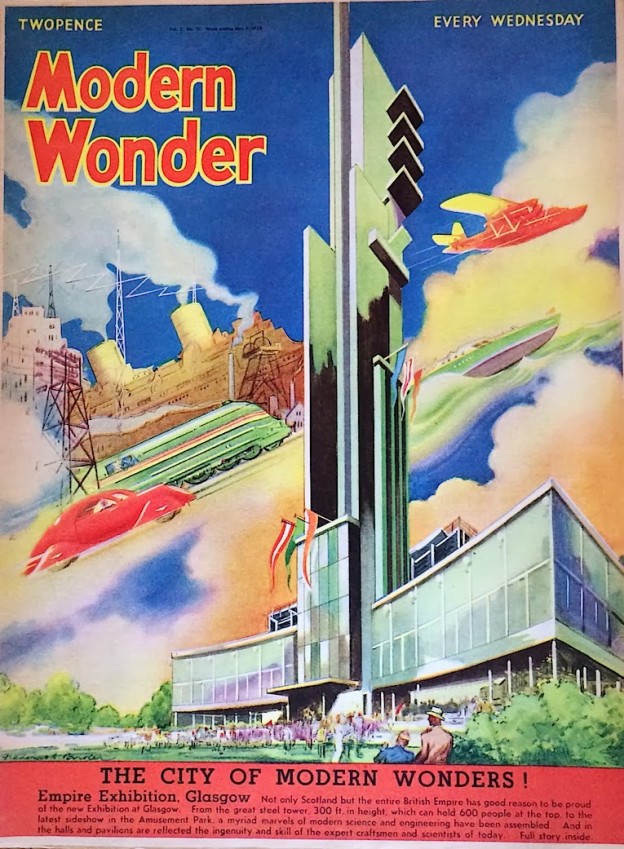
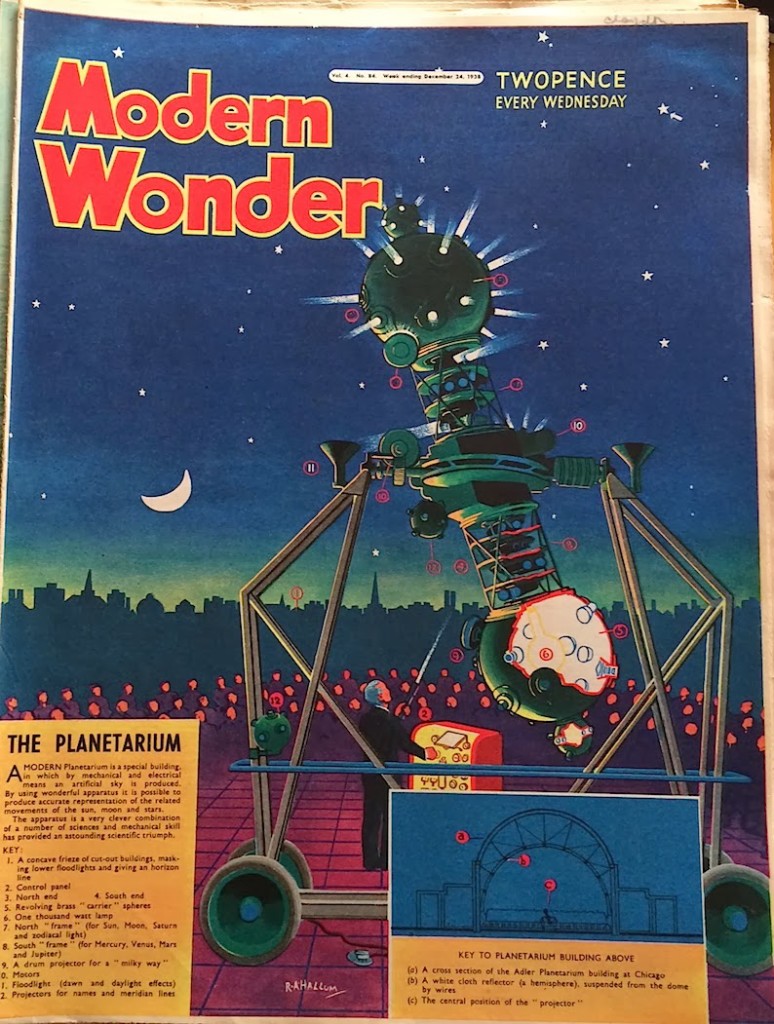
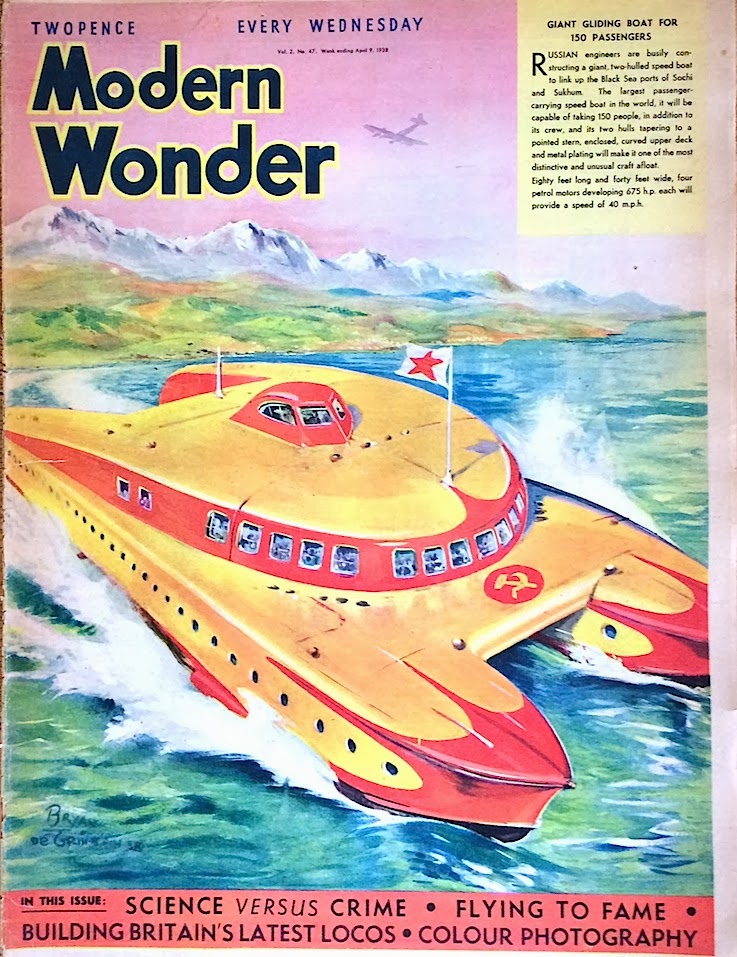
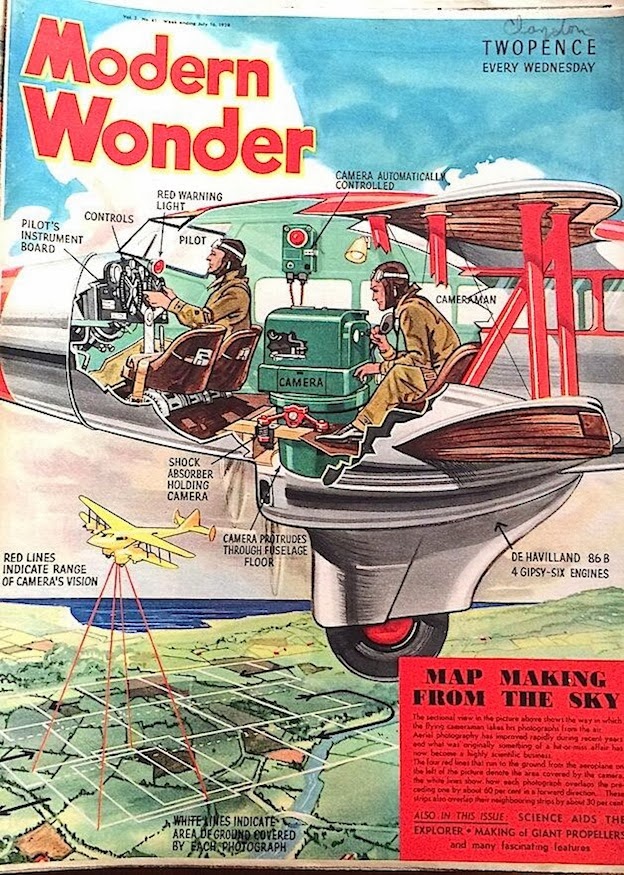
Some amazing covers from Modern Wonder: the Pictorial Review.(Odhams, London 1937 - 1940)

An astonishing magazine of modern invention, science and future prediction (visions of the future) subjects include: photography (miniature), aviation & flying boats, trains, shipping, wireless, television, military machinery, car racing, world record speed attempts, deep-sea diving & submarines, power stations and manufacturing. Striking, colourful covers, mostly by Bryan de Grineau and Lashwell Wood. Most issues have stories, (thrillers and science fiction) by such writers as Clifford Cameron, Stanton Hope, W. J. Passingham, Peter Barr, and in the first issue, John Wyndham (writing as John Beynon) Issue 1 also includes the required supplementary booklet 'Marvels of Today'. Issue 105 sees the appearance of Alex Raymond's 'Flash Gordon' comic strip, for about 30 issues, mostly in colour.  From issue 134, as Britain moves into the war, it's name changes to Modern Wonders (War Pictures).

Sligo’s Markree Castle—a misdemeanour recorded

Markree Castle

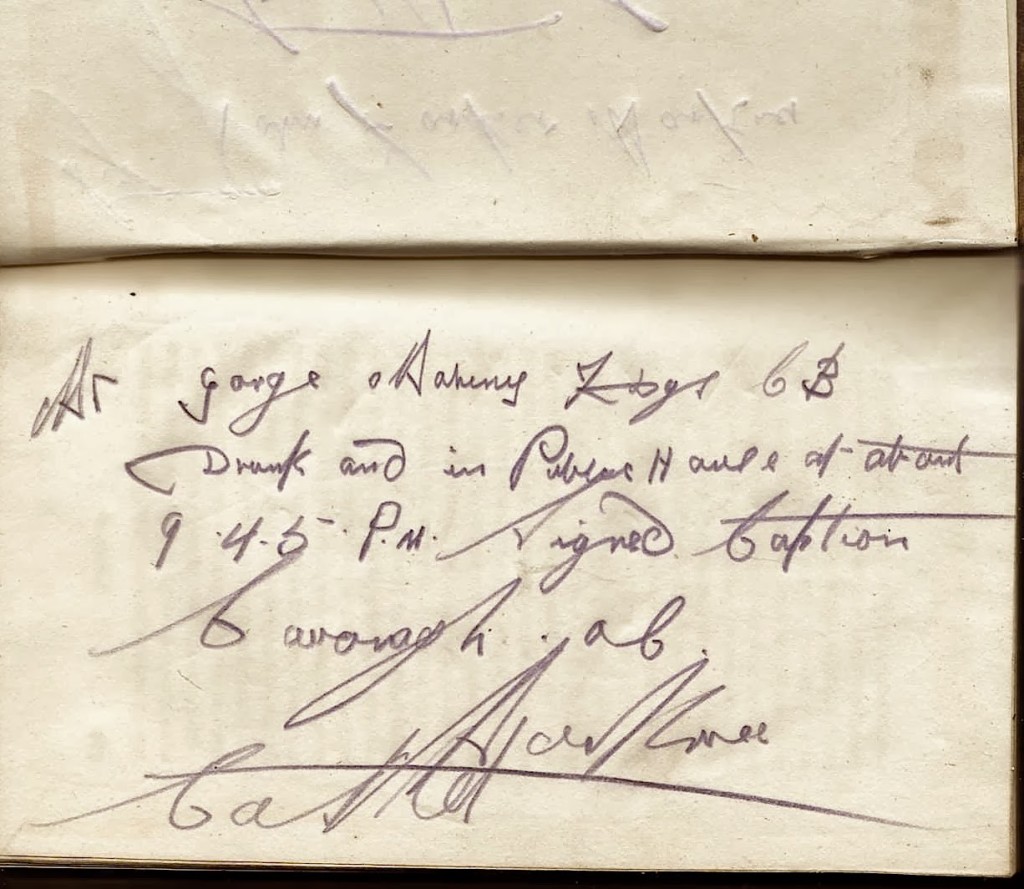
An extraordinary memento of Ireland’s bloody Civil War (June 1922 – May 1923) is this blue crayon scrawl in a copy of John Scott’s Visit to Paris (1814). The book came from the library of Edward Joshua Cooper, M.P. (1798 – 1863), one of a long line of Protestant occupiers of Markree Castle dating back to 1663.
During the short war between the Anti-Treaty IRA and the Irish Free State forces, a battalion from the latter occupied the majestic Castle for a short time, presumably to consolidate their hold over County Sligo. No doubt, the Coopers wisely decided to flee their family home during this bloody period, which gave some of the Irish officers the opportunity to avail themselves of a splendid library. It is not known how much a certain Captain Cavanagh read of Mr Scott’s book on Paris, or what he thought of it. However, what we do know is that he found the blank pages a very convenient notebook, as made his mark on at least three pages.

The most interesting entry concerns Corporal George O’Mahoney Rogers who, Cavanagh notes, was found ‘drunk and disorderly in (a) Public House at about 9.45 P.M.’ Perhaps at some time, other records will divulge what happened to Corporal Rogers… Or indeed Captain Cavanagh.

Forum Club (Grosvenor Place)

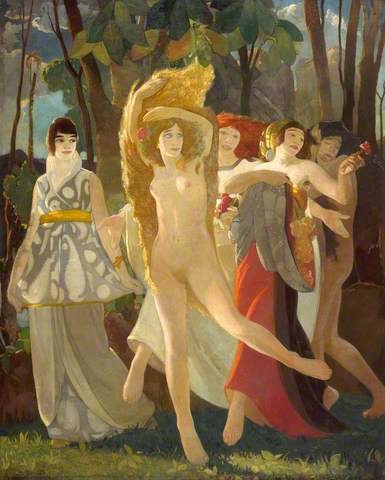
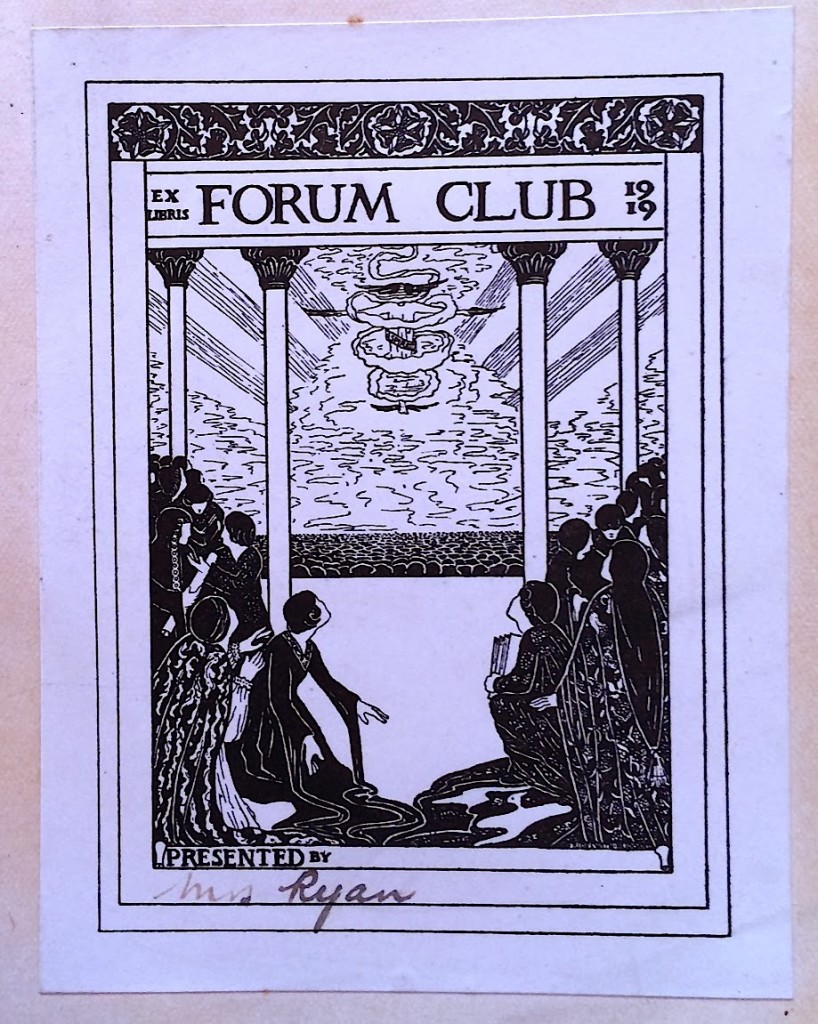
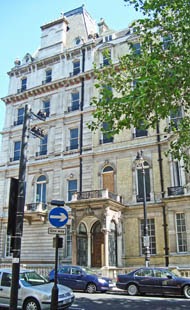
Found-- this intriguing bookplate. It can be seen in many books deaccessioned from the club's library. Until I researched the Forum Club I thought it had some occult or theosophical connection, as the women look like priestesses witnessing some sort of vision or apparition. In fact it was a normal London club, but solely for women, with 1,600 members.

It was founded in 1919 as The London Centre for Women's Institute Members, and lasted into the early 1950s. A number of suffragettes and early feminists were members, including Elizabeth Robins, Mary Sophia Allen and Sybil Thomas and Viscountess Rhondda. As well as accommodation for members (and their maids), the club contained a dining room, a lounge, a photographic darkroom, a salon which could by hired for exhibitions, a bridge room, a billiard room, a library and a hairdresing room. Formerly it had been the residence of of Sir Henry Campbell-Bannerman, who was Prime Minister from 1905 to 1908. A blue plaque commemorates his residency. During World War I it was The Princess Christian's Hospital for Officers - a convalescent home with 35 beds, affiliated to Queen Alexandra's Military Hospital in Millbank. A website in 2012 reported it was now boarded up but it will probably re-emerge as an oligarch's palace or a hotel.

Eating Chinese in late 1940s Soho

Forwarded to us by a loyal jot watcher. One restaurant was favoured by celebrities - Johnnie Mills, Bobby Howes, Coral Browne, Sandy Powell, Ivan Maisky and Lady Cripps - probably impressive names in their day. I especially like the bit about Lord Tredegar bringing his own jade chopsticks...

Stanley Jackson’s brief but brilliant Indiscreet Guide to Soho is crammed with so much colourful reportage on the immediately post-war night life, petty crime, Bohemian characters and restaurants in this popular quarter of London, that it is difficult to choose what to Jot down. In the end, I opted for two pages on Chinese restaurants. Jackson attributes our ‘craze‘ for eating Chinese to our sympathy for the nation’s stand against the ‘Jap Fascists‘, but the trend must surely pre-date this.

Incidentally, what happened to the redoubtable ‘Ley-On’s ?’

Click to read

The Air of Bloomsbury 2

The second part of an illuminating article found in a Times Literary Supplement from 1954 - a very lengthy anonymous review of J.K. Johnstone's The Bloomsbury Group. This part is good on the religious philosophy of the group and what gave them such strength and separateness. As the author says they enjoyed "..supreme self-confidence, superiority and contempt towards all the rest of the unconverted world." The Maharishi to the set was G.E. Moore and his Principia Ethica is still much in demand.

THE AIR OF BLOOMSBURY

…still they were hardly a group, Mr. Bell maintains. Yes, they met often and were intimate friends. Yes, they did like each other; also they shared a taste for discussion in pursuit of truth and a contempt for conventional ways of thinking and feeling. But, he asks, is there anything specific in this? Could not as much be said of many collections of young people in many ages? Here Virginia Woolf seems to chime in with him. ln Jacob's Room there is a tenderly mocking glimpse of her hero as he sits reading in the British Museum. And Jacob surely suggests an early Bloomsbury figure ? Indeed, from the fleeting touches which convey so well the effect of his presence, those who can remember her brother Thoby,and a certain hewn grandeur in his appearance, are tempted to read him back into Jacob, thus giving Jacob an independent existence, which her characters rarely possess in their own right. "Life on the page," says Mr. Forster, she could always give her characters, "but rarely life eternal..She could seldom so portray a character that it was remembered afterwards on its own account as Emma is remembered for instance ... "

Continue reading →
How to be Happy on the Riviera 1927

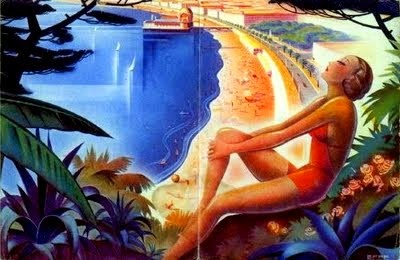
We are putting up an entire book on Jot101, a fairly early book on the Riviera. Very much of its time with local prices, information about the weather and sports facilities and recommendations for hotels and cafes and cabarets. Here are the first 4 chapters...


HOW TO BE HAPPY
ON THE RIVIERA

BY ROBERT ELSON


First published in August, 1927

Printed in Great Britain by J. W. Arrowsmith Ltd., 11 Quay Street, Bristol

Continue reading →

Edna Clarke-Hall – letters from Augustus John

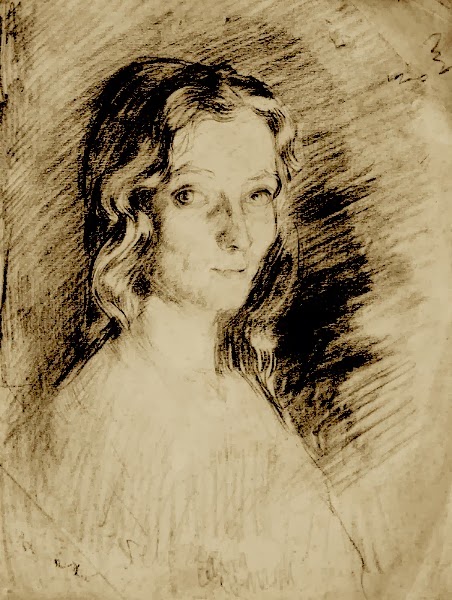
Portrait of
Edna by John

The exhibition catalogue recently posted on Jot 101 just scratches the surface of Edna Clarke-Hall’s remarkable career. A gifted artist, whose work in many media has always been in demand, was the friend of so many colourful artists in the early years of the twentieth century—notably Gwen and Augustus John. She died in 1978 aged one hundred and may have lived even longer had the shock of being moved from Upminster Common, where she had lived for more than seventy years, to a retirement home, not played its part.

Some unpublished letters addressed to her from Augustus John just before the First World War, which a friend who knew her well, managed to acquire, reveal much about her relationship with the older artist who, like many other men, was captivated by her beauty. They also reveal John to be a deep thinker on art and society whose was capable of decidedly Lawrentian rants against convention. Two of these letters are worth quoting in full:-

Continue reading →

Gentlewomen skiers in Edwardian Chamonix

Sixteen years before the first Winter Olympics was held at Chamonix on Mont Blanc the ladies in this press photo of 1908 were learning to ski on the slopes near the town. A note on the back of the photo tells us that the women were undertaking a ‘course de ski pour dames‘, which may indicate that back then etiquette demanded that ladies be taught in single-sex  groups. The numbers they wore may also suggest that they were formally scored by their instructor for their prowess on the snow. The three older women, including the grand dame with her flat hat and head-scarf, appear to relish their situation, while the little girl bearing number 9 seems utterly terrified.

The heavy-duty winter clothes of the men operating the horse-drawn sleigh in the background contrast remarkably with the dress chosen by the women skiers, which seems more fitted to a ‘promenade‘ around the town.

The Grosvenor House Ice Rink

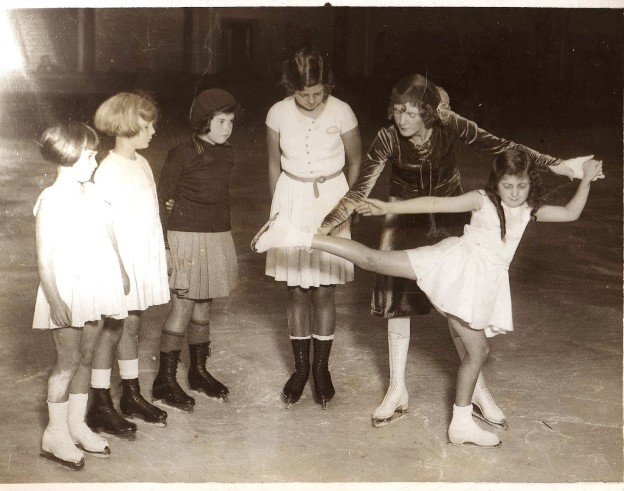
Best known as the venue for the most prestigious antiques fair in the world, the Great Room of London’s Grosvenor House Hotel (opened 1929) began life as a vast ice rink, where the rich and famous refined their skating skills. It is said that in 1933 the present Queen learned how to skate here. She must have been around the same age as some of the little girls being taught the basics by their elegantly dressed coach in this press photo dated 18th September 1931.

Unfortunately, under pressure from rival (and probably cheaper) establishments in the metropolis, the Grosvenor House Ice Rink was forced to close in 1935, after just six years of use. The space was then used as a grand ballroom, and afterwards as a conference venue. However, all the refrigeration machinery was left in situ underneath the present floor, where it can still be inspected.

Petulengro ‘King of the Gypsies’

Found in the Frederick Warne published children's magazine The Merry-go-Round of October 1937 this piece by (Xavier) Petulengro, who was known as 'King of the Gypsies.' Kooshti Bok, sometimes spelt Kushti Bok is Romany for 'Good Luck.'

Wikipedia says of him '...a British Romanichal horse trader, violinist, businessman, writer and broadcaster, known as the "King of the Gypsies". He frequently broadcast on BBC radio in the 1930s and 1940s, and later wrote regular astrology columns in magazines as well as publishing his autobiography and several books on Romany lore... His funeral at the age of (about) 97 was arranged in traditional Romanichal style, with about 100 mourners in traditional costumes and some 1,500 sightseers.'

This piece was written for the boy and girl readers of Merry-Go-Round -some of whom had attended this ceremony. 'Chavvies' = children.

Kooshti-Bok, Chavvies,

Well, this has been an exciting time for me. As many of you know, I was crowned King of the Gypsies at Baildon in Yorkshire on August 28th. I hope you saw the ceremony on the screen at your picture-house, but I am going to tell you all about it here.

Continue reading →