Recently the University of Roehampton announced that it is to close its Classics department. Leaving aside the surprising revelation that such a small and undistinguished seat of learning actually boasted a Classics department, this is part of a trend towards abolishing certain disciplines in the Humanties, principally ( one supposes) due to lack of interest from prospective students. We have also learnt that graduate with degrees in English Literature are now finding it harder than their fellow graduates in most other branches of the Humanities to secure jobs. In view of this, the ultra-vocationally inclined Sheffield Hallam University, has decided to abolish its department of English Literature. Doubtless, many other Universities that were former polytechnics, will follow suit.
The reassessment of the Classics as an academic discipline worth sticking with has been going on in and outside the Academy for a hundred or more years. Sometimes an insistence on a qualification in Latin seems absurd. When your Jotter was being groomed for Oxford at a State grammar school in Wales by his history master, it was discovered that if he wished to study English, an O level in Latin was the minimum requirement. Because he had switched from the Science stream to the Arts after ‘O’ levels, he had no such qualification, unlike those who had remained in the Arts all their school careers. Had he wished to study English at Cambridge, however, a qualification in Latin was not stipulated, thanks partly to the efforts of people like F. R. Leavis. In the end, your Jotter opted for Cambridge, but failed to get in, mainly because, unlike those from public schools preparing for Oxbridge, he was not offered special guidance on past exam papers etc. Not that he is bitter in any way! Continue reading



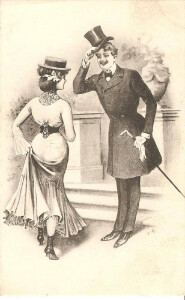 If Everybody’s Best Friend ( 1939) is to be believed, people were still debating the propriety of men giving up seats to women, whether or not it was necessary to doff a hat to a lady or where a man should walk on a pavement when accompanying a lady, as they had done for centuries before and perhaps still do. On the question of who should pay on a night out, to an earlier generation brought up before the advent of Women’s Liberation, there is no question that a man should pay for everything. Notice that it is tacitly assumed that once the man and woman are married, it is certainly the husband who must pay for a meal and for seats in a theatre or cinema, even though the wife may have an income from her job. But have things changed that much ?

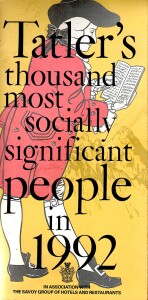 and perhaps still newsworthy, according to Tatler’s Thousand Most Socially Significant People in 1992.
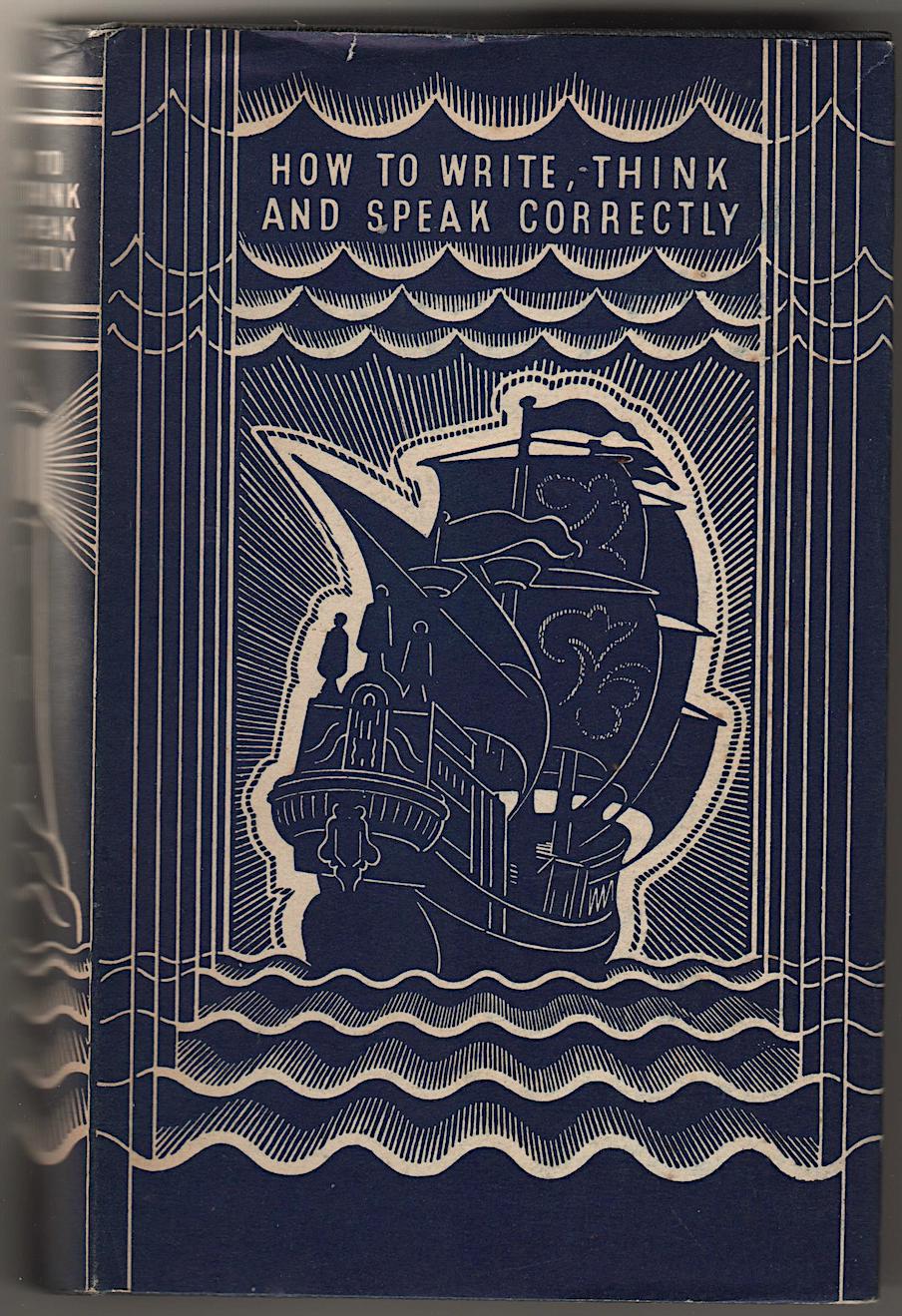
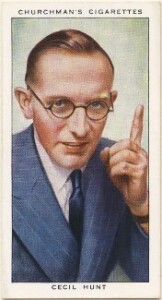 Cecil Hunt ( 1902 – 54) was a journalist, editor, novelist and anthologist best known throughout the English-speaking world for his compendiums of schoolboy ‘ howlers’. His first collection appeared in 1928 and proved to be a best-seller. At various times afterwards he produced other anthologies of howlers as well as guides to journalism, which he had studied at King’s College, London, and creative writing, books on the origins of words and a collection of unintentionally funny letters. He also wrote novels under two pseudonyms ( Robert Payne and John Devon). Interestingly, Hunt was President of the London Writers’ Circle and was instrumental in establishing Swanwick Writers’ Summer School. He died at just 51, but ironically his wife lived to be 107.
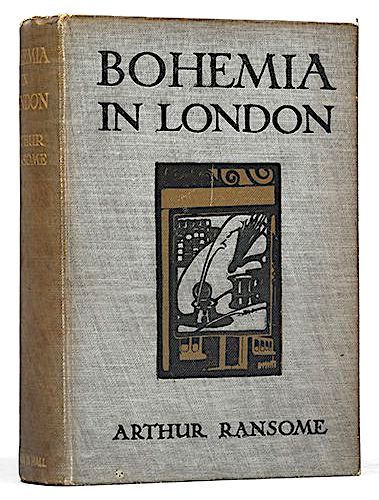
 We have seen ( previous Jot) how, in his first book, Bohemia in London, the young Arthur Ransome was happy to confess his bibliophilia. He seemed to love second hand books more than brand new ones, but he hated the practice of selling unwanted books ( whether new or second hand, he doesn’t say) given as gifts ending up on bookseller’s shelves. Certain people feel no guilt about doing this; they assume, wrongly, that they will never be found out, but if the gift is inscribed there is a reasonable chance that the bibliophile who gifted the book will discover it in some bookshop or bookstall eventually.
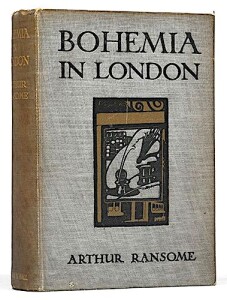 in collectable condition fetching £500 or more.