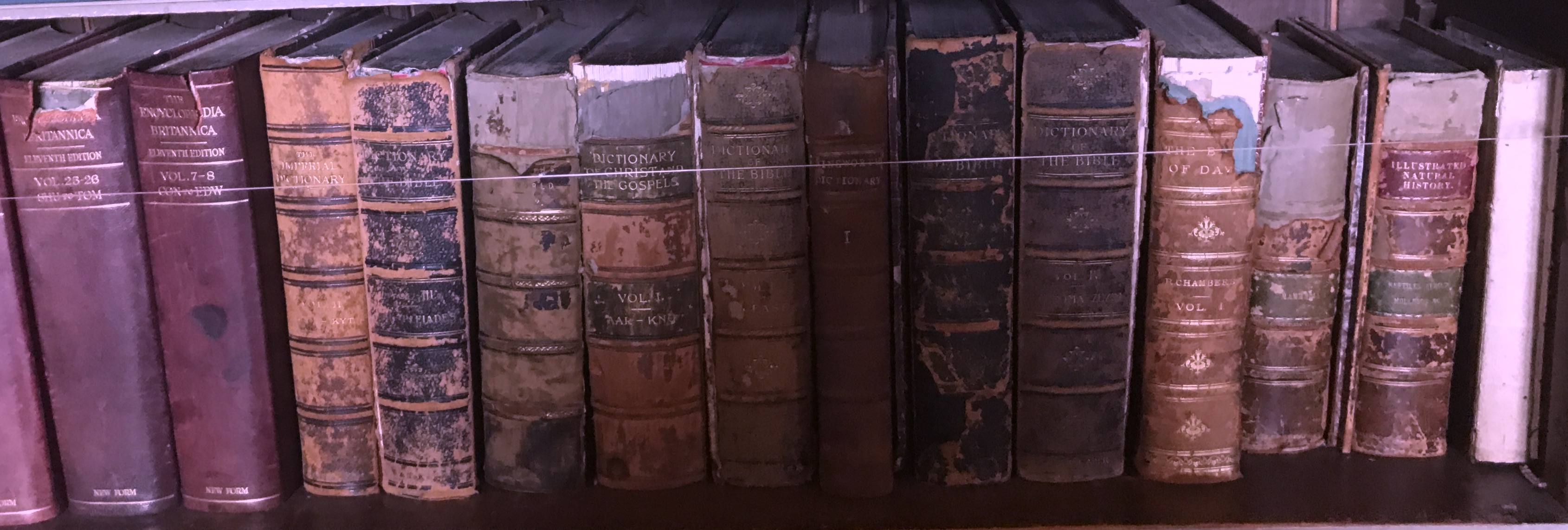
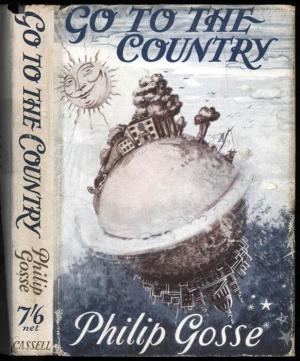
 The twentieth century writer Philip Gosse was one of those many British physicians who changed direction into literature. Others, including Oliver Goldsmith, Thomas Smollett, John Keats, Samuel Warren, Robert Bridges, Francis Brett Young, and Somerset Maugham, took up poetry or fiction, but Gosse began with books on pirates. In the collection of essays entitled Go to the Country(1935) we learn that by the time he had given up medicine Gosse had managed to acquire a large country house called ‘Crossbows’ that was spacious enough to have threeguest rooms, which for a bibliophile like him ( his wife also collected) was the ideal environment. Moral: if you are a seriousbook collector make sure that you make enough money to acquire a home large enough to house your collection.
Gosse succeeds in making every less fortunate collector envious by writing glibly about all the space he owned in which to shelve his huge library, and then shocks us by mentioning that while a GP he was momentarily tempted to pocket perhaps the only book in the house of the patient he was visiting—a work entitled Fancy Mice for Pleasure and Profit.Gosse is good on the way books should be housed and displayed –scattered around on tables or on open shelves which allow air to circulate, rather than in caged bookcases, where damp and mildew are encouraged to thrive, although he later rather puzzlingly admits to owning ‘ three tall bookcases with glass fronts ‘ in which his rare association copies were housed.
Gosse’s four works on pirates grew out of his own mania for collecting books on this subject, which luckily for him was not one for which he had any rivals among collectors. Because of this he was able to buy nearly every edition of the two works published by the mysterious eighteenth century chronicler Charles Johnson, and by so doing brought out a Johnson bibliography. Continue reading


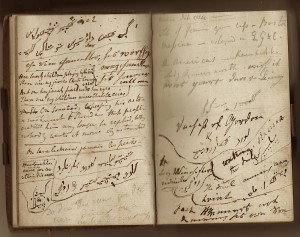 The front part is a short record of travels in Germany and Belgium in which the anonymous male diarist, who is accompanying his mother, at one point tells us that he was born in 1802, is very scathing about the appearance of most of his travelling companions. In one instance he remarks that the young son of the parson in the party ‘seemed to be as ugly as his father and as vulgar as his cousin’. He is singularly unimpressed by most of the foreigners he encounters along the way. For instance, he notes that his fellow diners at the Table d’Hote, were ‘12 disgusting looking Germans who luckily eat enormously & spoke little ‘. The following evening diners at the same table were’ rather more disgusting in their appearance & manner of eating than the day before ‘. Predictably, he is also critical of the meals he is obliged to eat and the inns that serve and accommodate him. In one inn he accuses the landlord of serving him a dish of greyhound puppy. Our diarist certainly places himself above the common lot. He seems knowledgeable about art and is a little snooty regarding the collections he views, suspecting that most of the paintings were copies from the masters. More positively, he is often ecstatic about the scenery and buildings he encounters and he particularly praises cathedrals and castles. We yearn for more, but unfortunately, the diary stops abruptly after thirty pages.
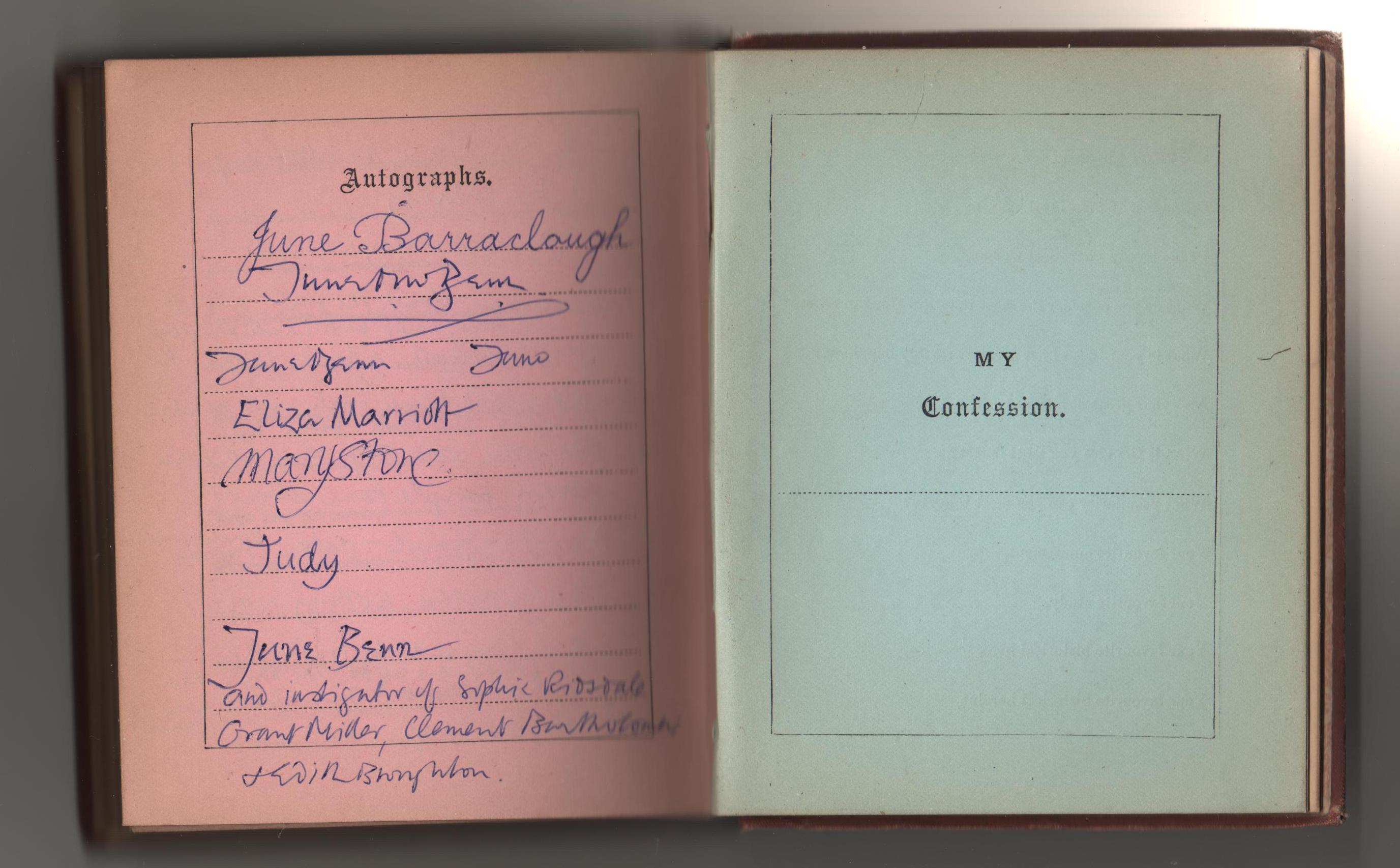


 Most of the Common-Place books you find in auctions or second-hand bookshops date from the nineteenth century—usually before about 1860—and are dull, dull, dull! They invariably contain passages from history books, books of sermons, and extracts from poems by Felicia Hemans and Robert Southey. Often they are illustrated by amateurs who like to think they can draw. Occasionally there are exceptions to this rule, but these rarely surface. So it’s nice in this Age of the Internet to find a Common –Place book that contains some information that is not always easy to find using Google. Such is the volume that we at Jot HQ discovered in a box of ephemera the other day.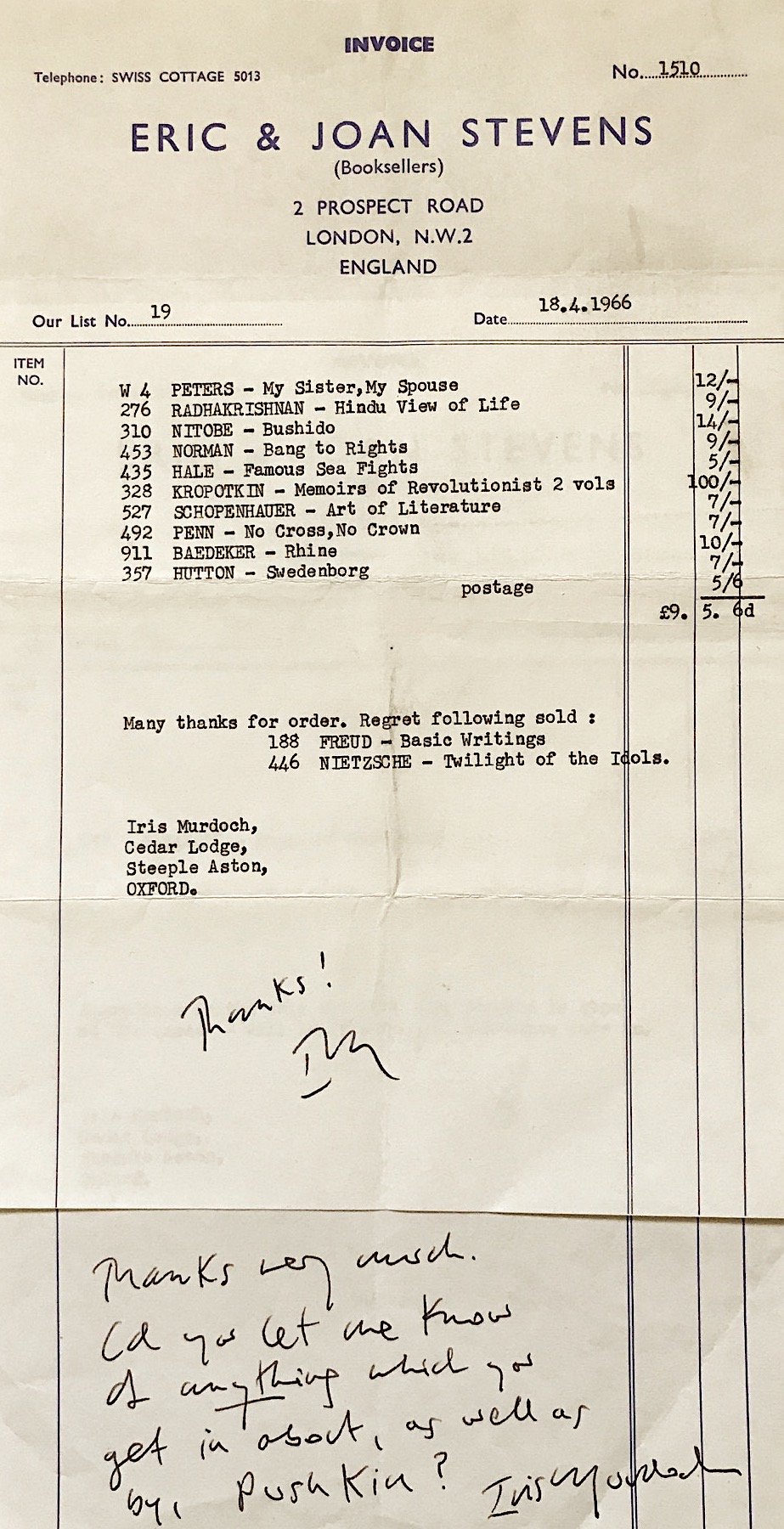


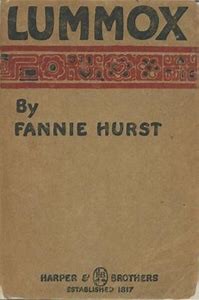 Banned books: No 12: Lummox by Fannie Hurst