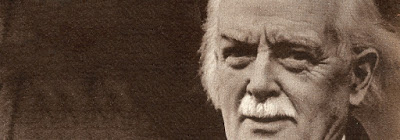
Harold P. Webber – bowls king

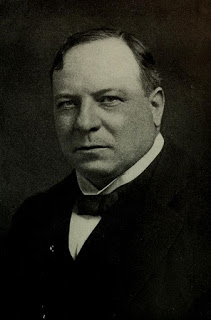
Found in the papers of L.R. Reeve (see A.J. Balfour and many others) a piece, from about 1970, about the life of a bowls champion Harold P.(Percy) Webber. One of Reeve's more minor characters and well beneath the Wikipedia radar but a sort of 'village Hampden' in the world of bowls and the author of a notable book on the subject, written with Dr John William Fisher: Bowls - How to Improve your Game (Pitman, London 1934.) Apart from his sporting skills ('his length bowling was uncanny') Webber was a fine orator…

H. P. WEBBER

Harold Webber's recent sudden death, left the members of his club in a state of bewilderment and shock, and had there been a Wailing Wall like the well-known meeting place in Jerusalem, his departure would have caused a record assembly among the mourners. At the time I was very impressed moreover not only by bowlers of other clubs, but by non-players who never went near a club. One acquaintance declared that he couldn't get the deceased celebrity out of his mind. At last his wife said, "It's no use dwelling on his death; it won't bring him back."
Continue reading

Sir Fred Schonell

Found in the papers of L.R. Reeve (see A.J. Balfour for background on him) this piece about the Australian writer and educationalist Sir Fred Schonell. He was also the author of several books aimed at teaching children to write and spell. The site Old School Reading Books suggests that some of these have become collectable. Reeve, having met the great man, had presentation copies of some of these...

SIR FRED SCHONELL

Professor Hamley once stated that the late Sir Fred Schonell was the best secretary the education section of the British Psychological Society had ever had. How right he was.
  Hamley, like Schonell, was an Australian, but there was no exaggeration in his assertion, for although Schonell’s unruffled manner was rather deceptive I also, whose knowledge of earlier secretaries is possibly greater than Hamley's, can announce that he was nearly perfect, and his professional career is a record of almost unbroken success. Moreover, although he and I were mutual members of three societies in London and frequently used to have a chat, I have to admit that until I read an obituary appreciation in The Times I was unaware of a great deal of his unusual career. I knew he was born in Perth, but it was news to me that he was one of the first graduates of the University of Western Australia to achieve a Hackett overseas scholarship.
Continue reading

Edwin Chadwick on sewage farms

Today, it is Joseph Bazalgette, father of the revolutionary sewage system for London that gets most attention from the press. But Bazalgette was really building on the earlier pioneering work done by the lawyer Edwin Chadwick (1800 -90), who pushed for sanitary reform from the 1840s, not just in London, where perhaps it was needed most, but in the non-metropolitan centres, and continued to work for the principle of clean water up to and beyond the 1880s, long after he had retired.

Here we have a letter from Chadwick, dated August 21st 1884, to a James Blackburn, who turns out to be the man who in the 1870s was dealing with the sewage coming from Aldershot Army Camp. Blackburn, who was then Ranger of Windsor Forest, had used the effluvia on 100 acres of mainly heather-strewn land, and so successful was he in growing crops on it that in 1879 he entered the Camp Farm for the Agricultural Society’s £100 prize for the best sewage farm in the United Kingdom. He didn’t win it, but Chadwick, evidently impressed by Blackburn’s methods, wrote to him from his home in East Sheen asking if he could visit him to discuss the latest thinking on metropolitan sewage disposal.

Continue reading

A. J. Balfour

A good piece from the papers of *L.R. Reeve on A.J. Balfour, as a former U.K. Prime Minister he is the highest ranking subject so far (along with Lloyd George.) As usual Reeve is good on his subject's voice and oratorical skills. Reeve's frequent presence at congresses and symposiums of 'leaders of thought' shows him as an almost Zelig-like figure...He ends on a joke, that if not true, ought to be.

Despite his deceptively ornamental appearance, the late Earl Balfour was a worker. Although his attractive manner was unperturbed and casual, he must have experienced periods of unremitting labour through many months; otherwise he could never have written so many theses and philosophical books, added to political publications, parliamentary labours, constituency engagements and university visits.

   His career as a statesman, philosopher and eminent speaker, is too well known to need emphasizing in great detail, but a few outstanding phenomena regarding his life should never be forgotten.
   In appearance he was probably the most aristocratic representative of his period, and was the greatest asset to the perpetuators of the class system. When in his seventieth year he was the leader of a mission to America in 1917, he was one of the most popular visitors England could have sent at any time, because he increased our prestige and disarmed criticism. I mention "perpetuators". Let me make it clear I am not suggesting that Balfour was a determined fighter to maintain the contemporary status quo. He seemed to be fully aware that in this world of fluctuations, there must be modifications of the class system, and an acknowledgement that injustices should be eliminated until the rights of all people are recognized.
Continue reading

William McDougall, F.R.S.

From the L.R. Reeve papers (see A.J. Balfour).

William McDougall*
I repeat my belief that H. G. Wells is the most quoted writer in my reading life, but the late William McDougall, F.R.S., must surely be the most mentioned author in the realms of British psychology. The great Lancastrian's name is also prominent in educational and social psychology, not only in Great Britain but in Europe, America and Australia.
  The well-known behaviourist Watson may be in the running for supremacy in America, for I believe his reputation is growing, and probably Freud's profile is becoming blurred. McDougall however, has a substantial following in the United States, partly because he was lured across the Atlantic to Harvard University, then to Duke University, Durham, N.C., and due to his authoritative well-written publications. Moreover he was a magnificent lecturer: a man whose attractive voice, commanding presence and deductive powers were irresistible to most people. When I wrote about W. H. R. Rivers and his two assistants, William McDougall and C. S. Myers joining an expedition to the Torres Straits in 1898, I could have added that each of the three men deserved first-class honours in Elocution.
  Having asserted that McDougall's reputation is so strong I have to admit that in 1969 Professor Hearnshaw of Liverpool, stated that the great psychologist's influence has almost if not completely vanished. I have no figures to fortify my theory, but if Hearnshaw is right how is it that recently one of McDougall's publications, An Introduction to Social Psychology once out of print, has been reprinted and re-published? Besides, did Hearnshaw forget America? Furthermore, did any other Englishman do more to establish British psychology on an experimental and physiological basis? Before I leave the three young adventurers I must refer to the fact with which I agree, that Rivers and McDougall were both critical of some of Freud's conclusions on the human race. Although I saw Myers scores of times in London, I never knew his opinion of the notable Viennese psychoanalyst. Usually his contributions in my hearing concerned industrial psychology.
Continue reading

Teddy Edward bears

Found among the boundless Peter Haining papers - this definitive piece about Teddy Edward bears:

TEDDY EDWARD

  Most people want to know how the Teddy Edward story began. The original teddy bear belonged to Sarah the then two-year-old daughter of Patrick and Mollie Matthews. Patrick Matthews, one time manager of Vogue Magazine Studios, had taken a photograph of Cecil Beaton's cat sitting in a flower bed and a framed enlargement was hanging in Sarah's bedroom. One day Mollie suggested that it might be a good idea to take photographs of several soft toys for children's nurseries - or even better do a book about Teddy Edward and his friends.

  The present Teddy Edward is not the original bear, who in the early days acted as Sarah's constant companion as well as photographic model ; like all well loved teddy bears the original teddy began to show signs of wear. And so a new bear was found but visually he didn't look exactly like the original Teddy Edward. So the two of them were taken off to the doll's hospital where Teddy Edward Mark 11 had his face lifted so that you couldn't tell the difference between the two of them. The original Teddy Edward is still much loved and lives in cosy retirement in Sarah's room.

Continue reading

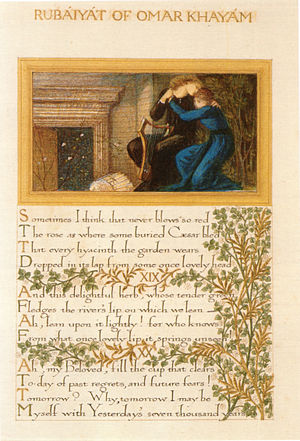
The fate of the Sangorski Omar 2

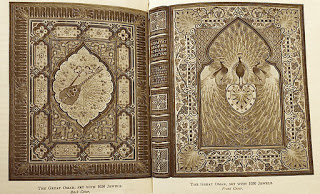
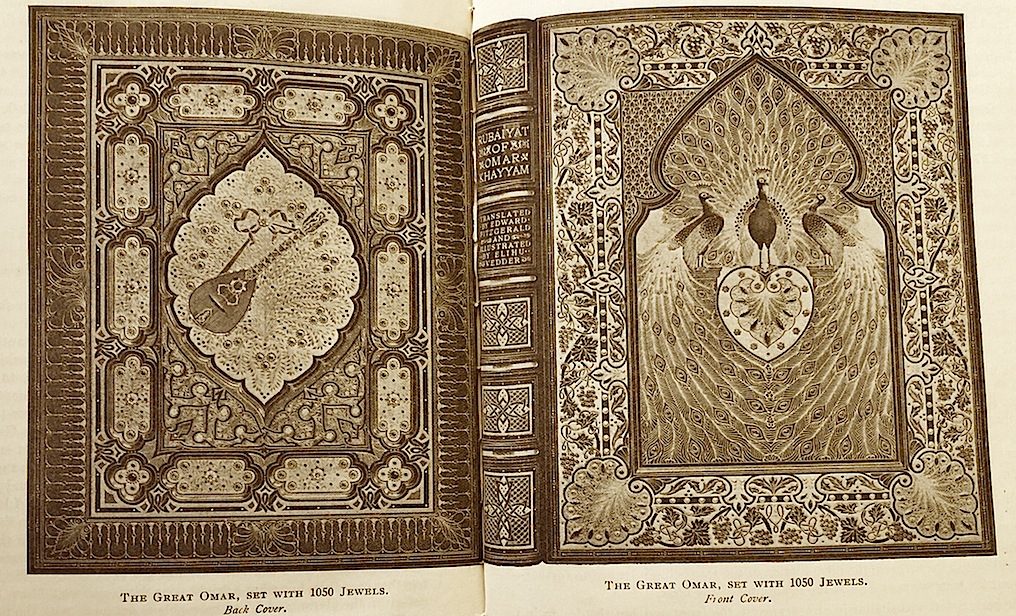
The second and last part of an article on Sangorski's  ill-fated Omar Khayyam binding. It was found in Piccadilly Notes: an occasional  publication devoted to books, engravings and autographs (1929).   A contemporary eyewitness account talks of Sangorski's Omar with its 'gold leaf blazing and the light flashing from hundreds of gemstones studding the tails of the peacocks on the cover..' Less commonly known is  the odious role played by New York customs officials in the affair and that the magnificent book was, in fact, making its second trip across the Atlantic when it was lost forever beneath the waves. J.H. Stonehouse writes:

Continue reading

Thomas Raymont (1864 – 1953)

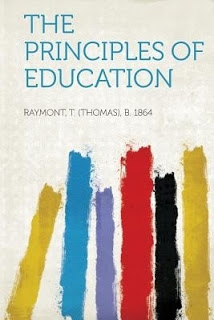
From the papers of L.R. Reeve* - this profile of Thomas ('Tommy') Raymont,  an unsung educationalist. His Principles of Education is still in print with the bald declaration on the cover 'b. 1864.' He died in 1953 and the book he appears to have written in old age was Modern Education (1935). Reeve, a native of Newton Abbot, refers to him as 'the great Devonian'...

THOMAS RAYMONT

It is a good many years since Thomas Raymont, M.A., wrote the Principles of Education, one of the standard books of its kind, but even today no one could read it for the first time without feeling that he had learned some immutable laws on child guidance; and if any earnest student asked me whether there was one sound book on the market for students in training I should suggest Raymont's sensible contribution which was written when the author was an exceedingly busy educational giant.
  Shortly after he ended his two years as student at the Borough Road Training College and was top at the final examination, I believe he was appointed as lecturer at his old college, and there is no need to stress the fact that such an appointment to a young man is rare.
Continue reading

The Red Priest and the Architect

It might perhaps be guessed that Conrad Noel (1869 - 1942), the 'Red Priest' of Thaxted, whose Socialist views once outraged the Tory faithful of his North Essex parish, would be sympathetic to the Art and Craft movement, whose guru was the Socialist poet and designer William Morris. But an inscription, dated April 1906, in a copy of The Country Cottage, presented to him from its co-author, George Llewellyn Morris, confirms it.

Amazingly, I found this inscribed copy of the little book, a hymn to the virtues of both the humble thatched labourer’s cottage and its much more sophisticated Arts and Crafts imitations in brick, plaster and tile, profusely depicted in photographs, in 2006 among the trashy novels in the ten pence box outside a well known bookshop in Saffron Walden. The book had been given to Noel four years before he became Vicar of Thaxted, and it had somehow found its way from here to that bookshop, just 12 miles away, in the intervening years.

Continue reading

The fate of the Sangorski Omar 1

The Great Omar*
Found in an offprint from Piccadilly Notes (circa 1930) this article about (possibly) the most lavish binding the world had ever seen. The magazine billed itself as 'an occasional  publication devoted to books, engravings and autographs.' it was edited by J.H. Stonehouse and this article is by him…

It was in 1907 that I first met Sangorski, when he brought a letter of introduction from a church dignitary, and asked to be allowed to show me a lectern bible which the Archbishop of Canterbury had commissioned his firm to bind, previous to its presentation by King Edward VII to the United States in commemoration of the tercentenary of the established church in America. I recognised at once the justice of his contention that there was something more in the design and execution of the work than was usually to be found in an ordinary piece of commercial binding and that the appreciation of it which had been expressed in the press was fully justified.

Continue reading

New Movements in Art 1942

Found - a folding 6 page art catalogue/ booklet for an exhibition in wartime Leicester June 1942. Artists included John Tunnard (who provides the image on the cover) John Piper, Ivor Hitchens, Graham Sutherland, Frances Hodgkins, Edward Wadsworth, Ben Nicholson, Naum Gabo, Barbara Hepworth, Hans Erni, Paul Nash, Kurt Schwitters, Eileen Agar, Ithell Colquhoun, Ceri Richards, Michael Ayrton,  John Buckland Wright ,Cecil Collins, Leslie Hurry. Top price was £150 for Two Serpents by Paul Nash. The 3 Schwitters were all less than £30..The curator and writer of the introduction (below) was Trevor Thomas - the subject of another Jot entry, as 21 years later he was the last person to see Sylvia Plath alive. He wrote a slim book on this called Sylvia Plath: Last Encounters (Privately Published, Bedford 1989.)

New Movements in art exhibition: 23 May to 21 June 1942: Leicester Museum and Art Gallery

Trevor Thomas, Curator.

By way of introduction.

The contention that "every picture tells a story" is now recognised as a popular fallacy, just as, Hollywood excepted, nobody now believes that "every story makes a picture." In this way free from the necessity for literary associations, we can approach such an exhibition as this with unfettered intelligence and liberated imagination.

Continue reading

A Short Cut to Ventriloquism

Found -an old booklet A Short Cut to Ventriloquism (London: L. Davenport 1934) by one Maurice Hurling. Apparently  ventriloquism has had a slight revival due to reality TV talent shows. The book gives various exercises to improve  ventriloquial skills but starts with the basics which we post below. The two major problems are the 'plosives' that cause the lips to move (B M P V) and the awkward W. Also developing a second voice for the dummy/ figure is essential. Hurling recommends starting with a 'Cheeky Chappy' voice, he also notes that the ventriloquial smoker has an advantage because 'a cigarette placed between the lips will help to keep them perfectly still.'

Preliminary Exercise

Stand in front of a mirror, not too close, and let your lips be slightly apart.

Now try to say each letter of the alphabet without any movement of the lips. With very little practice you will soon find you can do this quite easily except for the letters B, M, P, V and W. 

For these: 
B is pronounced "ge"
M is pronounced "EMG"
P is pronounced "Key"
V is pronounced "VHEE" (breathe it)
W is pronounced "Duggle-you"

Continue reading
Dr Charles Samuel Myers

Found in the L.R. Reeve papers (see earlier postings) - this piece on Dr Charles Samuel Myers (1873-1946) psychologist, anthropologist and musicologist. Among other things, he wrote the first paper on 'Shell Shock' (1915.) Many of Reeve's subjects were connected to psychology which, with education and politics, was a life long interest. He attended many meetings of the industrial section of the British Psychological Society where he first saw Myers. He gives much good detail about his appearance, voice and character...

DR C. S. MYERS

"He was a remarkable man," declared a well-known psychologist soon after the decease of Dr C. S. Myers, F.R.S. He was; and the tribute was, if anything, an understatement, for few who knew him would challenge the description 'remarkable'. One day, if the event hasn't yet materialized, a well-documented yet fascinating biography will insinuate itself into bookshops and public libraries, and thousands of people who have never heard of him will learn of a man who might well be described as a determined investigator into the innate possibilities of the human race.
Continue reading
J. H. Wimms

Another piece by L.R. Reeve, this on the writer and psychologist J.H. Wimms (Joseph Henry.) He is unknown to Wikipedia and his dates are also unknown but a remark by Reeves that his children must by now be grand parents or great grand parents (written circa 1970) puts Wimms birth date at about 1870. He published a paper in the British Journal of Psychology on The Relative Effects of Fatigue and Practice produced by Different Work in 1907 and earlier in 1903 Elementary Biology (Pilgrim Press). Wimms is mentioned in an earlier jot on D. W. Brogan where Reeve describes him as 'the finest lecturer I have ever known' - no mean compliment, as Reeve was a constant attender of lectures throughout a long and busy life. The Brogan piece also has background on L.R. Reeve.

J. H. WIMMS

The finest lecturer for any university is the man who can maintain an unbroken interest on almost any occasion. Trite, but true; and the greatest I have ever known was J. H. Wimms, M.A., of Goldsmiths’ College. He was one of those rare scholars who can maintain the attention of students who, even with no desire to learn are, in spite of themselves excited by the magnetic presentation of the lecturer, and find eventually that they have quite a fair knowledge of one or more specific subjects.
Continue reading

The Literary Cranks of London – Omar Khayyam Club

We could find no further copies of the 1894 London journal The Sketch which in that year was running a series 'The literary cranks of London.' However the 1899 publication The Book of Omar and Rubaiyat has an essay on the Omar Khayyam Club entitled 'The literary cranks of London' by 'A Member' which is almost certainly reprinted from the series. The book shows a menu card for the society designed by the PRB artist Simeon Solomon. The other club in the series was 'The Johnson Club' - there were possibly more.
Mention is made here of 'The Ghouls' which may pay further investigation... Of the many societies that flourished then the Omar Khayyam is one of the few to have survived and still meets. There is also an American chapter.

THE OMAR KHAYYAM CLUB

By A MEMBER

The literary cranks of London are as the sand of the sea-shore for number, and yet they have rather diminished than increased during the last few years. The Wordsworth Society no longer collects archbishops and bishops and learned professors in the Jerusalem Chamber to solve the mystery of existence under the guidance of the great poet of Rydal, and one is rather dubious as to whether the Goethe Society has much to say for itself to-day, although in its time it has crammed the Westminster Town Hall with enthu- siastic lovers of German literature. The Shelley Society one only hears of from time to time by its ghastly bur- den of debt,a state which perhaps reflects the right kind of glory upon its great hero, whose aptitude for making paper boats out of Bank of England notes, if apocryphal, is, at any rate, a fair exemplification of his capacity for getting rid of money.And as to the Browning Society, with its blue-spectacled ladies, deep in the mysteries of Sordello, if the cash balance, which is said at Girton to have been expended in sweetmeats, had any existence, at the London centre, one knows not what confectioner at the West End has reaped the benefit. There are, however, some fairly flourishing organizations at this moment. One of them is the "Sette of Odd Volumes," another the Johnson Club, to say nothing of the "Vaga- bonds," the " Ghouls," and the latest comer, the Omar Khayyam Club.

Continue reading
Sir Edward Bond—the man who transformed the British Museum Library

There aren’t many librarian superstars. Casanova was one, I suppose, but he was better known for his extra-mural activities. Panizzi of the British Museum was possibly another, but a successor, Sir Edward Augustus Bond (1815 -98), was arguably a greater innovator and was certainly more industrious.

Bond proved that if you had natural talent and were hard working and dedicated, you didn’t need a university education to get to the top in the British Museum at least—though this institution was an exception to the general rule that an Oxbridge degree was de rigueur for a career in the world of Victorian scholarship. Bond earned his spurs and his reputation as a gifted palaeographer, especially in Anglo-Saxon, while in the manuscript department of the Museum, which he had joined directly from school at the age of 17 in 1832. Although he ended up as Keeper of the department in 1867, he was expected to remain there until his retirement, so it came as a shock to many with more conventional educational backgrounds when he was chosen for the top job in 1873.

This letter, which is dated 19th January 1882 and was written to Robert Harrison, who may have been a proof reader,  belongs to his fifteen year reign as Principal Librarian, when, among other innovations, he introduced electric light into the Reading Room and storage areas( how amazing that there weren’t more fires in libraries during the eras of candles, gaslight and oil lamps) , built a large extension to house prints, drawings, manuscripts and newspapers, and oversaw the publishing of  the printed catalogue of books. In the letter Bond refers to certain errors (possibly printing errors) that Harrison has pointed out to him and requests that he:

...be so good as to return to me 2 copies of each set of the Printed Accessions delivered to you during the past year, and I will instruct Messrs Clowes & Sons to send you for the future only one set of the Printed Accessions, together with the Printed General catalogue...

Bond retired in 1888, aged 73, and doubtless spent much of the remaining ten years of his life on scholarly projects. His publication legacy is not big—a four volume facsimile of Anglo-Saxon Charters and an edition of the speeches of Warren Hastings were notable—but his greatest gifts to fellow scholars are the innovations that  made the British Museum Library one of the world’s greatest academic collections. [RH]

David Lloyd George

From the papers of L.R. Reeve*. His account of a major figure, much chronicled elsewhere, but with some unique insights as Reeve saw him speak many times, even in parliament.

DAVID LLOYD GEORGE

In some ways Lloyd George is a difficult subject, as so many people have heard the same stories from various sources, there is always the possibility that many have been heard on previous occasions.
  I heard him first, in the House of Commons during the First World War, and unexpectedly the topic under discussion was an increase in the charges for alcoholic drinks. I remember little about the speeches except that prices would be increased for the miner who wanted to wash down the coal-dust with many libations, and that for the purposes of the Act Guinness would be in the same category as beer.
Continue reading

Anonymous book donor revealed

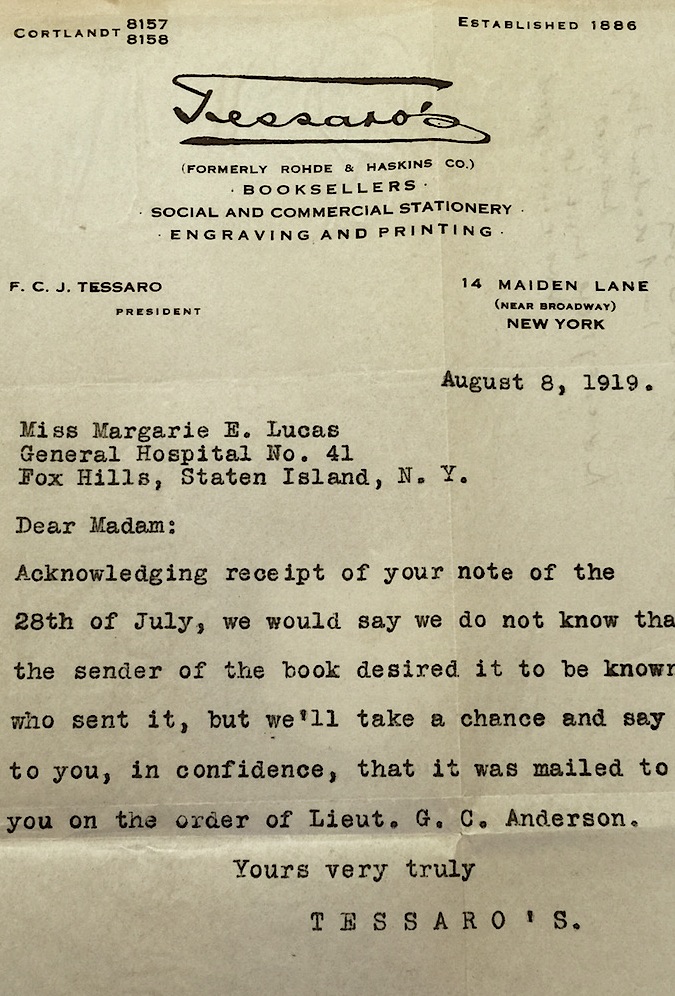
Found in a collection of ephemera this intriguing typed letter from the long vanished New York bookshop Tessaro's. The shop was in Maiden Lane which appears to have been a kind of bookseller's row. The address later housed a rare bookshop called Sabin's. Tessaro's was formerly called Rohde and Haskins who had dabbled in publishing at the dawn of the 20th century.

The letter deals with a request for the identity of the anonymous donor of a book from the recipient - a nurse (presumably) at The General Hospital at Fox Hills.  The shop decided ('we'll take a chance') to reveal the donor's identity. Significantly he was a soldier, as Fox Hills was a very large Army hospital dealing at that time with WW1 casualties. There the story ends. It would be nice to add 'and reader she married him.' The bookshop as go-between must be uncommon and in our cautious times it might not reveal the donor, or possibly send on the request to the donor for permission…

Dear Madam 
Acknowledging receipt of your note of 28th July we would say we do not know that the sender of the book desired it to be known who sent it, but we'll take a chance and say to you, in confidence, that it was mailed to you on the order of Lieut. G.C. Anderson.
Yours very truly,
TESSARO'S

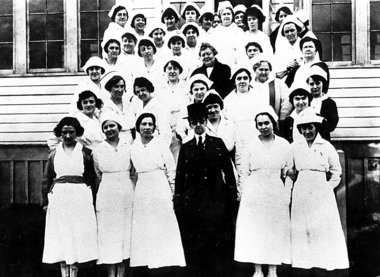
Fox Hill Nursing Staff (1921) from
Advance Archive Photos (many thanks)

Revolution of the Word – Modernist Manifesto

Found in Transition 16-17 (a double issue that appeared in June 1929 in Paris) this modernist manifesto/ proclamation…some of the signers like Harry Crosby, Eugene Jolas (Transition's editor) Kay Boyle, Hart Crane are well known and some like Leigh Hoffman and Douglas Rigby are almost unknown.

PROCLAMATION
Tired of the spectacle of short stories, novels, poems and plays still under the hegemony of the banal word, monotonous syntax, static psychology, descriptive naturalism, and desirous of crystallizing a viewpoint….
We hereby declare that:

1. The revolution in the English Language is an accomplished fact.

2. The imagination in search of a fabulous world is autonomous and unconfined.
(Prudence is a rich, ugly old maid courted by Incapacity…. Blake)

Continue reading

Lord Haldane

Found among the Reeve* papers this short memoir of Lord Haldane - i.e. Richard Burdon Haldane, 1st Viscount Haldane KT, OM, PC, KC, FRS, FBA, FSA (1856 – 1928)  an influential British Liberal Imperialist and later Labour politician, lawyer and philosopher. As with many of Reeve's pieces he had never met the man but had seen him give speeches at congresses and describes his speaking style well. He writes '...many have known have not known me. All of them I have seen, most of them I have heard, and some of them have sought information, even advice from me." For Reeve the unifying qualification all these people have is '… some subtle emanation of personality we call leadership, and which can inspire people to actions  unlikely to be undertaken unless prompted by a stronger will.'

LORD HALDANE

When one begins to delve into the pages of great books of reference, such as the Encyclopaedia Britannica, there are times one stops at a certain page and reads with an increasing sense of wonder and respect. I was looking for Haldane, and as I read the wonder grew. So this was the man treated so contemptuously by most of us during the First World War!
Continue reading