Someone emailed asking ‘for whom is this site intended?’ Not entirely sure -we are still finding our way. One of our jots gets 200 visitors every day An A-Z of Science Fiction words and contributions have come in- e.g. Barry Cox (all glories to his name) and others, sure but sporadic. Not a problem as we have unlimited reserves…this is a scintilla of HG Wells’ World Brain, a drop in the vast ocean of knowledge… Short answer – we are aiming at:
Enthusiasts, scholars, readers & re-readers, polymaths, historians, beatniks, robots, bibliomaniacs, collectors, academics, curators, archivists, scientists, botanists, gourmets, goths, gurus, gossips, geeks, pataphysicians, hipsters, bores, geniuses, diarists, pedants, intellectuals, flaneurs, ramblers, boulevardiers, bluestockings, hoarders, quizmasters, know-alls, art dealers, theorists, philosophers, jesters, occultists, walking encyclopaedias, antiquarians, millennials, autodidacts, autobiographers, nuns, monks, eggheads, child prodigies, analysts, data miners, savants, renaissance men and women, revolutionaries, obsessives, omnivores, the sincere, the pretentious and the intuitive, disrupters, contrarians, entrepreneurs, engineers, sophisticates, somnambulists, arguers, inventors, lexicographers, burners of the midnight oil, keepers of the flame, seekers of the Grail, Utopians, topographers, voyagers, travellers, explorers, perpetual students, poets, princesses, pundits, punks and pamphleteers…

… World Brain of H.G. Wells, an olla podrida, a rag bag of information, trivia and factoids. The conception of a sublime, leisured future. A hotch potch, a mélange, a farrago, a salmagundi.. Knowledge is power. Truth is beauty. Need to know this (and much more) on earth. A coming world of creation and idleness where time is spent in pursuit of knowledge and robots empty the waste paper basket. A dream of no work, all play and jack not a dull boy any more.
The oddest collection, passing strange, a saga, a fantasy, a dream…enter Captain Cuttle and the pedant Casaubon (a maligned man, Madam George). Keeping some sort of record with factoids, footnotes, ephemera, factbooks and essential trivia preserved. An information bank, an interest bearing investment. An index of all knowledge, no less, laid out in the lost monograph – A proposal for an information sharing galaxy.
An amazing expanding archive, beyond the algorithmic dream, post Mass Observation, many beautiful things no longer lost, bringing forth the mind of God, the all seeing eye – the library of Babel, Alexandria, far Antioch and the lost library of Zembla, the loot of cities. Universal access to all knowledge [A2K]. A vanished world recaptured. Notes and Queries honoured: New Encyclopaedists [Encyc2]. Nothing lost or forgotten. Time spent in research, curiosity and scholarship (the daring to be dull) the Renaissance ideal, the Victorian vicarage – just 4 hours a week of money yielding work. By Timothy! The answer is written on the wind, on the wall of the world. So much to know. Sums are not set as a test on Erasmus, all glories to Aaron Swartz, Brewster Kahle – respect… “He had a tale to tell.” Madam, I’m Adam. Exit, pursued by a bear.
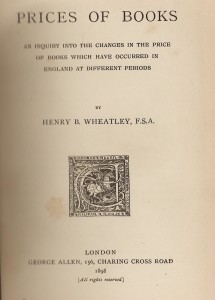 H.B.Wheatley’s Prices of Books (1898) is a real eye opener, not just for the prices realised by truly great and important books, but also for those works which today would not fetch ( in real terms) anything like the sums that our Victorian forebears might have paid.
 Joe and Arthur Rank


 In the April 24th 1942 issue of John O’London’s Weekly can be found a perceptive view by the essayist Robert Lynd on the subject of risible poetry written by good poets. He takes his cue from an incident a century before when Thomas Wakley, the founder of the Lancet, stood up in the Commons to mock some puerile lines from ‘Louisa’ by the Poet Laureate, William Wordsworth.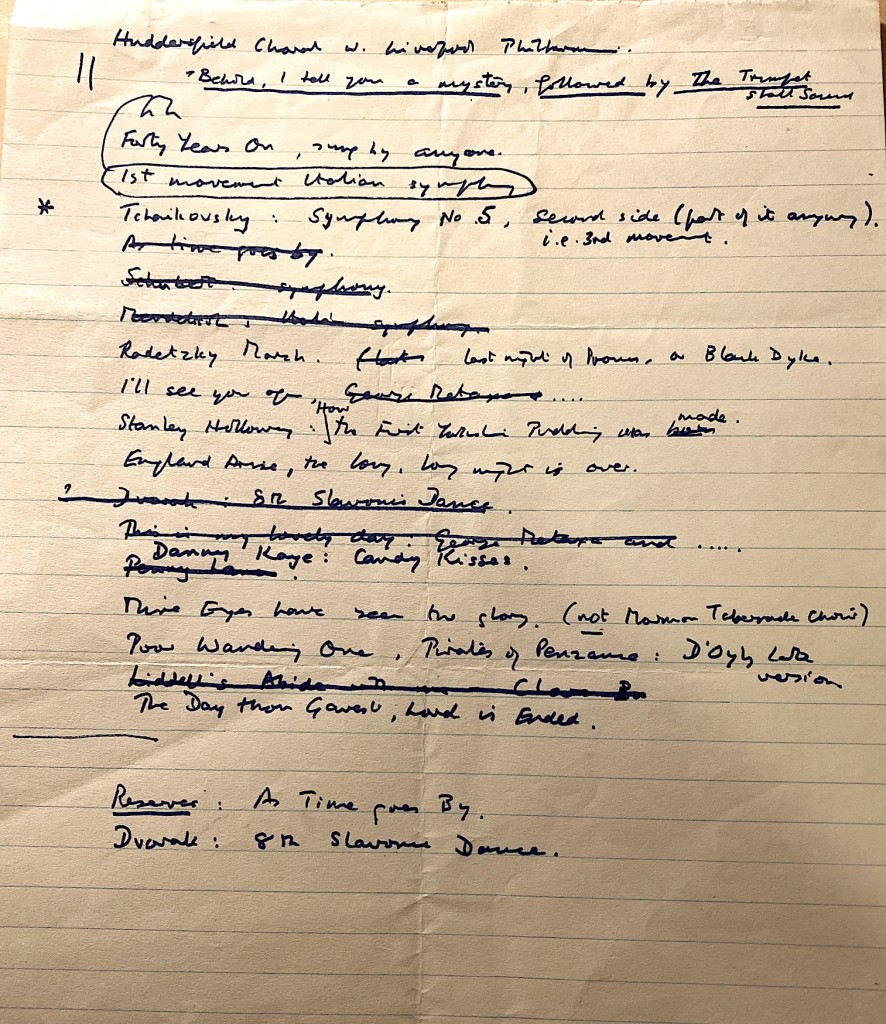
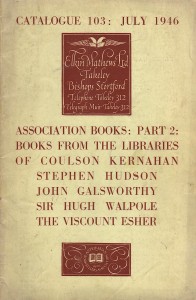 near Bishops Stortford, probably contained descriptions of books and manuscripts by one of the directors, Ian Fleming, an avid book collector. It’s tempting to imagine the future creator of James Bond trawling through some of the items in the catalogue in search of likely material.
 Found — all 3 issues of The Golden Urn the rare magazine produced at Fiesole by Bernard Berenson, Logan Pearsall Smith and his sister Mary Pearsall Smith (later Mary Berenson.) Of some value – we have catalogued it thus: