Found in Old Inns of Suffolk, an often consulted work by local historian 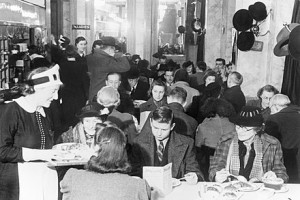 Leonard P Thompson, is a complaint about the ‘catchpenny ‘afternoon teas served up by typical road houses and other mediocre eating places.
Writing in 1948,Thompson argues that excellent and value for money teas can still be found in Britain, but that the ones offered by hotels and similar outfits are invariably unimaginative, mean and ridiculously expensive.
Thompson begins his complaint with a eulogy to a tea he once had at The Fleece, Boxford, near Sudbury, once the home village of the late Peter Haining, the doyen of paste and scissors anthologists, from whose archive ( now owned by Jot 101) Old Inns of Suffolk may have come.
‘It was a Tea of an essentially home-made order. There was plenty of bread-and-butter. There was potted meat and home-made jam. There were biscuits, there was cake. And there was a pot of refreshing, honest to-goodness tea. The price was extraordinarily reasonable. And it all pointed to this moral: if one country inn can observe the ancient traditions of its proud place in England’s social history, so can others. Some, indeed, do, but they are all too few; and of that few, the majority are completely unimaginative. Hotel Teas display the least imagination; two or three wafers of rather dry bread, lightly smeared with a mixture of margarine and butter; perhaps a couple of diminutive sandwiches of indefinable and often dubious content; a piece of dry cake, or an equally dry and hideously plain bun. Such is the usual composition of the average Hotel Tea . Continue reading

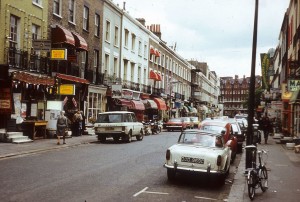 In his Good Food Guide of 1961-62 Raymond Postgate describes the trendy Parkes’ Restaurant at Beauchamp Place (above) in Kensington as ‘ a personal restaurant, dependent upon Mr Ray Parkes, the chef and owner, who offers in his basement at high prices what is claimed to be , and up to date is, haute cuisine.’


 Found in a album of cuttings from various East Anglian newspapers in the early twentieth century is a review that appeared in The Leader, December 24th, 1906 of A Study of British Genius by the pioneer sexologist Havelock Ellis. The reviewer gleefully notes that East Anglia seems to have produced a high proportion of geniuses. To make his point he lists in order of greatness those English counties that have contributed most to the making of English men of genius. These were:


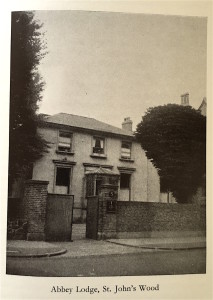 Found in a 1955 Punch – a review by the novelist Anthony Powell of Honours for Sale. The Strange Story of Maundy Gregory. (Gerald Macmillan, London: Richards Press 1954).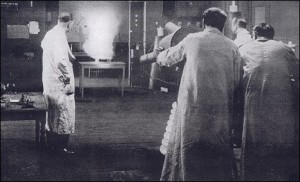
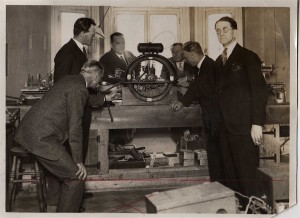
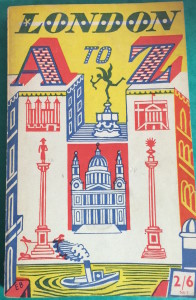 Found – this rare and attractive paperback guide to London published by Andre Deutsch in 1953 and illustrated by Edward Bawden. This extract of three entries gives the flavour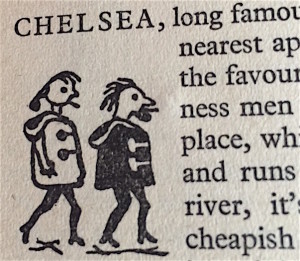
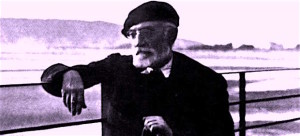 Found in Essays and soliloquies by Miguel de Unamuno (London: Harrap 1924) this preface written on the windswept Spanish island of Furteventura. The island is now mainly a holiday destination, although there is an impressive statue of Unamuno by the main road and also a life size statue of him on a side street.